



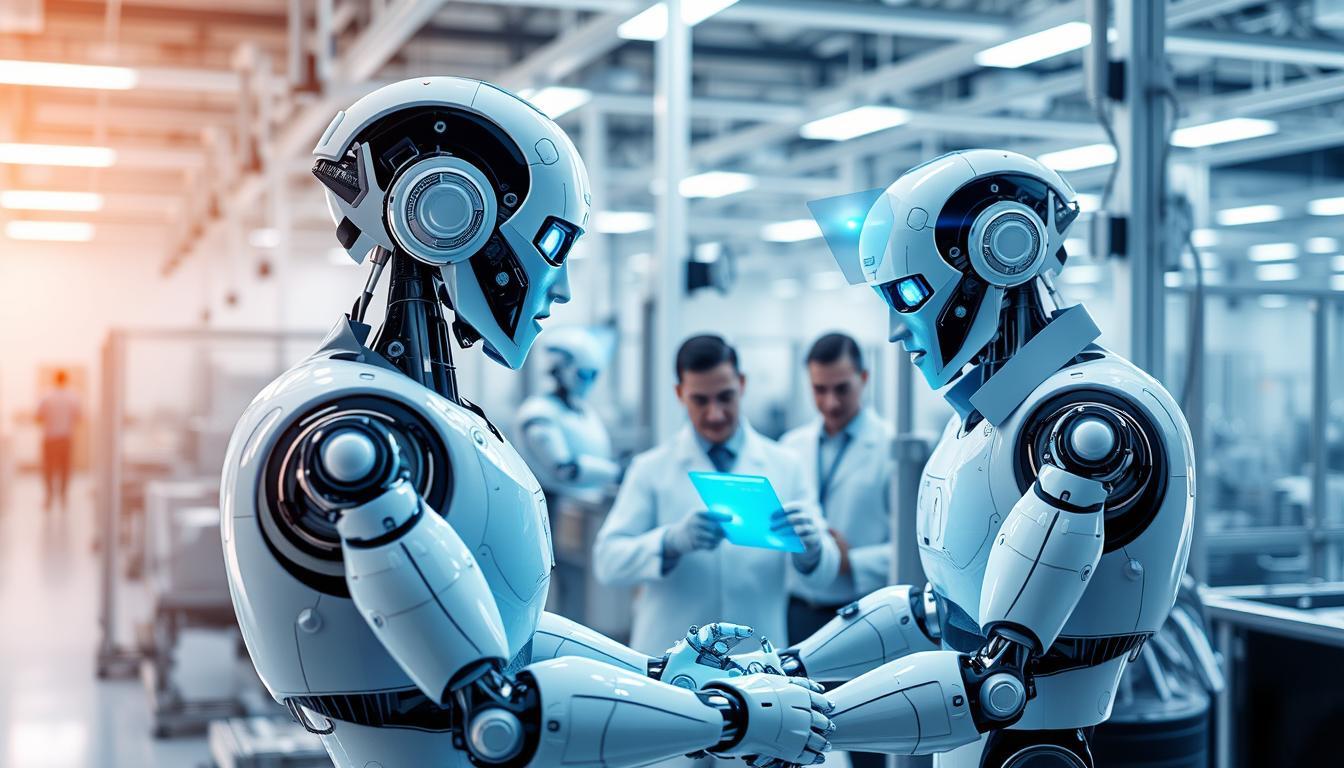
Google is making a targeted move into the future of industrial labour, committing $10 million through Google.org to train 40,000 manufacturing workers in artificial intelligence skills. The initiative, delivered in partnership with the Manufacturing Institute, reflects a broader recognition that the next phase of industrial competitiveness will be defined not just by technology adoption, but by workforce capability.
At its core, the programme is designed to bridge a widening gap. As manufacturing becomes increasingly digitised, many workers remain under-equipped to engage with AI-driven systems that are rapidly reshaping production environments. Google’s intervention is not about replacing labour, but upgrading it, embedding AI fluency directly into the shop floor.
From Automation to Augmentation

The training itself is structured around practical application. Two new courses, including “AI 101 for Manufacturing” and a more advanced track for technicians, are being developed to ensure that workers can apply AI tools directly within their daily roles.
This distinction matters. The conversation around AI in industry has often been framed in terms of automation and job displacement. Yet the reality emerging within manufacturing is more nuanced. AI is increasingly being deployed as an augmentation tool, enhancing decision-making, improving efficiency, and enabling workers to operate at a higher level of productivity rather than removing them entirely.
By focusing on applied skills rather than abstract knowledge, the programme reflects this shift. It is less about teaching workers to build AI systems and more about enabling them to use them effectively, whether in maintenance, quality control, or production optimisation.
Scaling Skills, Not Just Technology

Beyond the classroom, the initiative is designed to scale through existing workforce infrastructure. The Manufacturing Institute will expand its Federation for Advanced Manufacturing Education network into at least 15 new regions, creating local training hubs that connect education directly with industry demand.
Scholarships will also play a central role, lowering barriers to entry for workers looking to upskill or transition into more advanced roles. The inclusion of Google’s AI Professional Certificate within the programme further reinforces its accessibility, positioning AI literacy as a foundational skill rather than a specialist capability.
This approach reflects a broader strategic principle: technology adoption alone does not drive transformation. It must be matched by parallel investment in human capital. Without that alignment, even the most advanced systems risk underperformance.
Part of a Much Larger Play
Google’s investment does not exist in isolation. It forms part of a wider push to prepare the workforce for an AI-driven economy, backed by initiatives such as the AI Opportunity Fund and broader training programmes that have already reached millions globally.
At a strategic level, the company is positioning itself not just as a technology provider, but as a stakeholder in how AI reshapes labour markets. By investing directly in skills development, Google is helping to define the narrative around AI adoption, one that emphasises opportunity and productivity rather than disruption alone.
This positioning is increasingly important as policymakers, businesses, and labour organisations grapple with the implications of AI at scale. Workforce readiness is no longer a secondary concern. It is central to economic resilience.
A New Industrial Skillset
What emerges from this initiative is a redefinition of what it means to work in manufacturing. The factory of the future will not simply require operators, but digitally fluent technicians capable of interacting with intelligent systems, interpreting data, and making informed decisions in real time.
This does not eliminate traditional skills, but builds upon them. Mechanical expertise, problem-solving, and operational awareness remain essential, now augmented by the ability to work alongside AI tools. The result is a hybrid workforce, where human judgment and machine intelligence operate in tandem.
The Real Competitive Advantage
The significance of Google’s move extends beyond the 40,000 workers it aims to train. It signals a broader shift in how competitive advantage is defined within manufacturing.
For decades, the focus has been on capital investment, machinery, infrastructure, and supply chain efficiency. Increasingly, the differentiator is becoming talent, specifically, talent that can leverage advanced technologies effectively.
In that context, AI training is not simply an educational initiative. It is an economic strategy. One that recognises that the future of manufacturing will not be determined solely by what companies build, but by how well their people are equipped to build it.