


Luxury has always been built on perception.
Craftsmanship, heritage, materials, scarcity. These were once the foundations that defined what luxury meant. But in today’s digital-first economy, something has shifted. The distance between perception and reality has narrowed, and in some cases, collapsed entirely.
Few brands illustrate that tension more clearly than Luciente.
On the surface, Luciente presents itself as a modern menswear label rooted in timeless elegance. The language is familiar. Precision tailoring. Premium materials. Elevated essentials designed for the contemporary man. A brand that blends innovation with tradition, offering what appears to be high-end ready-to-wear without the traditional barriers of luxury pricing.
It is a compelling proposition. One that speaks directly to a new generation of consumers who want the aesthetic of luxury without the legacy price tag.
But beneath that proposition lies a more complex story. One that says less about a single brand and more about the evolution of the entire fashion landscape.
Because Luciente is not just a clothing label. It is a case study in how modern fashion operates.
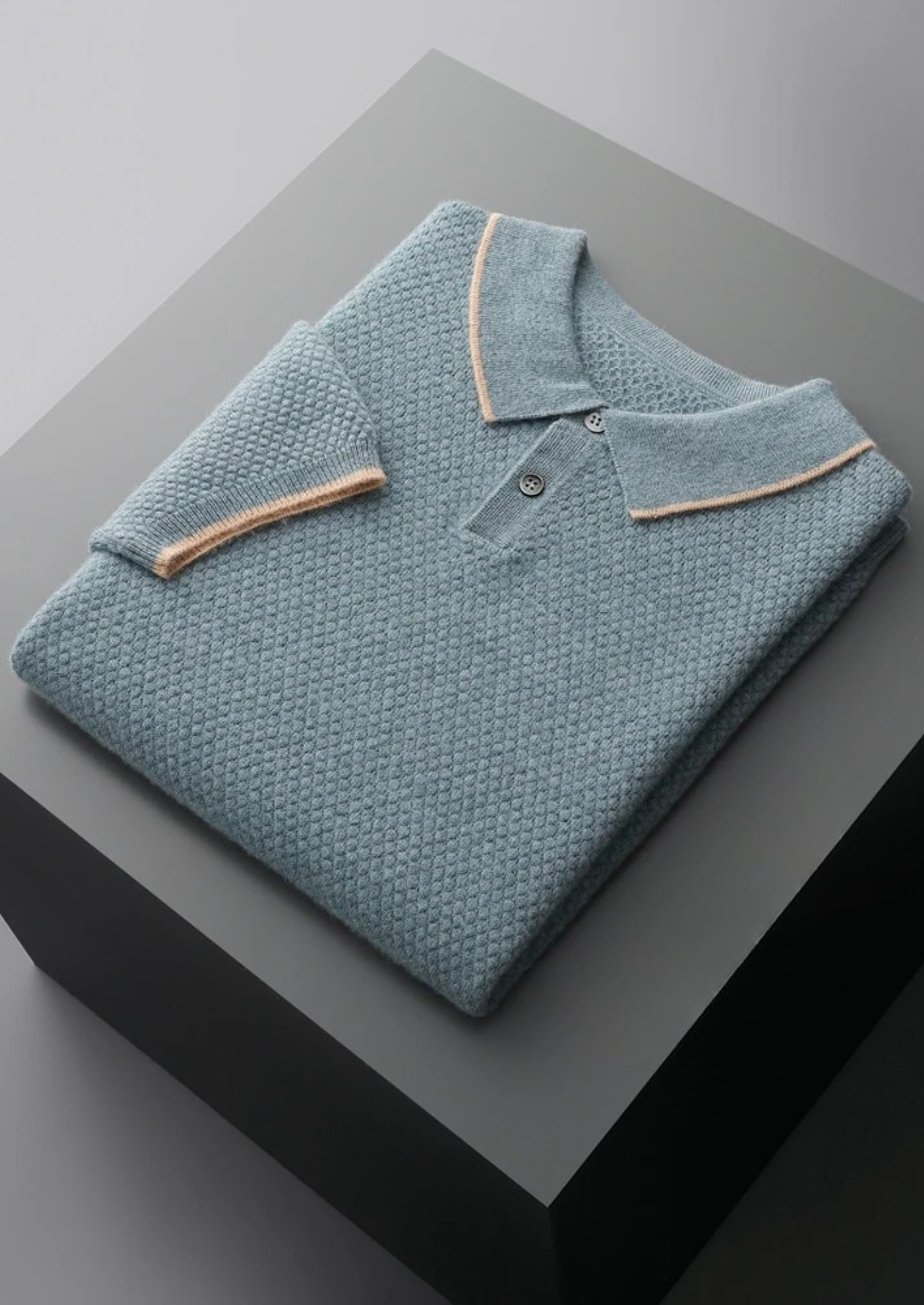
At its core, the brand follows a now familiar model. Digitally native, globally distributed, and built around direct-to-consumer channels. Its collections focus on clean silhouettes, neutral palettes and versatile pieces designed to move seamlessly between work, travel and leisure. Linen shirts, merino knits, structured outerwear. The kind of wardrobe that aligns with the current appetite for understated, everyday luxury.
There is nothing accidental about this positioning.
Minimalism has become the dominant visual language of modern menswear. It signals confidence without excess. It aligns with the broader shift towards quiet luxury, where branding is subtle and quality is implied rather than declared.
Luciente understands this language well. Its branding, imagery and product descriptions are carefully constructed to reflect it. Everything feels considered. Everything feels elevated.
And yet, the most interesting aspect of Luciente is not what it shows, but what it reveals.
Because in the digital age, luxury is no longer validated solely by brands. It is validated by consumers.
And increasingly, those consumers are speaking.
Across independent review platforms, feedback on Luciente is sharply divided. While some customers report positive experiences, noting comfortable materials and acceptable quality, a significant number express dissatisfaction with product consistency, delivery times and customer service.
Issues around sizing discrepancies, delayed shipping and difficulties with returns appear repeatedly in customer feedback.
Some reviewers go further, questioning whether the perceived positioning of the brand aligns with the actual product received, particularly in relation to materials and manufacturing origin.
This contrast is important.
Not because it discredits the brand outright, but because it highlights a broader shift in how fashion is consumed and evaluated.
The traditional model of luxury relied on distance. Distance between the brand and the consumer. Distance between production and perception. Distance that allowed storytelling to dominate.
That distance no longer exists.
Today, every purchase is followed by immediate, public feedback. Every inconsistency is documented. Every expectation is tested in real time.
For brands like Luciente, this creates both opportunity and risk.
The opportunity lies in accessibility. By removing the traditional gatekeeping of luxury, digital brands can reach a global audience instantly. They can offer aspirational aesthetics at a more attainable price point. They can build momentum quickly.
But the risk is equally clear.
When you position yourself within the language of luxury, you are judged by its standards.
And those standards are unforgiving.
This is where Luciente becomes particularly relevant to a Business Enquirer audience. Because it sits at the intersection of brand, perception and operational reality.
It raises a question that extends far beyond fashion.
What does luxury actually mean in 2026?
Is it price?
Is it craftsmanship?
Is it experience?
Or is it simply perception, executed well enough to convince?
Luciente suggests that the answer is no longer singular.
Instead, luxury has fragmented.
For some, it remains rooted in heritage. In brands with decades, or centuries, of history. In ateliers, artisans and slow production cycles.
For others, it has become more fluid. Defined by design, convenience and accessibility rather than provenance.
Luciente operates within this second category.
It is part of a broader wave of brands that prioritise speed, reach and visual identity over traditional structures. Brands that are built for the algorithm as much as for the wardrobe.
This does not inherently make them inferior. But it does change the rules.
Because in this model, trust becomes the most valuable currency.
Not heritage. Not price. Not even design.
Trust.
And trust is built, or lost, in the details.
Delivery timelines. Product consistency. Customer service responsiveness. Transparency around materials and sourcing.
These are not peripheral concerns. They are central to the modern luxury experience.
Luciente’s mixed reception highlights what happens when those elements are not perfectly aligned.
Some customers are satisfied, even impressed. Others feel misled or disappointed. The gap between expectation and reality becomes the defining factor.
And that gap is where modern brands either succeed or fail.
What makes this particularly interesting is that Luciente is far from alone.
Across fashion, beauty and wellness, a new generation of brands is emerging with similar models. Digitally native. Aesthetically refined. Positioned within the language of luxury, but operating on entirely different supply chains and timelines.
Some execute this model exceptionally well. Others struggle to maintain consistency as they scale.
For consumers, the challenge is navigating that landscape.
The cues that once signalled quality are no longer sufficient. A well-designed website, premium branding and strong social presence no longer guarantee product integrity.
Due diligence has become part of the purchasing process.
For business leaders, the implications are even more significant.
Because this shift is not limited to fashion. It reflects a broader transformation in how brands are built and perceived across industries.
The democratisation of luxury has created opportunity, but it has also diluted certainty.
In this environment, the brands that succeed will not simply be those that look premium. They will be those that deliver consistently against that promise.
Luciente sits at that crossroads.
It has captured the aesthetic of modern menswear. It has tapped into the demand for accessible luxury. It has built a brand that feels aligned with current cultural trends.
But its long-term trajectory will depend on something far less visible.
Execution.
Because in the end, the modern consumer is not just buying a product. They are buying an expectation.
And expectations, once set, are difficult to renegotiate.
What Luciente ultimately reveals is not a flaw in the concept of accessible luxury, but a challenge in its delivery.
It shows how quickly perception can be created, and how quickly it can be questioned.
It highlights the importance of aligning brand narrative with operational reality.
And perhaps most importantly, it reflects a broader truth about the current era of consumption.
We are no longer passive buyers.
We are active evaluators.
Every purchase is a test. Every experience is a data point. Every brand is under continuous review.
In that environment, there is no such thing as invisible performance.
Everything is seen. Everything is shared. Everything matters.
Luciente, in many ways, is a mirror of that reality.
A brand built for a new kind of consumer, operating within a new kind of market, facing a new kind of scrutiny.
And whether it evolves to meet that scrutiny or not will determine its place within the next chapter of modern fashion.
Because in today’s world, luxury is no longer defined by what a brand says.
It is defined by what it delivers.