


There are certain products in life that become invisible. Not because they lack importance, but because they have remained unchanged for too long. Toothpaste is one of them.
For decades, oral care has existed in the background. Functional, clinical, largely uninspiring. A category dominated by legacy brands, incremental innovation and a sense that nothing really needed to change.
Until it did.
Zing Toothpaste represents a new kind of disruption. Not loud or aggressive, but quietly intentional. A brand that has taken something as routine as brushing your teeth and reimagined it through the lens of modern lifestyle, design and performance.
Because in today’s world, even the smallest daily habits are being re-evaluated.
And increasingly, they are expected to do more.
What Zing understands, perhaps better than most, is that the future of consumer products lies in collapsing categories. No longer is it enough to clean. A product must repair, protect, enhance and integrate seamlessly into a broader wellness narrative.
At the centre of Zing’s formulation is a combination that reflects this shift. Fluoride, still widely recognised for its role in cavity prevention, sits alongside hydroxyapatite, a mineral that mirrors the natural composition of tooth enamel and supports remineralisation.
This dual approach is deliberate. It moves beyond the binary debate that has long defined oral care. Instead of choosing between traditional protection and modern alternatives, Zing integrates both into a single system.
The result is a product positioned not as a compromise, but as an upgrade.
There is also a subtle but important shift in how the brand approaches whitening. Rather than relying on aggressive abrasives, Zing uses enzymes such as papain to dissolve surface stains from everyday habits like coffee, wine and tea.
It is a quieter form of effectiveness. Less about instant transformation, more about consistent improvement.
That philosophy runs through the entire product. Low abrasion. Gentle formulation. Designed for daily use rather than occasional intervention.
This is not about dramatic before-and-after moments. It is about long-term maintenance, elevated.
Equally important is what Zing leaves out. The formula is free from SLS, a common foaming agent that can irritate sensitive mouths, and avoids titanium dioxide, a whitening pigment often included for purely cosmetic reasons.
This absence is not accidental. It reflects a broader consumer shift towards transparency and intentionality. People are no longer just asking what a product does. They are asking what it contains, how it is made and whether it aligns with their values.
Zing’s answer is clear. Vegan-friendly. Cruelty-free. Manufactured in the UK using recyclable packaging and a lower carbon footprint compared to traditional mass-market alternatives.
This positioning places the brand firmly within the wider movement towards conscious consumption.
But what makes Zing particularly interesting is that it does not lean too heavily into that narrative. It does not present itself as a moral choice. Instead, it frames sustainability and ingredient transparency as part of a broader standard of quality.
In other words, these are not differentiators. They are expectations.
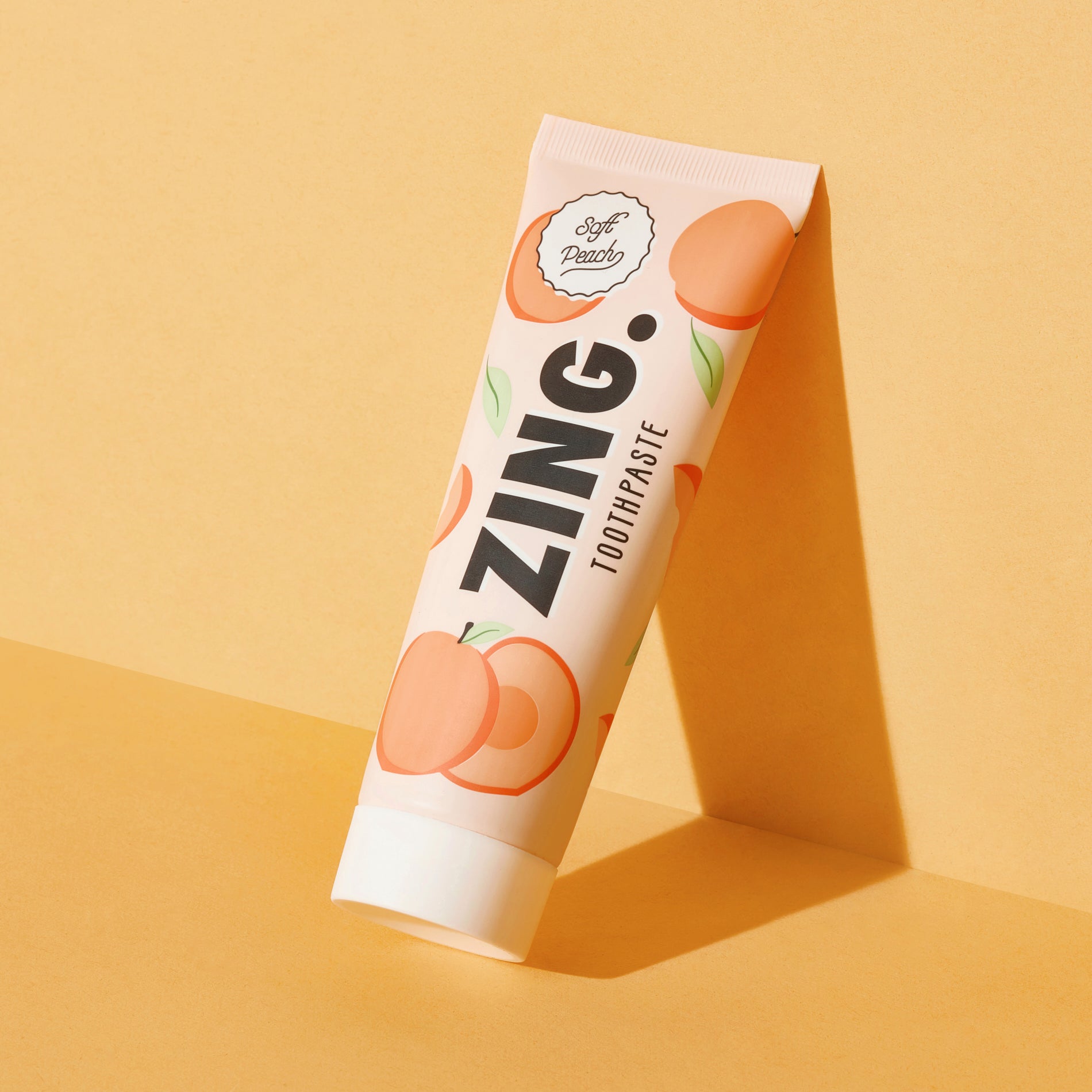
The aesthetic of the brand reinforces this idea. Clean, minimal, slightly playful without tipping into novelty. The kind of product that feels considered enough to leave out on a bathroom shelf, rather than hidden away in a cabinet.
That may sound trivial, but it speaks to something deeper. Design is no longer reserved for luxury goods. It is becoming a baseline expectation across everyday products.
Zing taps into this shift with precision.
The flavour profile is another example. Moving beyond the traditional dominance of mint, the brand offers options such as peach, lemon and apple, reframing brushing from a purely functional act into something more experiential.
It is a small change, but one that reflects a larger trend. Consumers are seeking variety, personalisation and a sense of choice, even in the most routine aspects of their day.
This is where Zing begins to transcend its category.
Because what it is really selling is not toothpaste. It is a reimagined ritual.
A moment that feels considered rather than automatic. A product that aligns with the same values that shape decisions in food, fitness and lifestyle.
In that context, oral care becomes part of a broader ecosystem of self-optimisation.
And that is where the business story becomes particularly compelling.
Zing sits within a new generation of consumer brands that are redefining what premium means. It is not about exclusivity in the traditional sense. It is about intentionality. About paying more for something that feels better designed, more transparent and more aligned with modern expectations.
At around the £10–£13 mark, Zing is positioned above standard supermarket toothpastes, but below the level of specialist dental products.
This middle ground is strategic. It allows the brand to occupy a space that feels elevated without being inaccessible.
For a Business Enquirer audience, this positioning will feel familiar. It mirrors what has happened across multiple industries, from skincare to nutrition to apparel.
The rise of the premium everyday.
Products that justify their price not through branding alone, but through a combination of performance, design and narrative.
Zing’s growth also reflects a broader shift in how consumers engage with health. Oral care is no longer siloed. It is increasingly viewed as part of overall wellbeing, connected to everything from diet to longevity.
This creates an opportunity for brands that can bridge those conversations.
Zing does so by positioning its formula around enamel health, sensitivity reduction and long-term protection, rather than just immediate cleanliness.
It is a subtle reframing, but an important one.
Because it aligns oral care with the same language used in high-performance health and wellness.
Of course, no modern brand exists without scrutiny. Zing has faced regulatory attention in the past, particularly around claims related to ingredients used in competitor products, highlighting the importance of evidence-based communication in a category where trust is critical.
This serves as a reminder that as brands push boundaries, they must also navigate the realities of regulation and scientific accountability.
For consumers, however, the broader takeaway is not controversy, but evolution.
The fact that toothpaste is even part of a wider conversation around ingredients, sustainability and performance is, in itself, a sign of change.
And that change is unlikely to reverse.
The most interesting aspect of Zing is not its individual features, but what it represents collectively. A move away from passive consumption towards active choice. A recognition that even the most routine products can be improved, refined and reimagined.
It speaks to a generation that is no longer satisfied with default options.
A generation that expects more from everything it uses.
In that sense, Zing is less about disruption and more about alignment. It aligns oral care with the expectations already set by other industries. It brings toothpaste into the same conversation as skincare, nutrition and lifestyle design.
And once that shift happens, there is no going back.
Because the question is no longer whether a product works.
It is whether it works well enough for the life you are trying to build.
Zing answers that question with clarity. Not through bold claims or exaggerated promises, but through a considered approach to formulation, design and positioning.
It elevates the everyday without overcomplicating it.
And in doing so, it captures something that many brands miss.
True innovation is not always about creating something new. Sometimes, it is about looking at something familiar and asking a better question.
Why does it have to stay this way?
For toothpaste, the answer is increasingly clear.
It doesn’t.