



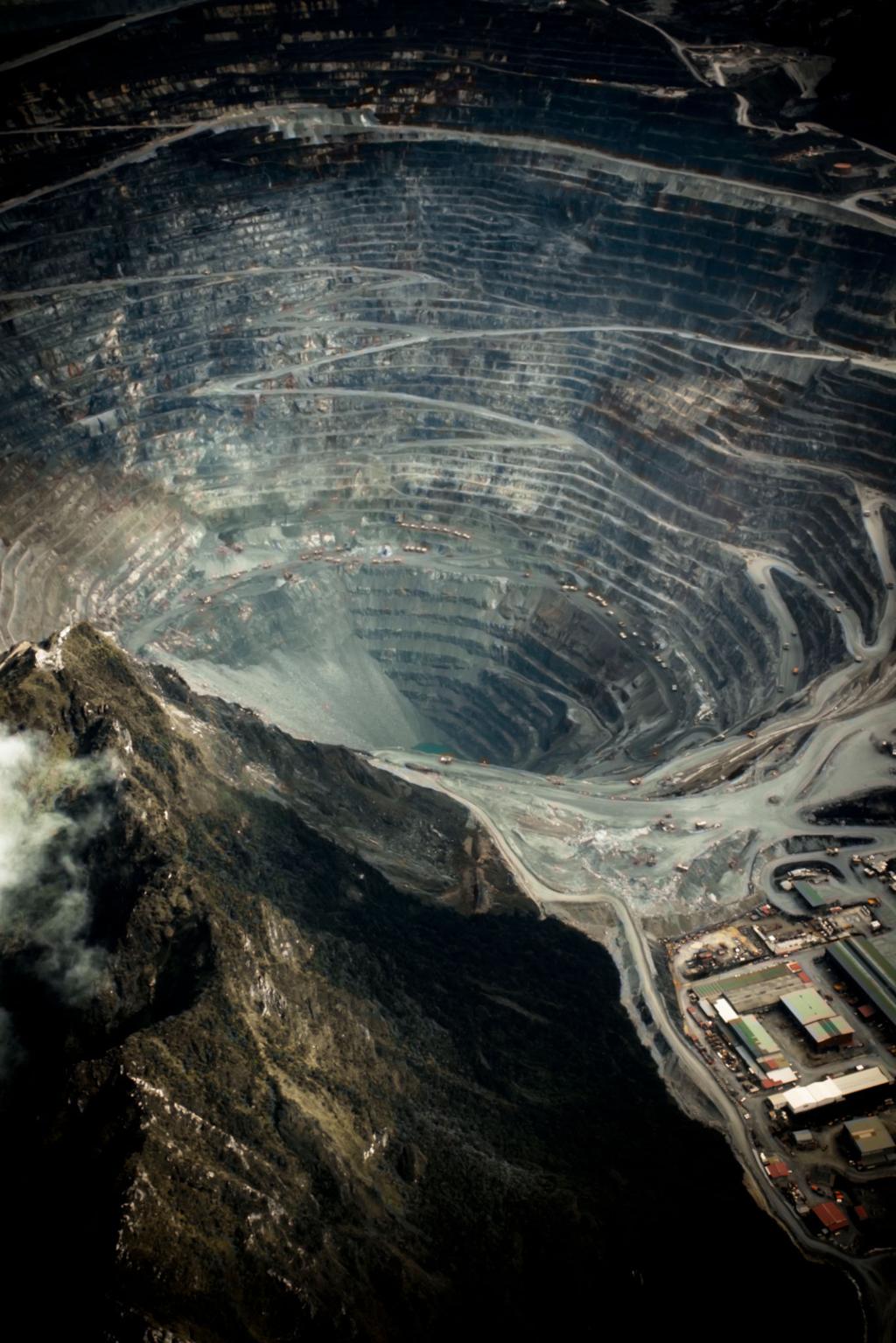
One of the world’s most important copper and gold mining operations is facing another major setback. Freeport-McMoRan has confirmed that full production at Indonesia’s massive Grasberg mining complex will now not resume until early 2028, extending concerns around global copper supply at a time when demand for the metal continues accelerating rapidly.
The delay centres around recovery operations at the Grasberg Block Cave underground mine in Papua, Indonesia, where a severe mudflow incident last year significantly disrupted operations. While unaffected sections of the wider mining complex have partially resumed activity, current output remains at only around 40% to 50% of normal capacity.
The announcement is significant not simply because of Grasberg’s scale, but because copper itself has become one of the most strategically important commodities in the modern economy. Copper sits at the centre of electric vehicles, renewable energy infrastructure, AI data centres, battery systems and global electrification projects. Any disruption at a mine of Grasberg’s size immediately attracts international attention.

Historically, Grasberg has been one of the world’s largest copper and gold mining complexes, producing enormous volumes of both metals annually. The site has long been viewed as one of the crown jewels of the global mining industry due to both its scale and mineral richness. But increasingly complex underground conditions are now exposing the technical challenges facing modern mining operations worldwide.
According to company statements, the latest delay stems from additional work required on ore handling and logistics infrastructure following the September mudflow incident. Groundwater infiltration has reportedly caused underground ore to become significantly wetter than expected, creating operational safety concerns and forcing Freeport to redesign parts of its transportation and loading systems.
The operational complications are highly technical but commercially critical. Wet ore conditions are affecting the automated systems used to transport material from underground mining zones onto trains, forcing engineers to install new safety and flow-control systems designed to prevent further mud-related incidents.
The situation highlights a much broader trend emerging across the global mining sector. As easily accessible mineral deposits become depleted, mining companies are increasingly being forced into deeper, more technically demanding underground environments. Those operations often involve significantly greater geological complexity, infrastructure risk and operational uncertainty.
This challenge arrives at a particularly difficult moment for global copper markets. Demand for copper continues rising sharply due to the rapid expansion of AI infrastructure, renewable energy projects, electric vehicles and large-scale grid modernisation programmes. Analysts increasingly view copper as one of the defining commodities of the next industrial era because of its critical role in electrification.
At the same time, supply growth is struggling to keep pace.
Major mining projects often require years or even decades to develop, while permitting, environmental scrutiny and geopolitical risk continue slowing new production globally. Large operational disruptions at existing mines therefore have an outsized impact on market sentiment and pricing expectations.
Freeport’s revised guidance has already triggered concern among investors and commodity analysts. Earlier expectations suggested Grasberg would return to full production during 2027. The extension to early 2028 significantly lengthens the recovery timeline and reduces near-term production expectations across both copper and gold markets.
The company has already lowered production forecasts substantially. Earlier this year, Freeport revised expected copper output from the Indonesian operation downward following slower-than-expected recovery progress. Gold production expectations were also reduced as operational issues continued affecting underground mining efficiency.
Financial markets reacted quickly. Shares in Freeport-McMoRan fell sharply following previous recovery revisions as investors became increasingly concerned about execution risks and future production reliability at one of the company’s flagship assets.
Yet despite the setbacks, long-term demand fundamentals for copper remain extremely strong.
Governments worldwide continue accelerating investment into renewable energy infrastructure, EV production and AI-powered data centre expansion. Copper remains one of the best electrical conductors available, making it essential for nearly every major electrification project currently reshaping the global economy. That structural demand growth is creating increasing pressure on mining companies to maintain stable supply.

The Grasberg situation also reinforces the growing importance of operational resilience within mining itself. Investors are paying closer attention not only to commodity prices, but to how effectively mining companies manage geological complexity, environmental risk and infrastructure reliability.
Modern mining projects are becoming increasingly dependent on advanced engineering systems, automation technologies and sophisticated environmental management processes. Any operational failure can now create significant global ripple effects due to the concentrated nature of mineral supply chains.
For Indonesia, the delay carries additional strategic implications. Grasberg represents one of the country’s most economically important mining assets, contributing substantial export revenue and supporting wider industrial activity. The Indonesian government retains majority ownership of the operation through state-controlled interests, making the mine strategically significant both economically and politically.
The wider industry will now be watching closely to see whether Freeport can stabilise recovery operations over the next 18 months. While company executives remain confident the technical issues can ultimately be resolved, the extended timeline underlines how fragile global commodity supply chains can become when major operations encounter unexpected disruptions.
And with copper increasingly central to the future of AI, renewable energy and electrification, the world’s dependence on massive mining complexes like Grasberg may only become more visible in the years ahead.