



Set against the reflective calm of Wood Wharf’s waterways, Songbird Restaurant & Bar feels like the kind of place London has been waiting for in Canary Wharf. It is polished without being cold, elegant without being overworked, and quietly atmospheric in a way that makes you want to stay longer than planned.
This is not a dining room built around showmanship for its own sake. Instead, Songbird is shaped by restraint, light and mood. It understands that luxury often lives in the details, in the confidence of a space that does not need to shout to make an impression.
From the outset, its position does much of the talking. Framed by the water and softened by the movement of daylight across the docks, the restaurant benefits from one of the most distinctive settings in the area. Canary Wharf’s glass-and-steel drama remains ever-present, yet here it feels less corporate, less hurried, more cinematic. The skyline still dominates, but at Songbird it is reflected, diffused and reinterpreted through the calm of the water outside.
“At Songbird, the view is not simply a backdrop. It is part of the dining experience itself.”
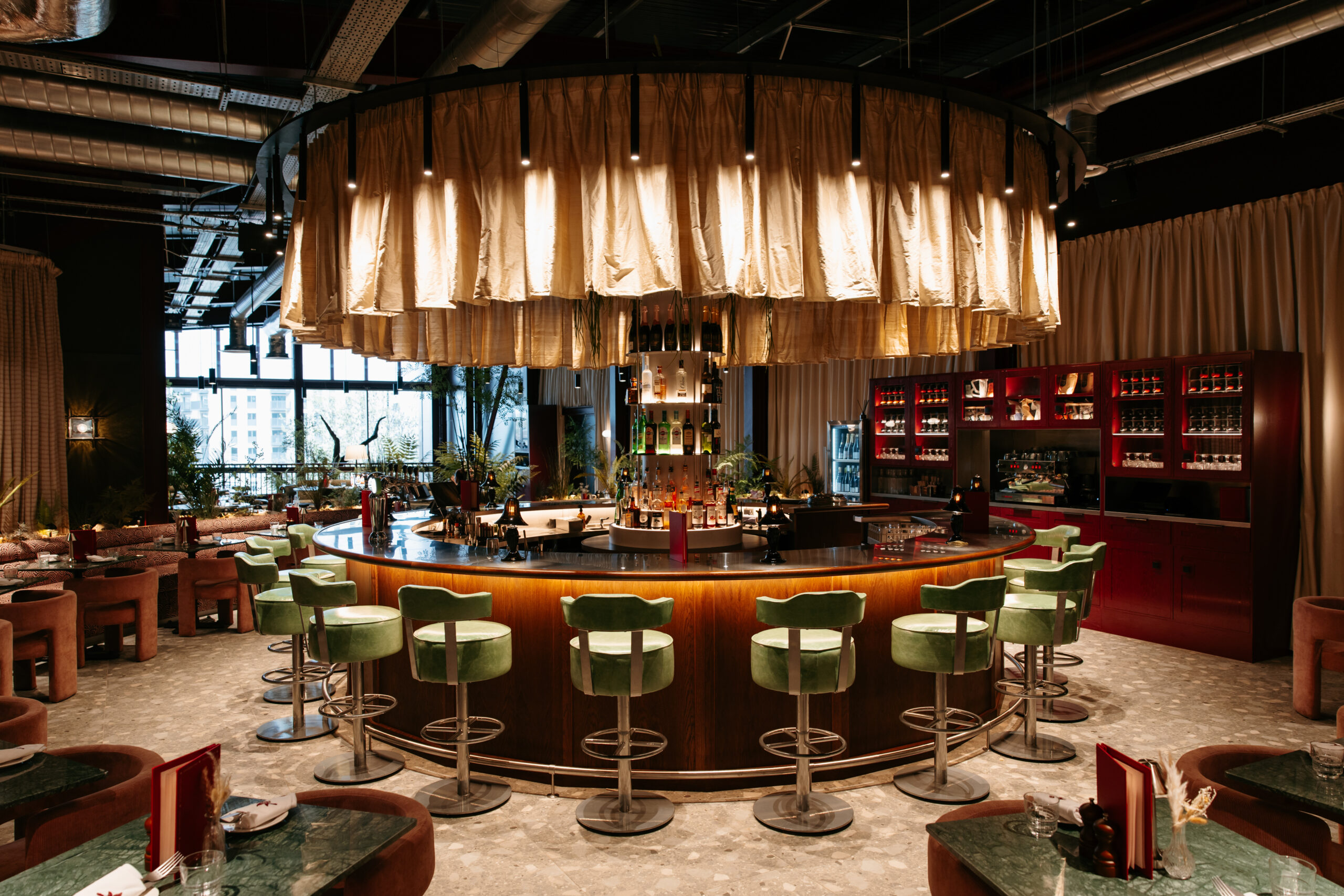
Inside, the design follows the same philosophy. Created by Rachel Gowdridge, the interiors strike a careful balance between contemporary polish and warmth. Curved banquettes encourage conversation rather than formality, while green marble tables catch the changing light and add a subtle sense of richness to the room. At the centre, a circular cocktail bar anchors the space with quiet assurance, giving the restaurant a focal point that feels sculptural rather than performative.
Floor-to-ceiling windows do the rest. They pull the outside in, connecting diners to Wood Wharf’s evolving light and creating a room that seems to shift in character throughout the day. At lunchtime, the space feels bright, open and clean-lined. By evening, it takes on a softer, more intimate energy, one that suits the slower pace of dinner and drinks by the water.

That same sense of control and elegance extends naturally to the menu.
Songbird’s cooking reflects a modern reading of British Isles cuisine, but it does so without heaviness or nostalgia overload. There is precision here, but also playfulness. The dishes feel considered, indulgent in places, but never overcomplicated.
Plates such as crumpets with caviar and braised beef rarebit set the tone immediately, delivering familiarity reworked with finesse. Elsewhere, a tableside Wagyu burger finished with truffle leans into theatre, but in a way that still feels aligned with the restaurant’s overall character. It is indulgence with intention rather than excess for effect.
At lunch, the offering becomes looser and more relaxed, responding to the different rhythm of the day. Lobster rolls and schnitzel bring a more informal energy to the table, giving Songbird the flexibility to move comfortably between business dining, long lunches and slower afternoons spent by the water.
“The menu understands the mood of the room, balancing comfort, polish and a sense of occasion.”
This versatility is one of Songbird’s greatest strengths. It is not trying to be only one thing. It can host a polished lunch, a pre-theatre dinner, an evening of cocktails or a longer dinner that gradually unfolds into night. In a district where hospitality sometimes leans too heavily on utility, that flexibility gives Songbird a stronger sense of personality.
The drinks list reinforces that identity. Cocktails play with nostalgia while keeping one foot firmly in the present, with serves such as the Yorkshire Negroni and Earl Grey Martini offering familiar references reimagined with clarity and confidence. It is the kind of list that complements the room rather than competing with it.
Alongside that sits a curated wine selection designed to move seamlessly with the menu and the changing tempo of the day. Nothing here feels overdesigned. The choices feel deliberate, polished and easy to enjoy, which is often harder to achieve than complexity for complexity’s sake.
As evening settles in, Songbird begins to show its most compelling side. The lighting softens. Conversations deepen. The reflective quality of the water outside becomes more atmospheric, and the restaurant takes on the feeling of a destination rather than simply a place to eat. There is a sense of quiet transformation to it, as if the room is designed to exhale with the city as the day winds down.
This is where Songbird seems most confident. Not in trying to dominate Wood Wharf’s dining scene with noise or spectacle, but in offering something more refined: a restaurant that understands atmosphere, timing and the emotional texture of a good evening.

In many ways, Songbird feels purpose-built for how Canary Wharf is changing. As the district continues to evolve beyond its historic image of office towers and after-work convenience, places like this are helping redefine what dining in the area can look and feel like. The emphasis is no longer purely on efficiency. It is on experience, setting and the kind of hospitality that invites people to stay, return and settle into the space.
That makes Songbird more than just another opening. It feels like part of a wider shift in tone, one where Canary Wharf’s sharp edges are softened by a more nuanced, lifestyle-led approach to eating and drinking.
“Songbird brings a quietly confident elegance to a part of London that is learning to linger.”
Final Thoughts
Songbird Restaurant & Bar succeeds because it understands that modern dining is about more than the plate alone. It is about atmosphere, design, pacing and the ability to make a guest feel that time is being spent well.
With its waterside setting, assured interiors, polished British menu and evolving day-to-night mood, Songbird offers something Canary Wharf increasingly values: a sense of occasion that never feels forced. It is elegant, contemporary and composed, a restaurant that allows the setting, the design and the food to move in step with one another.
In a district defined by momentum, Songbird’s greatest luxury may be its ability to make people slow down.