

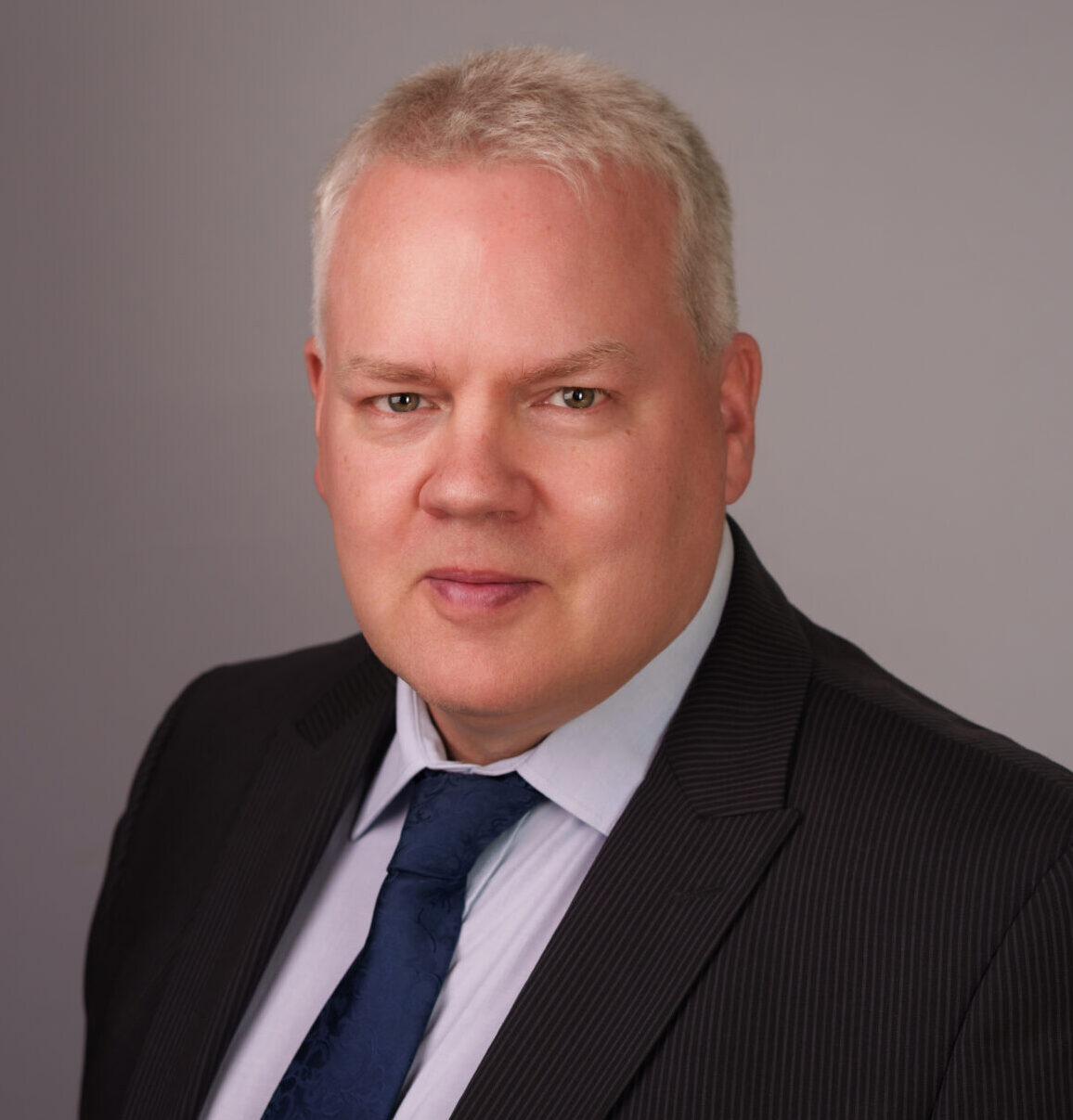
Business Enquirer speaks with Johan Kempe, Director of Drilling Operations at Advance Drilling, about scaling the business, navigating the Arabian Shield’s challenging terrain, and supporting Saudi Arabia’s rapidly growing mining sector.
Johan Kempe has spent his career on the equipment and technology side of drilling — with several global roles within Atlas Copco / Epiroc with Equipment supply and service, and as Product Director for drilling equipment at Komatsu Mining in Ontario, Canada.
In July 2025, he joined Advance Drilling, AMAK’s wholly owned drilling subsidiary, as Director of Drilling Operations, based in Najran. Business Enquirer spoke with him about what drew him to Saudi Arabia at this specific moment, and what it takes to build a drilling company almost from scratch in one of the world’s most promising, and most demanding, exploration environments.
An Equipment Career Applied to Operations
“The job I was offered is very interesting, and the country itself is very interesting,” Kempe said. “Since I graduated as a mining engineer many years ago, I’ve always maintained a keen interest in exploration of new mineral deposits and developing new mines.”
With high-grade deposits depleting in more mature mining jurisdictions, he sees Saudi Arabia’s government-backed push into mineral exploration as a rare opportunity.
“It’s a great place to be, with the fantastic support we have here from the government, especially for mineral exploration.”
While most of his career has been spent on the drilling technology side rather than in geology, Kempe believes that background brings something distinct to an operations role.
“I think I can contribute with some new ideas and new approaches when it comes to technical challenges, which is then complemented by input from colleagues and partners who understand the geology better than me.”
Engineering Around the Mountains
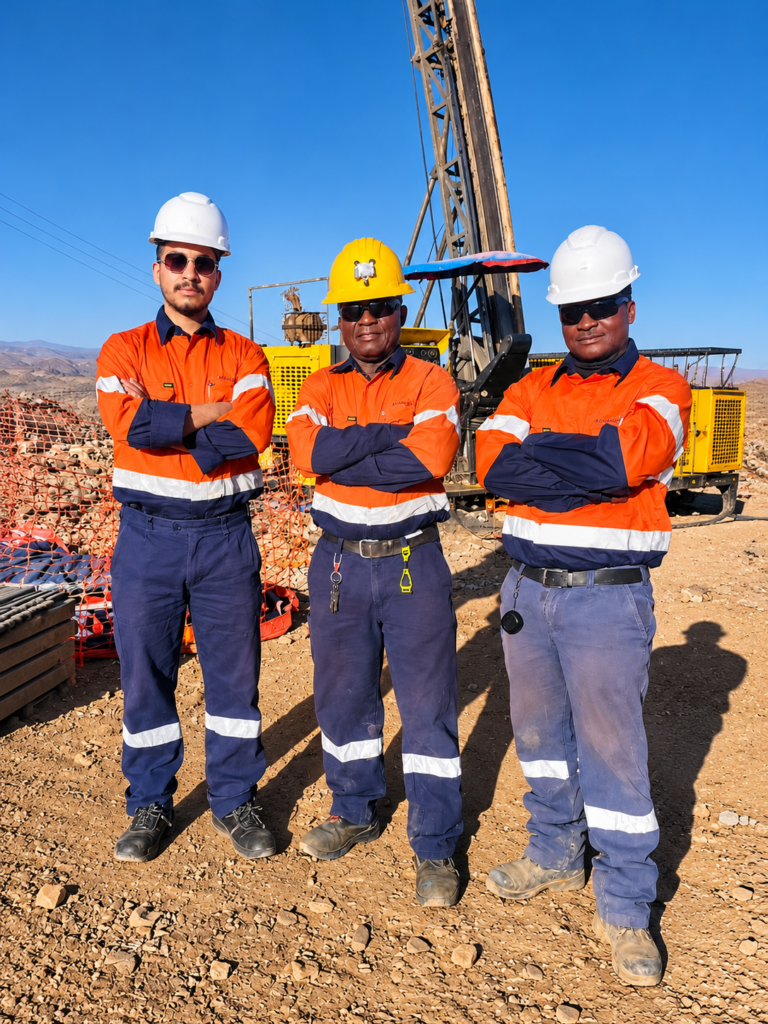
The terrain of the Najran and Asir provinces, Kempe says, tends to surprise newcomers.
“The landscape is actually really scenic — probably not what a foreigner would expect when traveling to Saudi Arabia. Much of the Arabian Shield’s southern provinces have very high mountain ranges and deep valleys.”
Those rapid elevation changes create real operational challenges, particularly around building road access to exploration sites and safely mobilizing drilling equipment.
One characteristic of the landscape that Kempe says he hadn’t fully anticipated is how little unconsolidated material covers the bedrock. In response, Advance Drilling has built its operating model around crawler chassis rigs.
Water logistics present a similar engineering puzzle. Water is delivered by truck, and in some cases must be transferred into bags and pumped up to the drill pad to avoid putting trucks at risk on difficult terrain.
Advance Drilling is also developing formation-specific polymer solutions to reduce fluid losses and water recirculation, alongside targeted casing strategies.
“With less water use, we can have a smaller drill pad and don’t need a massive area to store drilling fluid in the sumps,” Kempe explained. “That makes the operation less sensitive to delays and improves efficiency.”
Scaling a Programme, Tripling a Fleet
AMAK’s in-house drilling operation began modestly in 2021 with just a couple of rigs. Metres drilled grew gradually over the following years, through a combination of AMAK’s own fleet and outsourced contractor capacity, before AMAK made a significant investment decision in 2025 to sharpen its focus on exploration drilling — a decision that brought Kempe on board to build a dedicated team.
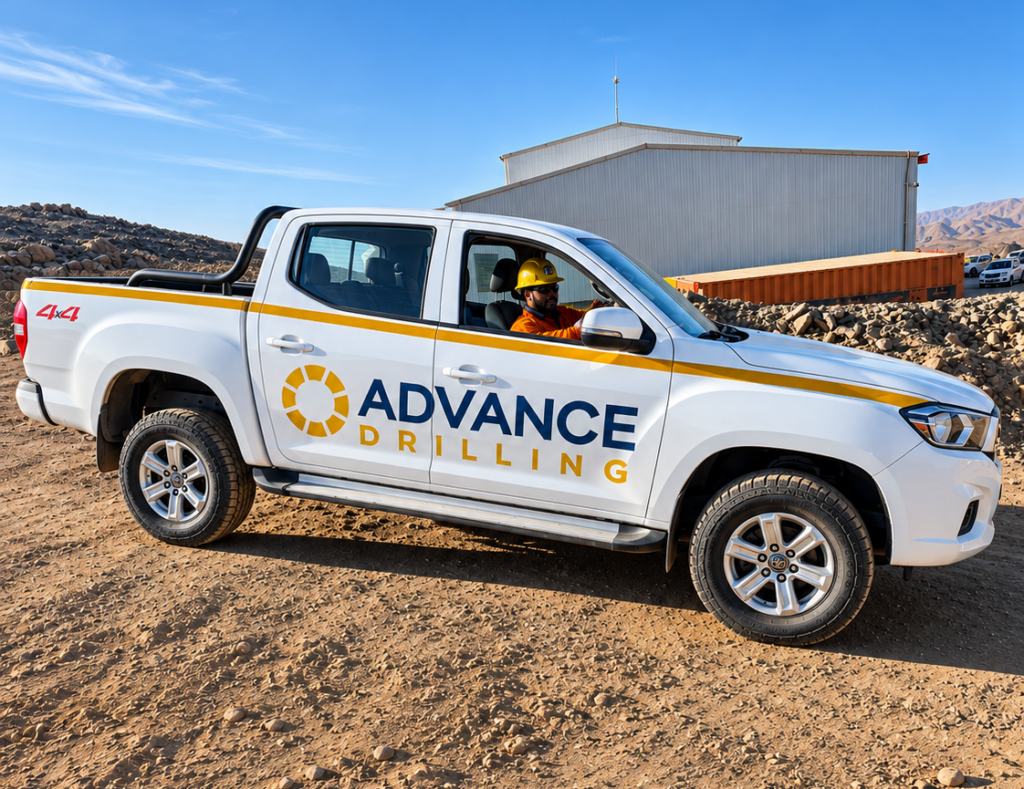
“Over the recent fifteen months since I started, we have basically tripled the fleet,” Kempe said. “We’ve also built a sizable team focused on exploration drilling, and the new recruits are bringing a lot of experience from some of the leading global drilling contractors.”
Alongside fleet growth, the team has adopted modern survey tools and new digital reporting systems.
“Since Advance Drilling was established as AMAK’s dedicated drilling subsidiary, we have been in a position to support most of AMAK’s requirements — and beyond that. We continue to grow, and we’re now ready to support requirements from other companies in the Kingdom.”
The team itself blends experienced international hires — managers, supervisors, and drillers — with a growing base of Saudi nationals still building their skills in the industry.
“We’re developing depth and breadth across all functions, including operations, HSE, maintenance, and supply chain,” Kempe said. “That’s a very good base now for further growth into other areas of the Kingdom.”
Across all of AMAK’s licence areas, the aim, he said, is straightforward: recover the best representative samples — core or chip — while working to reduce overall exploration cost.
Drilling Into a Geological Blank Space
The Arabian Shield remains one of the world’s most prospective yet underexplored Precambrian terranes, and Kempe says that reality shapes how his team plans and adapts in real time.
“The lack of ground cover over the bedrock here is something I haven’t experienced so much in other regions of the world,” he said.
There is generally an oxidized surface zone requiring surface casing, but otherwise, he describes the geology as comparatively forgiving for drilling.
That’s beginning to change as Advance Drilling expands into areas of the Kingdom with more unconsolidated sand and sediment cover, requiring new tailored solutions.
“It’s a huge country with a lot of variation in geology,” Kempe said. “As we move into new greenfield areas, I’m sure we’ll continue to get new experiences — you can’t always prepare for that. As a driller, you need to remain flexible and adapt to new challenges.”
Building an Internal Drilling Company From Scratch
Standing up Advance Drilling as a wholly owned subsidiary inside AMAK was not Kempe’s first experience building an operation from the ground up — but he credits a supportive board for smoothing the path.
“At every step, they’ve helped us overcome the problems we’ve faced, with support from the wider company,” he said.
The underlying logic, Kempe explained, is about focus.
“For a mining company, ore extraction and processing will always be the core business. Over the past year and a bit, we’ve built a dedicated team for maintenance and drilling operations, focused on exactly what we do. We’ve gained huge efficiencies by not sharing resources that are otherwise prioritizing ore delivery — and the mine operation sees similar benefits, because they can focus their own resources on their core activities.”
Given his background, Kempe says the technical side of standing up the subsidiary — rig mobilization, spare parts planning, consumables — came relatively easily.
People proved to be the harder challenge.
“A large portion of our drillers, maintenance staff, and managers have been recruited from overseas, from a foreign talent pool at this stage. Onboarding that many new employees has been very time-consuming.”
That said, he believes the company has now reached a tipping point.
“We’ve reached critical mass — we get a lot of ad hoc applications through social media and email, and referrals from our existing team, so it’s becoming easier.”
For AMAK, Kempe says, the arrangement secures reliable access to drilling capacity while ensuring modern technology and methods are employed for efficiency gains.
Advance Drilling manages its external contracting relationships independently, and spare drilling capacity can be offered to external customers, while AMAK’s own requirements remain prioritised when necessary.
Recruiting and Retaining in a Workforce Built From Scratch
Saudi Arabia’s mining boom has created intense demand for skilled drilling personnel in a professional community still being established.
Kempe says competitive rosters are central to Advance Drilling’s approach, particularly given the remote nature of exploration drilling work.
“We offer competitive rosters where both expats and Saudi employees can be home with family, with a reasonable balance between work requirements and time with family.”
The team currently blends experienced expatriate staff with a growing pipeline of Saudi nationals.
“We’re trying to attract more Saudi nationals who are willing to learn — that’s very important to us,” Kempe said.
With the core team structure now in place, he says the focus is shifting increasingly toward on-the-job and classroom training for long-term workforce development.
Keeping Pace With Unprecedented Growth
Saudi Arabia issued 61 new mining and small-mine exploitation licences in 2025, up from 19 the previous year, representing an increase of around 220%. Investment associated with the newly licensed projects exceeded SAR44 billion, equivalent to approximately US$11.7 billion.
Asked what that pace of growth demands of the sector, Kempe pointed to both the strength of national support and the practical challenges of working at the frontier.
“With such unprecedented growth, all stakeholders are working to keep up, and the regulators are doing a great job — the support for the country’s major infrastructure is very good.”
The harder challenges, he said, sit closer to the ground.
“The challenge with exploration is access to remote areas, and finding solutions for accommodation and supplies — food, fuel, water, and other essentials needed for exploration drilling.”
People remain the central constraint.
“Government offers good support with funding for hiring local Saudi nationals, but as always in our industry, it’s challenging to attract people to work the long hours we do in remote areas. Attracting and retaining top international talent is also becoming more competitive, so we have to make sure we remain an attractive employer — and I think others in the industry see the same thing.”
A Fleet of 100 and a Target for Market Leadership
Asked where Advance Drilling needs to be in three to five years for his mandate to be fully realised, Kempe didn’t hesitate.
“Our target is to become and remain the leading drilling contractor in Saudi Arabia,” he said. “We’re looking to have a diverse fleet of close to 100 units, prepared for different drilling applications, and to gain at least 20% market share.”
Saudi nationals, he added, should represent the largest share of the company’s workforce, with Saudi leadership represented across every department.
“Those are maybe some tall ambitions for the coming years.”
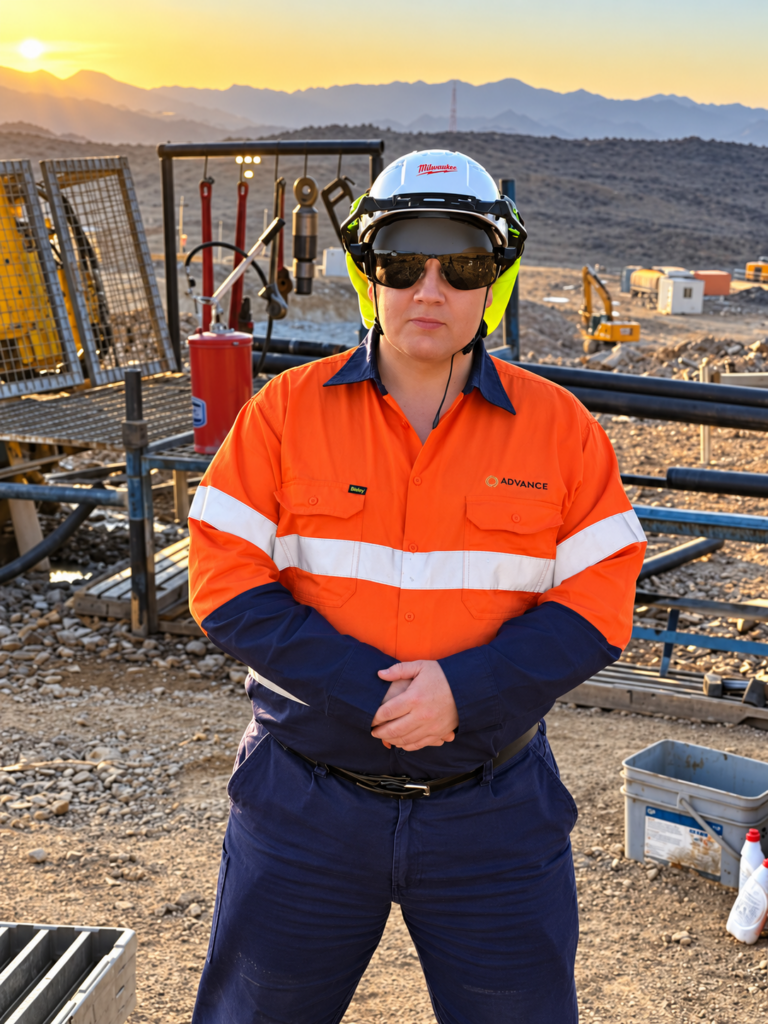
Automation, Directional Drilling, and Vision 2030
With Saudi Arabia seeking to establish mining as the third pillar of its industrial economy under Vision 2030, Kempe sees technology as central to what a mature, world-class drilling capability in the Arabian Shield should look like.
“Automation is developing very rapidly in our industry,” he said. “I see a future where all the heavy and more dangerous work could be removed — where the driller could potentially sit in an air-conditioned cabin, protected from extreme heat, dust, and the elements.”
Advance Drilling is already moving in that direction: the company will commission computerized drill rigs for underground use in the fourth quarter of this year.
Directional drilling is another technology Kempe expects to play a growing role, particularly for deeper deposits.
“It improves accuracy in hitting targets and reduces the total number of meters required for a programme. We’ve already gained some experience in this area, and we’re ready to support exploration efforts with this technology where it can be beneficial.”
www.advancedrilling.com.sa