


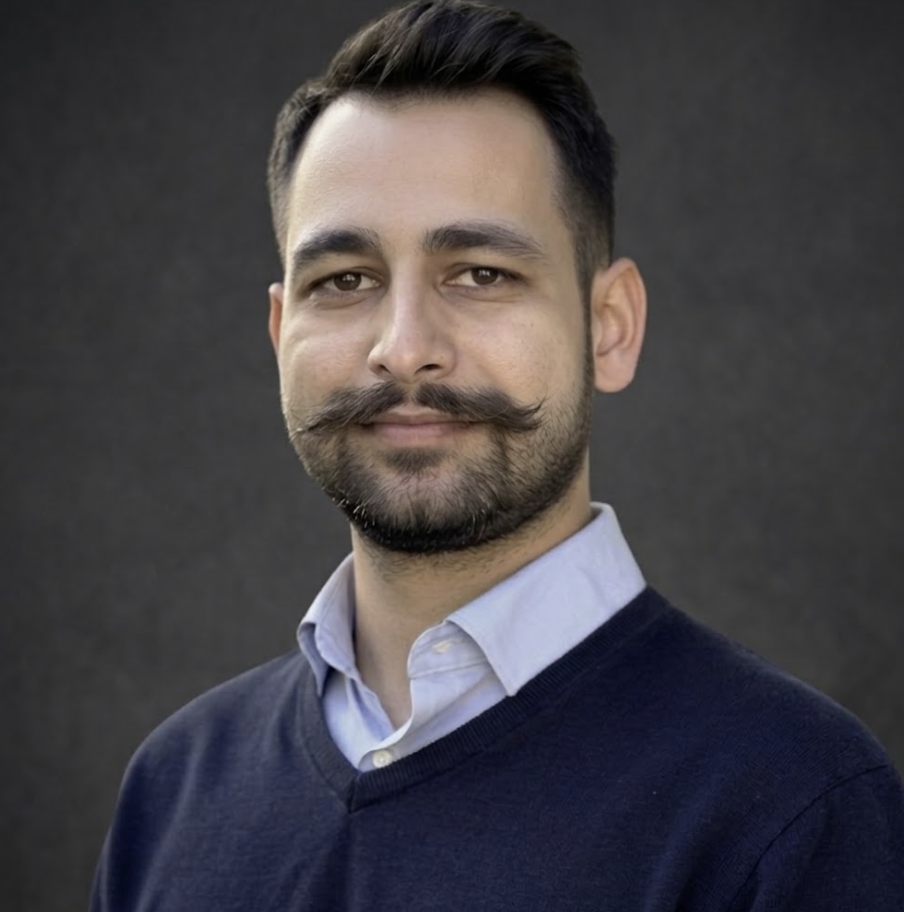
Europump’s Dennis Ocal on why the world’s energy transition needs to stop waiting — and start converting
The debate around the global energy transition often feels like a war of absolutes. Electrify everything. Hydrogen is the future. Fossil fuels must go. But step into a conversation with Dennis Ocal, CEO of Europump — the Milan-headquartered energy infrastructure company with over three decades in the fueling industry — and a far more pragmatic picture emerges.
“The policy narrative in Europe is heavily focused on electrification and hydrogen,” Ocal says, leaning into the kind of bluntness that only comes from 30 years of watching grand promises meet hard infrastructure realities. “But the electrical grids are not ready. The charging stations are not ready. And hundreds of millions of internal combustion engines are already on the road — today.”
The Chicken and the Egg
It is a classic infrastructure dilemma: manufacturers won’t commit until consumers demand it, and consumers won’t demand what doesn’t yet exist. Ocal calls it the “chicken and the egg” — and argues that in the rush to leap toward tomorrow, policymakers are ignoring a perfectly serviceable bridge that’s already been built. That bridge is LPG.
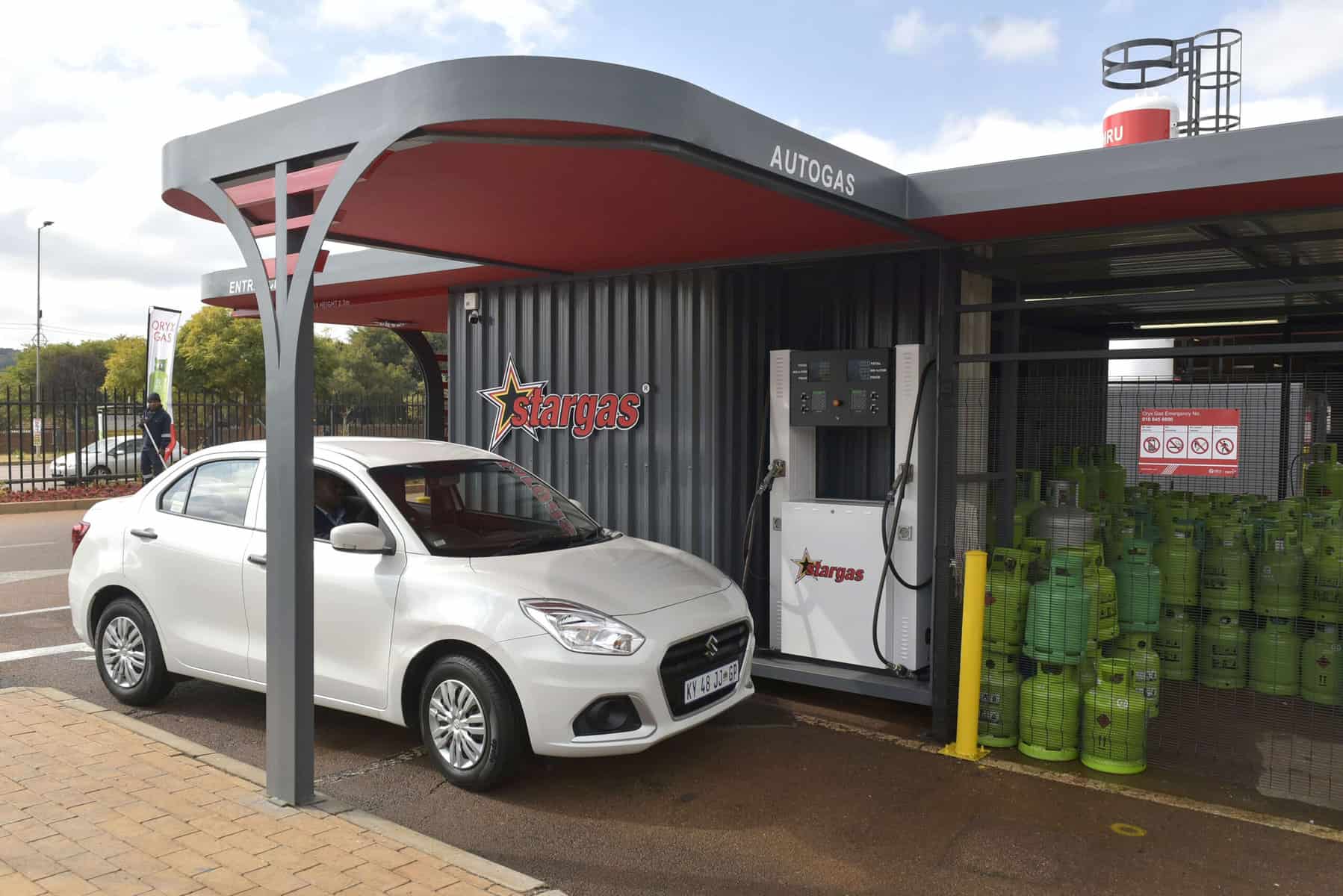
Liquefied Petroleum Gas — often dismissed as old technology — is, in Ocal’s view, one of the most underutilised tools in the global clean energy toolkit. In Italy alone, there are over 4500 LPG filling points already operational, part of a distribution network built by the Europump group’s Spark System Auto Gas division. Converting a traditional internal combustion engine to run on LPG or CNG takes a conversion kit and a fraction of the cost of buying a new electric vehicle.
The numbers are difficult to argue with. While gasoline prices in Europe have surpassed €2 per litre, LPG currently sits at around 80 cents per litre — and cuts carbon dioxide emissions by up to 20%. “We are not asking governments to build something new,” Ocal says. “We are asking them to use what already exists.”
Bio LPG: The Renewable Nobody Talks About
The environmental case for LPG grows even stronger when Bio LPG enters the equation. Chemically identical to conventional LPG, Bio LPG is derived from renewable feedstocks — rapeseed, agricultural crops, organic waste — and can flow through existing LPG infrastructure without modification.
This matters enormously in emerging markets. In Nigeria, LPG depots already supply cooking gas to millions of households. With minimal conversion, those same facilities could simultaneously become auto-gas stations — reducing deforestation from charcoal use, lowering urban carbon emissions, and building a local clean-mobility ecosystem without a single kilometre of new pipeline.
Ocal is careful not to oversell it. “Awareness is a real challenge,” he says. “In Tanzania, for example, many people simply do not know that you can run a car on LPG. You need safety training programmes, government incentives, and proper consumer education. The technology is ready. The infrastructure conversation needs to catch up.”
From Pump Manufacturer to Energy Consultant
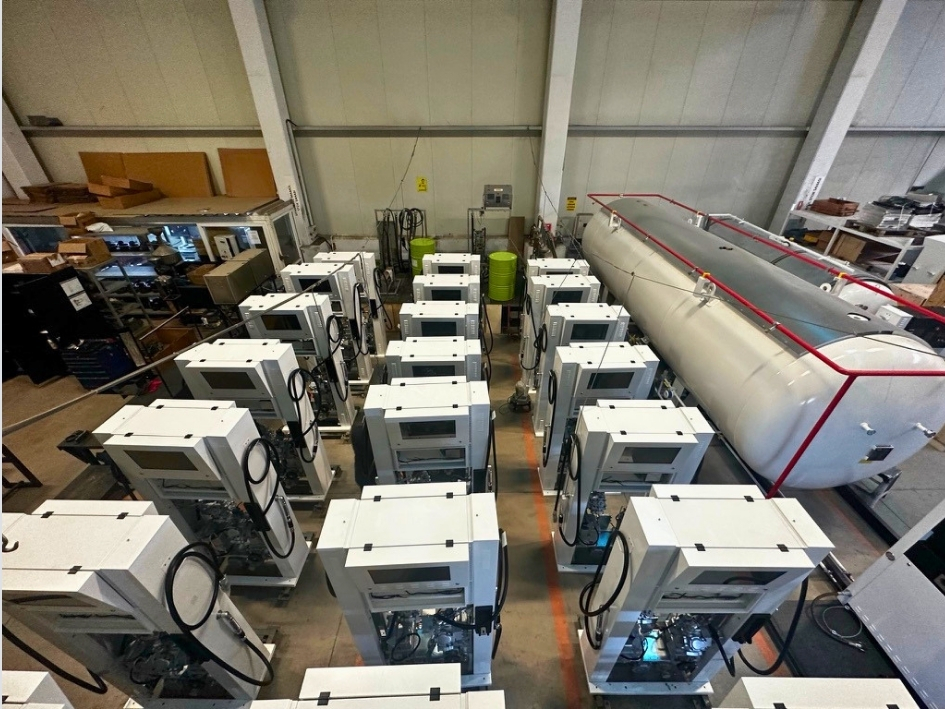
Europump has itself undergone a significant transformation. Founded over 30 years ago as a specialist pump manufacturer based in Milan, the company has evolved — through deliberate vertical integration — into what Ocal describes as an energy consulting and project company. Where it once supplied equipment, it now manages procurement and operations across upstream, midstream, and downstream sectors.
“We are not just selling a pump,” he says. “We are the partner who helps a country or a company understand its energy options and build for the next 20 years.”
This shift is reflected in the company’s technological investments. Europump has moved toward Coriolis mass flow measurement — a technology that provides real-time temperature and density compensation, delivering accuracy within 0.2%. Compared to conventional positive displacement meters used in most gasoline or diesel dispensers, it represents a meaningful leap in inventory management. Paired with magneto-restrictive level gauge probes integrated directly into tanks, operators can cross-calibrate dispenser outputs against tank levels in real time, receiving millimetre-accurate data through cloud-based dashboards.
For mature markets, Ocal explains, the demand is for AI-driven analytics, cloud reporting, and automated wet stock control. For developing markets, the priorities are inverted: simplicity, durability, and equipment engineered to operate reliably for 10 to 20 years in remote locations where service technicians cannot easily travel. Managing both realities simultaneously — from a headquarters in Milan, with late-night calls to South American partners and weekend sessions supporting Southeast Asian clients — is a logistical feat that Ocal describes with the matter-of-fact composure of someone long accustomed to operating across time zones.
Geopolitics as a Catalyst
The 2022 invasion of Ukraine was a turning point — not just geopolitically, but commercially. For Europump, demand for LPG vaporizers surged as nations that had previously relied on centralised pipeline networks began urgently seeking decentralised energy alternatives. Ocal was watching closely.
“Energy security became the primary investment driver almost overnight,” he recalls. “Countries started asking: how do we make ourselves independent? How do we build a network that cannot be switched off by a pipeline blockage?”
Ongoing instability in the Gulf — disrupting shipping lanes and driving oil price volatility — has deepened that urgency. The result, Ocal argues, is a once-in-a-generation opportunity to make the case for distributed LPG and CNG infrastructure as not merely an energy solution, but a national security one.
Investors, too, are paying closer attention. When asked about the spectre of stranded assets — a legitimate concern in an era of rapid energy transition — Ocal offers a pointed contrast: a hydrogen dispenser today costs several hundred thousand euros and depends on infrastructure that remains largely theoretical outside a handful of pilot projects. An LPG tank, by comparison, can be integrated into an existing forecourt at a fraction of the cost, using established technology, serving established demand.
“LPG is not a stranded asset risk,” he says flatly. “The unproven, billion-euro infrastructure project is.”
The Three-Tier Future
None of this means Ocal is opposed to electrification or hydrogen. His vision for the future is not a retreat to the past — it is a more honest accounting of what is achievable, and when.
“The best path forward is a multi-tiered structure,” he says. “Electric vehicles, hydrogen, LPG, and CNG — coexisting, supported by government-led awareness campaigns, safety incentives, and realistic subsidies. You do not force an entire world to make a single transition simultaneously. You use every tool available.”
It is, in essence, an argument for energy pluralism in an era of energy ideology. And coming from a man who has spent three decades building the infrastructure that powers millions of vehicles across dozens of countries — quietly, practically, without fanfare — it carries a weight that no policy paper quite manages to replicate.
The gas station of the future, Dennis Ocal suggests, might look very much like the one that already exists. It just needs to be seen more clearly.
Europump is headquartered in Milan, Italy, and operates across markets in Europe, Africa, Latin America, and Southeast Asia.
www.europumpitalia.com