


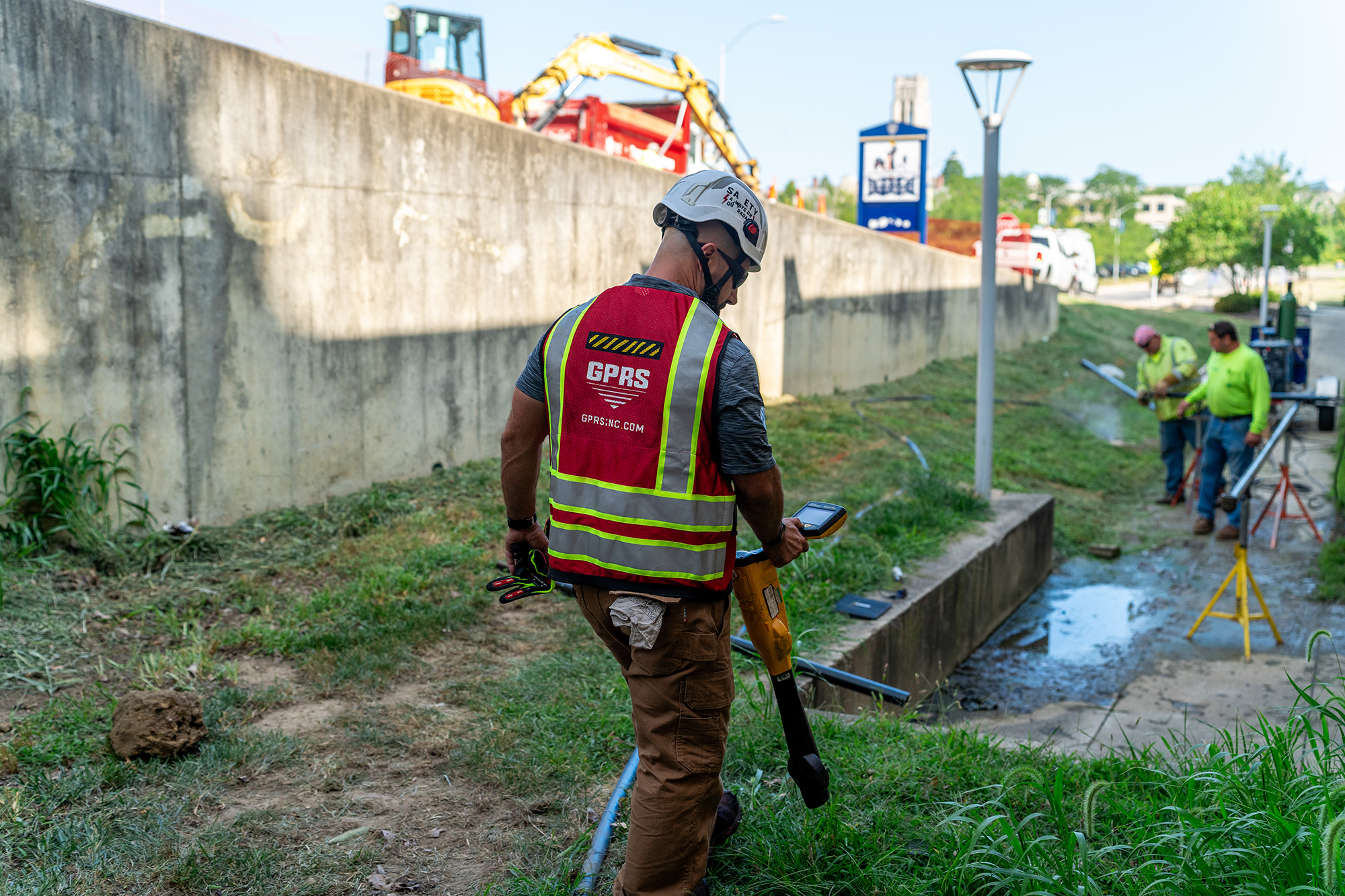
How Matt Aston, GPRS and Screening Eagle are turning subsurface uncertainty into safer, smarter infrastructure decisions
Founded with a single radar unit and a determination to prevent avoidable damage, GPRS has grown into a nationwide infrastructure intelligence business.
Its relationship with Screening Eagle Technologies demonstrates why the best results emerge when advanced equipment, disciplined training and clear digital workflows operate as one system.
A Problem Worth Preventing
Some of the strongest businesses begin with a problem their founder cannot ignore.
For Matt Aston, that problem was cutting into concrete without reliable knowledge of what lay inside it. Around his father’s concrete business, Aston saw how inaccurate drawings could place people, programmes and budgets at risk. A live electrical line was not where the plans said it should be. The incident was avoided, but the lesson remained.
Years later, an advertisement for ground penetrating radar gave Aston a way to revisit that experience.
The technology could detect rebar, post-tension cables, conduits and other hidden objects without damaging the structure. In 2001, he founded Ground Penetrating Radar Systems, better known as GPRS, with one scanning unit in northwest Ohio.
His guiding idea was preventative rather than reactive. As Aston later put it, he was interested in “fixing the flaw, instead of merely cleaning up the mess.”
That distinction still defines the company.
GPRS is not selling radar traces for their own sake. It is selling confidence before a contractor digs, drills, cuts or cores. The value lies in the incident avoided and the decision made with better evidence.
From Scanning Service to Infrastructure Intelligence
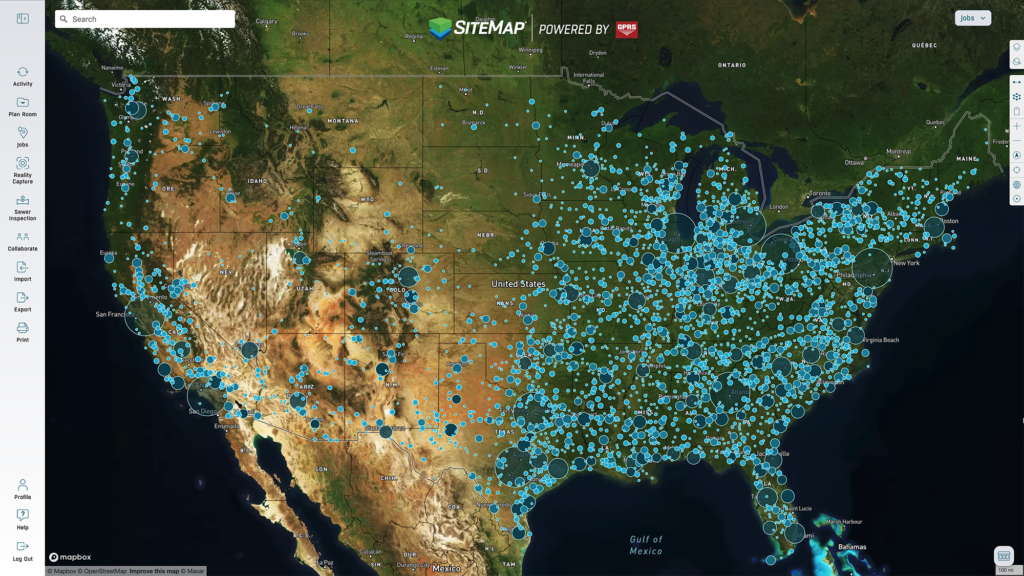
Over 25 years, GPRS has taken that proposition nationwide.
Its project managers operate across all 50 states, supporting contractors, utilities, architects, engineers and facility owners.
The portfolio now extends beyond utility locating and concrete scanning to video pipe inspection, leak detection, 3D laser scanning, drone imagery, and mapping and modelling.
Together, these services reveal the condition of an asset above ground, below ground and within the structure itself.
Scale would mean little without repeatability. GPRS therefore built its operating model around the Subsurface Investigation Methodology, or SIM.
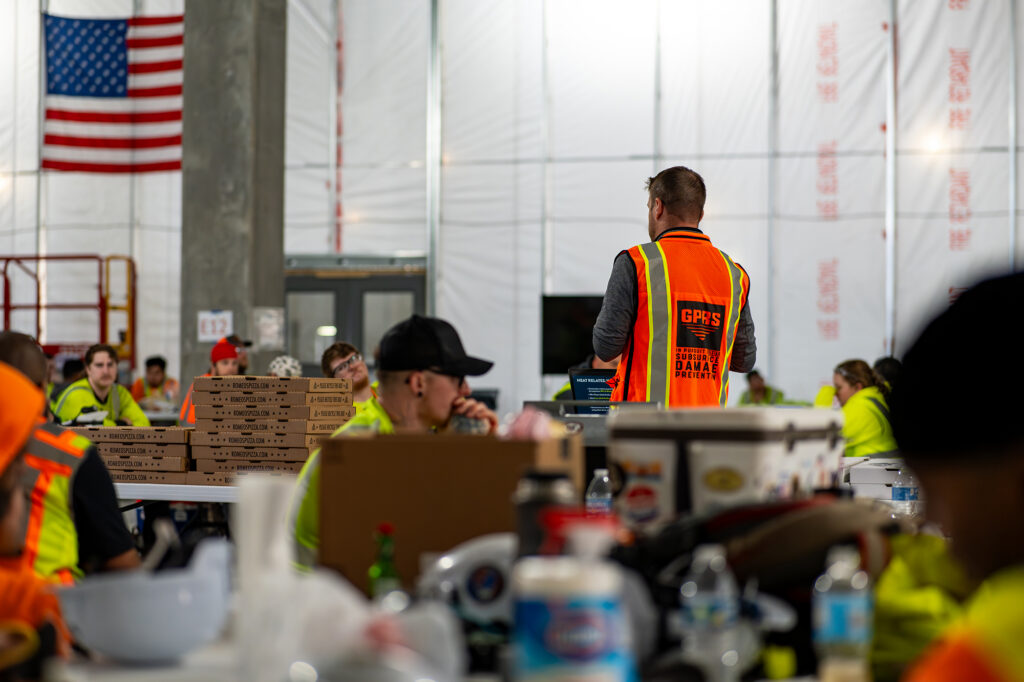
Project managers complete 80 hours of classroom education and 320 hours of mentored field training, while the methodology uses multiple technologies and a defined process to create redundancy in the investigation.
According to GPRS, that approach has supported an accuracy rate above 99.8% across more than 500,000 utility-locating and concrete-scanning projects.
Equipment is never treated as a substitute for judgement.
Radar data must be collected correctly, interpreted by trained people and tested against complementary information. This makes supplier relationships strategically important. A national service provider needs technology partners that improve fieldwork while making data easier to understand, share and retain.
Why the Screening Eagle Relationship Works
Screening Eagle Technologies is a natural fit because its philosophy mirrors the GPRS model.
Created through the merger of Swiss non-destructive testing specialist Proceq and Singapore software company Dreamlab, Screening Eagle combines sensors, software and data to protect the built world.
GPRS combines trained people, repeatable methodology and digital delivery to prevent damage. Both businesses believe infrastructure decisions improve when hidden conditions become visible.
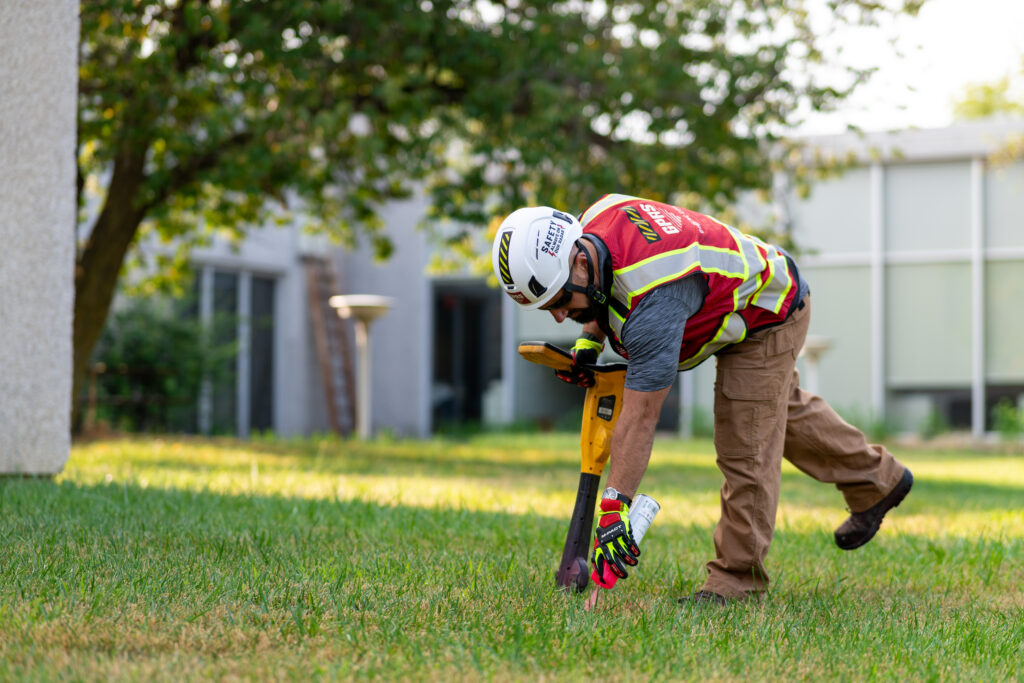
The Proceq GP8800 illustrates the practical value of the relationship.
Used by GPRS for concrete scanning, the compact radar unit provides high-resolution structural imaging in difficult spaces, including close to walls, beneath pipes and across irregular surfaces.
Its stepped-frequency continuous-wave technology helps operators examine shallow and deeper features in one scan.
Three-dimensional visualisation, augmented reality, digital annotations and shareable reporting turn a technical measurement into information the project team can use.
That combination matters on a live job site.
Portability improves access, data clarity supports interpretation and connected software reduces friction between capture, review and delivery.
For GPRS, whose reputation depends on consistent performance across a national workforce, those benefits are operational rather than cosmetic.
The relationship also works because each side contributes something the other cannot create alone.
Screening Eagle develops specialist hardware and software; GPRS applies technology at extraordinary field scale.
Every scan exposes equipment to different structures, materials, access constraints and customer requirements. That creates a valuable feedback loop between product innovation and practical use.
GPRS benefits from a forward-looking supplier, while Screening Eagle gains insight from experienced operators working in demanding real-world conditions.
Turning Field Data Into a Lasting Asset
Aston’s wider ambition is visible in SiteMap, GPRS’s cloud-based infrastructure management platform.
Instead of allowing a locate or scan to become another isolated PDF, SiteMap brings georeferenced utility data, site photographs, video, CAD files and building information models into one accessible environment.
In 2026, SiteMap 3.0 added further mobile and augmented-reality capabilities, helping users carry subsurface intelligence back into planning meetings and site walks.
This shift changes the economic life of the information.
A concrete scan may begin as a safety requirement for today’s core drilling. Properly captured and organised, however, it can also inform tomorrow’s refurbishment, maintenance or extension.
The same is true of a utility map, pipe inspection or point cloud.
GPRS is moving from one-time detection towards a living record of the built environment.
Screening Eagle’s emphasis on connected inspection complements that direction.
The partnership is strongest not because one company supplies a device to another, but because both recognise that the sensor is only the beginning.
The real outcome is trusted data moving efficiently from the physical asset to the people responsible for it.
Leadership With Prevention at Its Core
Aston’s achievement has been to scale a technical service without losing sight of its human purpose.
GPRS has grown through new markets, services, acquisitions and software, yet the original question remains simple: what does the team need to know before work begins?
That clarity gives the business a durable centre as technology changes around it.
The next phase will bring more automation, artificial intelligence, robotics and immersive visualisation to construction and facilities management.
Those tools will be valuable only if they increase trust rather than complexity.
GPRS’s model offers a useful answer: combine advanced sensors with rigorous training, a repeatable methodology and a platform that keeps information available beyond the immediate job.
That is also why Screening Eagle works as a partner.
Its technology strengthens the moment of capture; GPRS supplies the field expertise, operating discipline and customer context that turn capture into action.
Together, they demonstrate a more intelligent approach to the built world: see the risk earlier, share the evidence faster and prevent the problem before it becomes a cost, a delay or an injury.