



Business Enquirer speaks with Carl Wiggman, CEO of Print Studios, about AI, outsourcing, and why staying small might be the smartest growth strategy in iGaming.
The online gambling content industry has spent the better part of a decade optimizing for volume — more titles, faster releases, cheaper production. Carl Wiggman, CEO of Print Studios, speaking with Business Enquirer’s Zaakira Ebrahim, argues that this race has created an opening for studios willing to do the opposite.
Print Studios, the outfit Wiggman leads as CEO, has built its identity around craftsmanship rather than output, a stance that shapes everything from how it uses artificial intelligence to how many people it plans to hire.
An Industry That Can No Longer Hide
Wiggman opened by describing a fundamental shift in how gaming studios operate in public. Where the industry once ran on low transparency, he said, it now exists under near-constant visibility — and that means a studio’s internal culture and its external product can no longer drift apart.
He pointed to three studios as case studies in identity. No Limit City, he noted, projects its game culture directly through its social presence. Games Global, by contrast, has cultivated something closer to a corporate, Formula One-style brand. Shady Lady, meanwhile, operates behind an entirely digital persona. For Wiggman, the lesson is the same in each case: culture and product have to match, because audiences now see both.
Why Outsourcing Struggles With Original Ideas
Cost was the next battleground. Wiggman was direct about the trade-offs between in-house development and outsourced, volume-driven production models. Outsourcing, he said, is genuinely cheaper — and it works well when a studio is replicating a mechanic that has already proven itself in the market.
Where it breaks down is originality. Executing a genuinely new concept through external partners, Wiggman explained, is both harder and more expensive than doing it in-house. Novel ideas don’t compress easily into the templated pipelines that make outsourcing cost-effective in the first place, which is a large part of why Print Studios keeps its concepting close to home.
“AI hasn’t lowered the bar for releasing games. It has raised the bar for standing out.”
AI as a Research Tool, Not a Shortcut
Given how much of the industry conversation now centers on artificial intelligence, Business Enquirer pressed Wiggman on how his studio actually uses it. His answer was narrower than some might expect: Print Studios does not build with web-app tools like Lovable. Instead, it uses AI — advanced versions of Midjourney among them — strictly during research and concepting.
The value, he said, is in inspiration and art referencing. Rather than sourcing existing, specific images and risking the legal and creative baggage that comes with that, the team can generate original reference material to work from.
Has AI made it easier to ship games? Not exactly, according to Wiggman. It hasn’t lowered the bar for releasing titles — but it has raised the bar for standing out. That pressure is felt most acutely by a studio like his, which has deliberately chosen quality over quantity in a market where competitors are shipping constantly.
Borrowing From Video Games, Without Losing the Gamble
Wiggman also addressed the growing influence of video game design on casino mechanics — a trend visible across the industry. His framing was careful: video game mechanics are inspiration, not a blueprint to copy wholesale. The test for anything Print Studios adapts isn’t whether it’s fun to play in the abstract, but whether it’s fun to gamble on.
Practically, that means the studio looks for gambling-like moments in external entertainment experiences — video games chief among them — and translates those specific moments into digital casino titles, rather than importing an entire game system and hoping it fits.
Letting Veterans Return to Their Craft
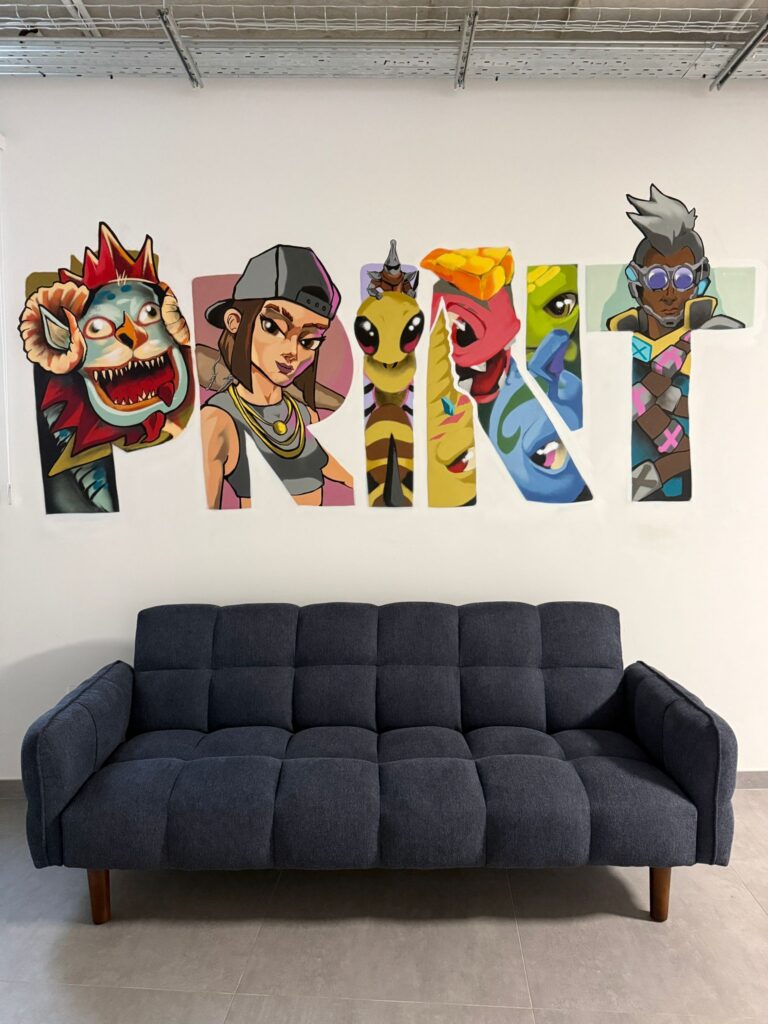
Asked why the studio resists scaling up production, Wiggman traced it back to its people. Print Studios is staffed largely by industry veterans who, at larger studios, had moved into management roles overseeing other people’s work. Print Studios’ approach inverts that: it puts those experts back into hands-on creative work rather than administrative oversight.
The result, in Wiggman’s telling, is a team better equipped to take on genuinely complex creative challenges — because the people solving those problems are the same people with the deepest experience solving them, not managers relaying instructions.
Pairing Unique Mechanics With Unique Themes
On competitive strategy, Wiggman described a deliberate departure from industry norms. Many studios, he said, pair a unique mechanic with a generic, familiar theme — a safe combination designed not to alienate players. Print Studios does the opposite, marrying unique mechanics with unique themes in an effort to build something closer to a new franchise or original intellectual property.
It’s a riskier approach, but one aimed squarely at differentiation in a market where “unique but safe” has become the industry default.
A Netflix-Style Approach to Talent
Wiggman’s leadership philosophy, he said, owes something to Netflix’s well-known approach to talent management: rather than building rigid policies designed to keep the lowest-performing employees in line, the studio extends freedom and trust to its top performers.
That trust, he argued, is what allows a small team to punch above its weight — producing more games per person than a conventional studio structure would typically allow, without sacrificing the craftsmanship the studio is built around.
What Comes Next: Staying Small, Building In-House
Looking ahead, Wiggman was candid about Print Studios’ near-term plans. The company intends to stay a tight-knit operation of roughly 26 people rather than scaling headcount aggressively.
The bigger strategic move is technical: Print Studios is developing its own internal Remote Game Server (RGS), a shift that would reduce its reliance on external partners such as Relax Gaming. Alongside that infrastructure build, Wiggman confirmed plans to expand into non-slot gambling titles — details of which remain unannounced.
Taken together, the roadmap suggests a studio betting that independence and craftsmanship, not scale, will be the differentiators that matter as the iGaming content market matures.
www.printstudios.com