


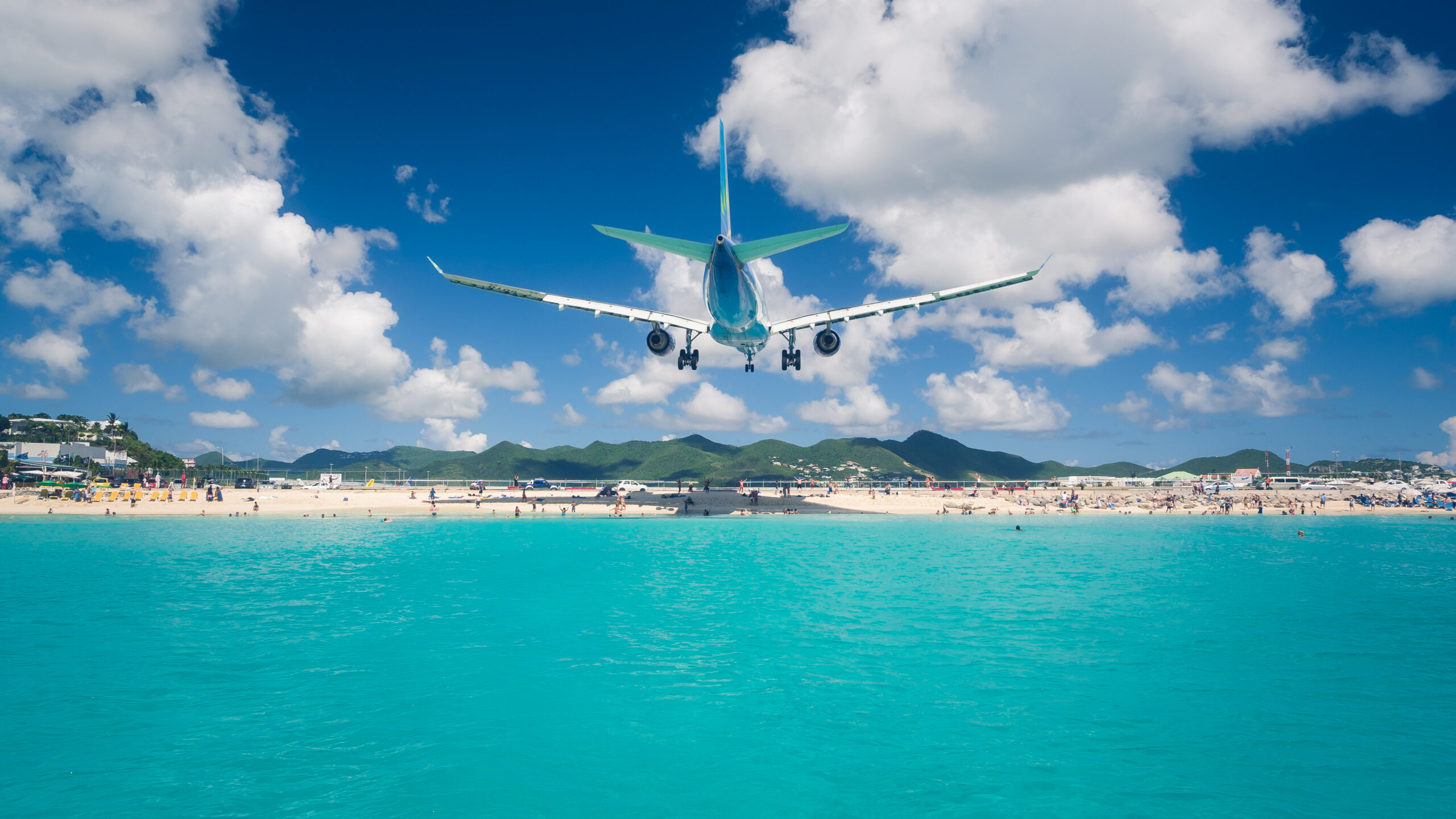
Business Enquirer speaks with May-Ling Chun, Director of the St. Maarten Tourism Bureau, about connectivity, culinary identity and building a smarter, more sustainable destination.
There are few places in the world where a traveller can cross an international border on foot, without a checkpoint, and find themselves in an entirely different culture, language and cuisine by lunchtime.
St. Maarten/Saint-Martin has built its global identity around exactly that duality and, according to May-Ling Chun, Director of the Tourism Bureau, it remains the single biggest differentiator in an increasingly crowded Caribbean market.
“Our unique position is our dual-nation product,” Chun told Business Enquirer. “It’s always promoted as Saint-Martin, Dutch and French, and there’s nothing like it in the world. This isn’t just how we identify ourselves. It comes from the guests, the visitors and journalists who discover it and speak about it too.”
That dual identity is layered on top of another distinguishing feature: a resident population representing more than one hundred nationalities, living and working together across generations.
Chun says these traits give St. Maarten a foundation that goes well beyond the traditional sun, sand and sea proposition.

Beyond the Beach
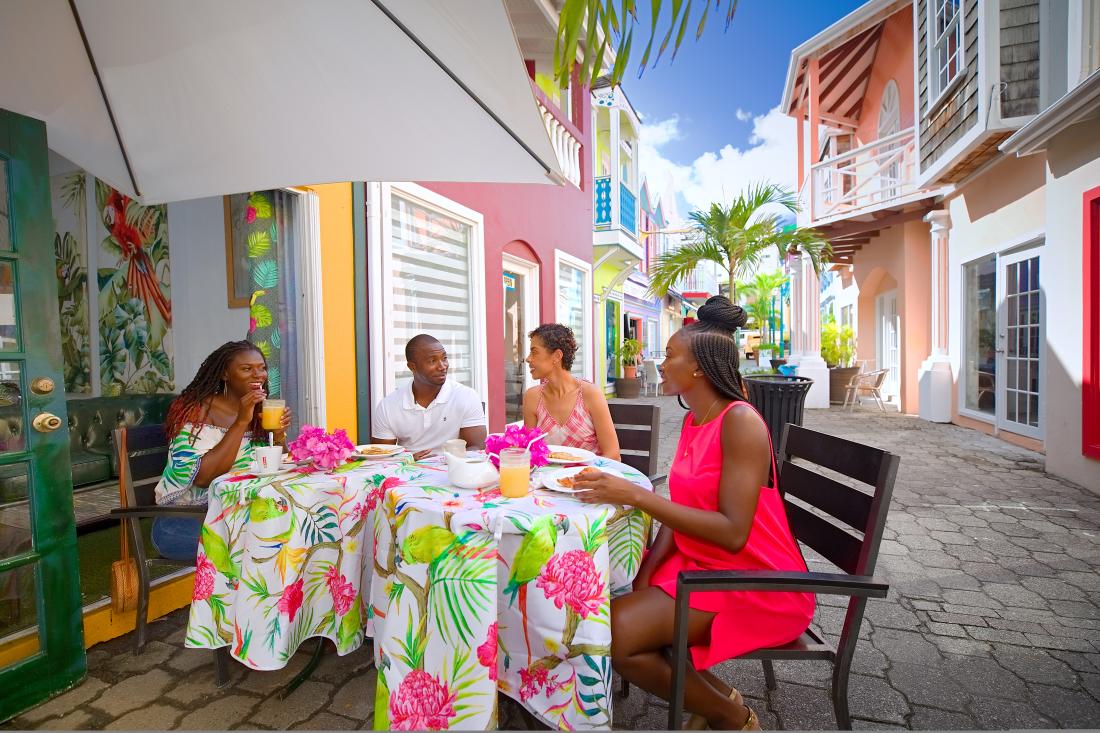
While the island’s beaches remain central to its appeal, the Tourism Bureau is actively steering its proposition towards what Chun describes as culinary tourism, cultural experiences, wellness and authentic community immersion.
“The trend nowadays is that visitors are seeking a more cultural experience,” she said. “These characteristics allow us to attract today’s experience-driven traveller, while creating more opportunities for our local entrepreneurs.”
That entrepreneurial dimension is a deliberate policy focus. St. Maarten’s tourism strategy leans heavily on its network of MSMEs, or micro, small and medium enterprises, which the Bureau is actively training and supporting to increase their role in the visitor economy.
“The jobs, the product, it’s there,” Chun said. “Entrepreneurs are being trained and helped more and more to increase their involvement. That’s definitely a positive trend moving forward.”
The Regional Gateway
Connectivity remains the backbone of the island’s tourism model, and Chun is quick to point out that St. Maarten’s ambitions extend well beyond its own shorelines.
“Airlift is fundamental to us, and not solely as a destination. We are the regional gateway,” she said. “We always say we are the northeast hub of the Caribbean, but we’re really the regional gateway.”
The Tourism Bureau’s airlift strategy centres on strengthening its core North American and European markets while actively cultivating new demand from Canada and, this year in particular, South America, a market Chun says presents a clear opportunity given its geographic proximity. The wider Caribbean region is also part of that expansion push.
Central to this strategy is a close working relationship with Princess Juliana International Airport.
“They are our partners in this,” Chun explained. “Together we basically decide on new airline partners, strategise on new routes, and always have ongoing talks with airlines from all over to see the opportunities we can create.”
One current priority is smoothing out seasonal troughs.
“We’ve been making the slow season smaller, trying to fill that gap so that in slower months we can get more frequency or new airline opportunities coming to the island,” she said.
That gateway function is reinforced by Winair, St. Maarten’s national carrier, which connects the island to more than 16 destinations across the region, alongside regional partners such as InterCaribbean.
“A lot of the surrounding islands use our gateway as the gateway to connect to their islands, or to make combination experiences,” Chun noted.
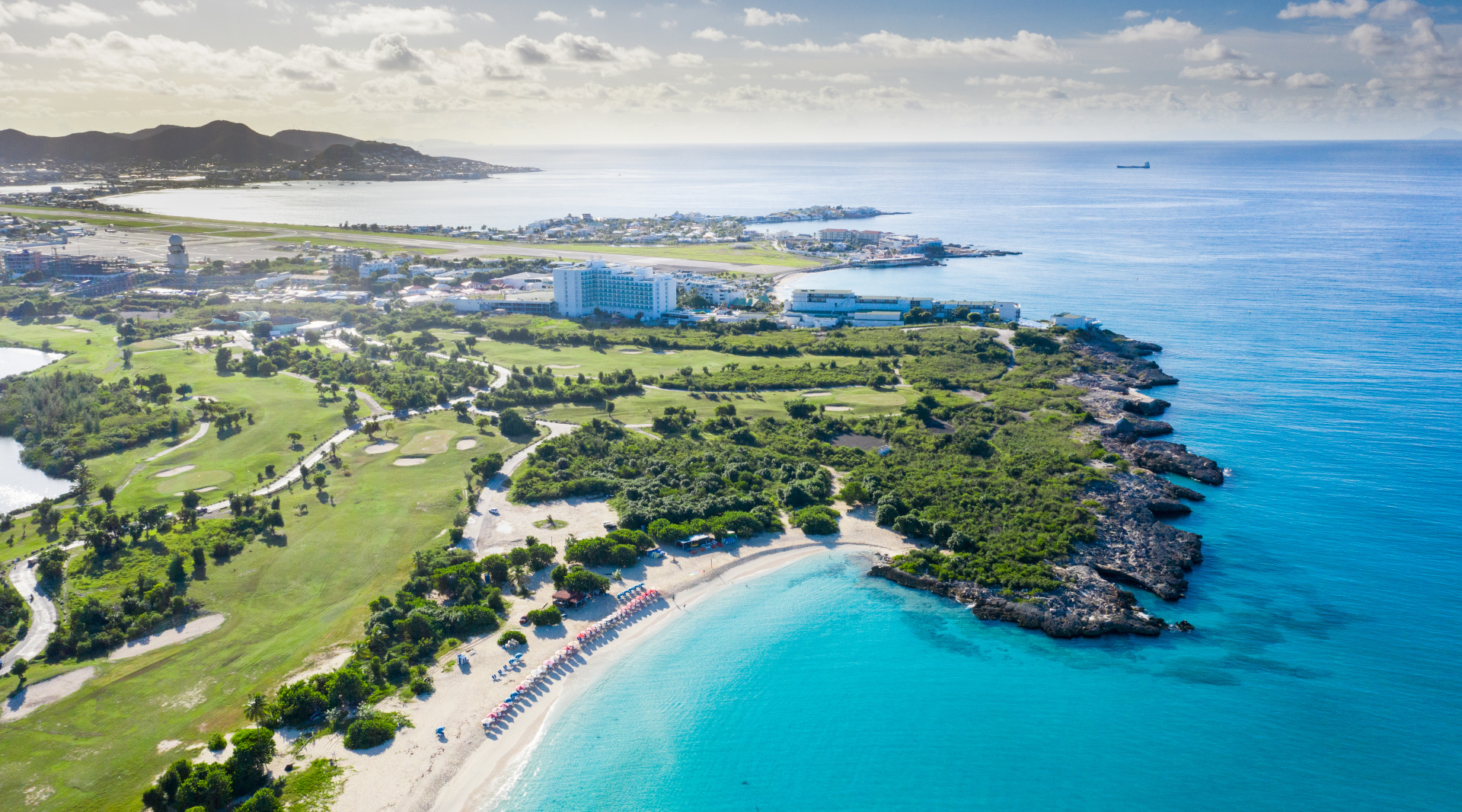
Princess Juliana International Airport: The Gateway Rebuilt
No conversation about St. Maarten’s tourism strategy is complete without Princess Juliana International Airport, or SXM.
Located in Simpson Bay on the Dutch side of the island, PJIA has spent much of the last decade rebuilding, both physically and reputationally, into what officials now describe as the Caribbean’s northeast aviation hub.
The airport’s modern story is inseparable from Hurricane Irma, which devastated the terminal in 2017. Reconstruction unfolded in careful phases because the facility had to remain operational throughout.
Temporary arrival and departure facilities opened on the terminal’s first level in December 2018, while the full upper floor and its four jet bridges, capable of accommodating wide-body aircraft, returned to service in November 2023.
The rebuilt check-in area opened in January 2024, followed by a newly reconstructed arrival hall in October 2024, featuring upgraded baggage handling and streamlined immigration and customs processing.
The roughly 30,000-square-metre terminal reconstruction was funded through loans from the World Bank and European Investment Bank, with construction carried out by Ballast Nedam.
That rebuilt capacity is now being matched by rising airline demand.
American Airlines, Delta, United and JetBlue all operate regular services from major US hubs including Miami, Charlotte, Atlanta, Newark, Houston, New York JFK and Boston.
Air Canada and Air Transat add seasonal Canadian services from Toronto and Montréal, while Air France and KLM maintain direct European links from Paris and Amsterdam respectively.
Southwest Airlines entered the market as a notable recent addition, launching daily service from Orlando in April 2026, its first new international destination since 2021, followed by weekend flights from Baltimore/Washington.
In July 2026, Contour Airlines announced a new twice-weekly nonstop route linking St. Maarten with St. Thomas in the US Virgin Islands from October, alongside an expansion of its San Juan operations.
“Every new route strengthens the connectivity that is so vital to island communities,” said PJIA Chief Executive Officer Michael Cleaver. “It strengthens regional ties, expands opportunities for business and tourism, enhances mobility for our residents, and gives travellers greater choice in how they connect across the Caribbean and beyond.”
For inter-island travel, Winair remains the workhorse of the regional network, operating scheduled services from PJIA to Anguilla, St. Barths, Saba, Sint Eustatius and Dominica, reinforcing the airport’s role not just as St. Maarten’s front door, but as connective tissue for the wider northeast Caribbean.
Investment With Intention
With St. Maarten now a mature tourism market, Chun describes the island as “pretty congested” in places, making investment policy a matter of precision rather than volume.
“We see the opportunities more in boutique and lifestyle hotels, branded resorts, luxury villas, wellness concepts, mixed-use developments, and the upgrading of existing properties,” she said.
Incentive structures are designed to encourage owners of existing hotels to elevate their offering rather than simply add new rooms to the market.
The underlying philosophy is one of balance.
“We’re interested in investment that raises the quality of the visitor experience, but also incorporates sustainability and creates meaningful local employment,” Chun said.
“You can bring tourism, but you have to balance it so the community benefits from it as well, job creation, economic development. With St. Maarten’s strong connectivity and international appeal, we’re in a good position to be very specific about what we want to attract.”
Dispersing the Crowds
Yachting and cruise tourism remain pillars of the island’s visitor economy, supported by close partnerships with the Port of St. Maarten and the island’s marinas.
But the Bureau’s current focus is on spreading the benefits of that traffic more evenly across the island.
“There’s an important priority in dispersing visitors beyond the traditional areas, and bringing them more toward culinary, cultural and community-based experiences,” Chun said.
The Bureau is examining which areas are already saturated with visitor activity and actively working to divert traffic towards inland areas and lesser-known experiences, from hiking trails to wellness offerings.
“This way they get a much better experience,” she said.
Sustainability as a Long Game
Asked about environmental responsibility, Chun framed sustainability as an ongoing balancing act rather than a finished initiative.
“Sustainability means balancing economic growth with environmental protection in a way that benefits our residents,” she said.
The Bureau’s current direction includes encouraging responsible business practices, reducing waste, protecting beaches and marina assets, and supporting local sourcing.
“This doesn’t happen overnight,” Chun acknowledged. “It’s continuous collaboration with government, the private sector, residents and visitors.”
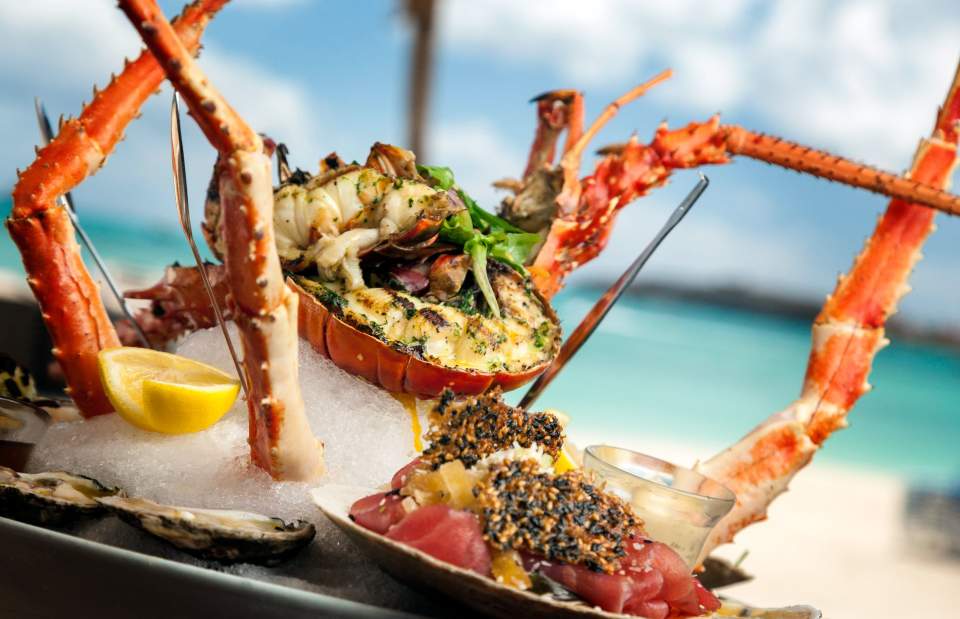
The Culinary Capital of the Caribbean
If there is one identity St. Maarten wears most proudly, it is food.
The island counts more than 360 restaurants, a figure Chun believes has grown as food trucks and community dining experiences have proliferated, while culinary tourism now sits at the centre of the Bureau’s marketing strategy.
Carnival, the island’s largest cultural festival, features more than 75 food booths representing St. Maarten’s ethnic communities.
The Bureau has also built platforms such as St. Martin Flavors to spotlight the island’s food scene, alongside the French side’s annual Gastronomic Festival each November.
“We centralise it into our marketing, from digital marketing to social media to the content creators and media trips we’ve created,” Chun said.
“Whether you come for a date night or a full week, you’ll experience a variety of culinary offerings, farm-to-table dinners, farmers markets, private chefs, even catamaran tours where chefs cook for you while you’re sailing.”
That strategy, she says, has generated significant organic promotion through visitor content on TikTok and Instagram, a channel Chun credits as central to the destination’s appeal.
“People look at social media to see what others think of a destination. I think that’s the success of our marketing strategy as well.”
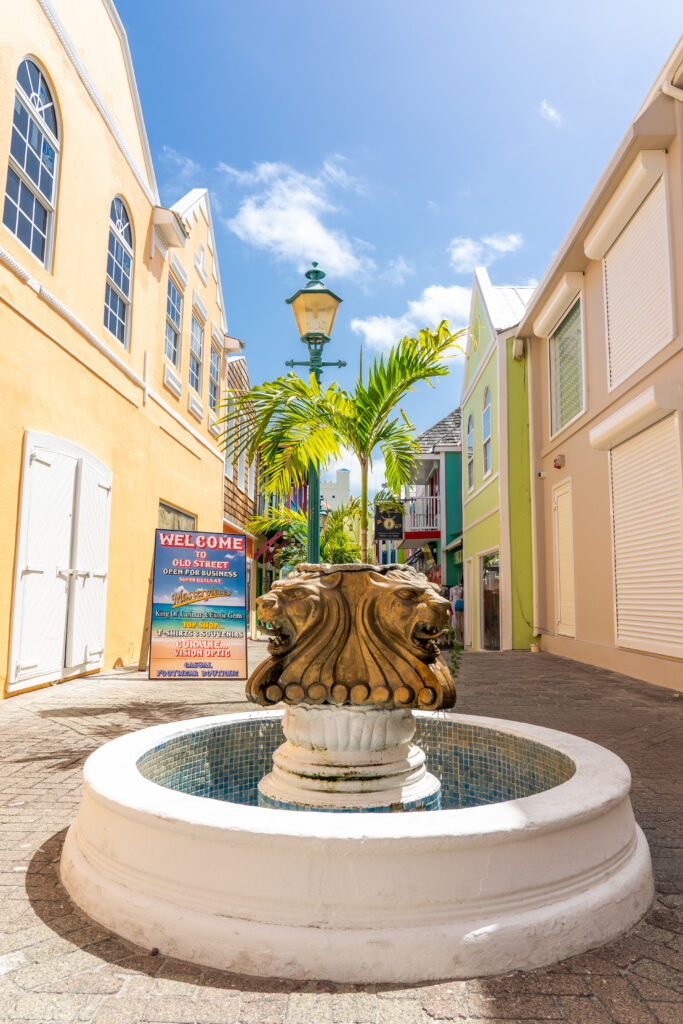
A Destination Without Borders
Asked for final thoughts, Chun returned to the theme that opened the conversation.
“The uniqueness is the Dutch-French side. You’re not going to do only one side of the island. You’re going to come here to a place that has no borders but has history, and you’re going to have such a diverse experience. I think that’s the reason people return.”
“You can have a very active, adventurous stay, or a very relaxing one, wellness, the outdoors, and come back totally revived,” she added. “That’s the beauty of coming to our destination.”