



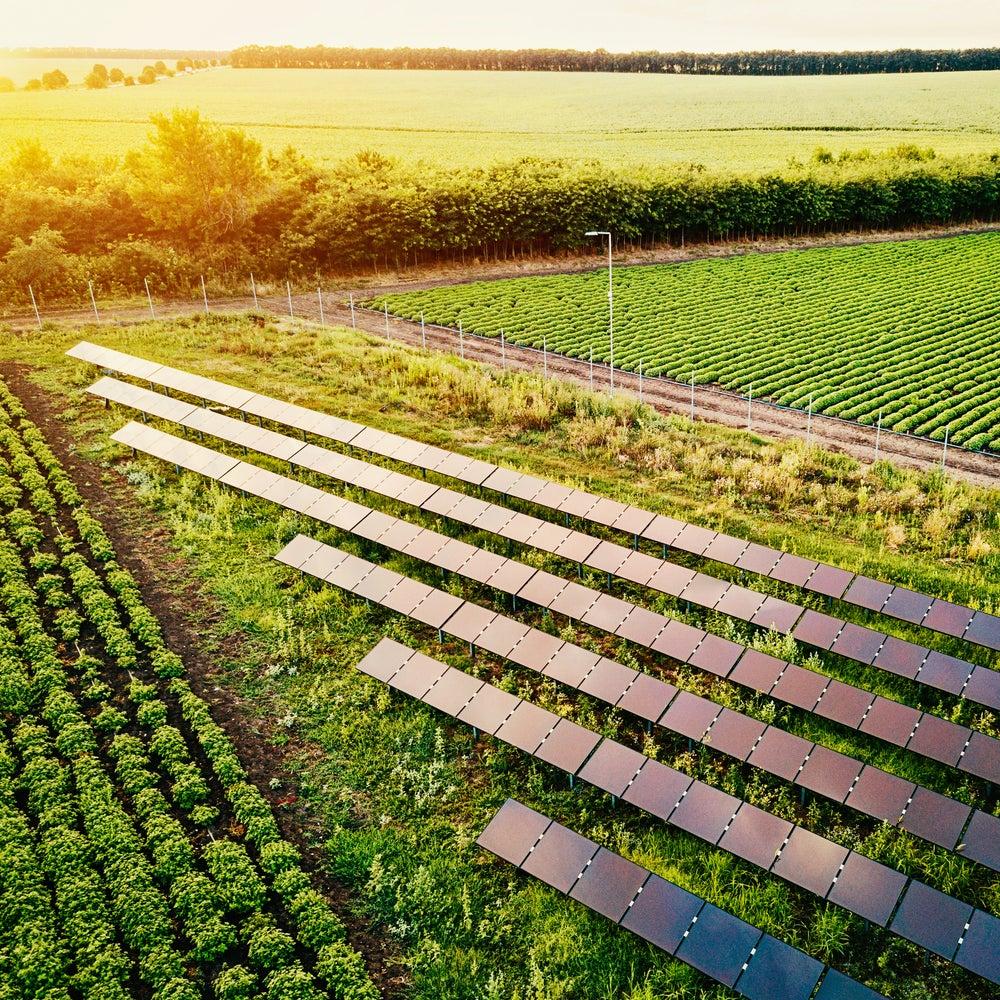
Africa is beginning to reframe one of the most persistent tensions in development: the competition between land for food and land for energy. The launch of the African Agrivoltaics Platform marks a coordinated effort to resolve that tension, bringing together agriculture and solar power in a single, integrated system designed to address both energy access and food security.
Agrivoltaics, the concept at the centre of this initiative, enables solar panels to be installed above or alongside crops, allowing both electricity generation and farming to take place on the same land. Rather than displacing agriculture, solar infrastructure becomes part of it. In environments where land is both valuable and increasingly under pressure, this dual-use approach offers a fundamentally different model for growth.
A Platform Built for Scale

The newly launched platform is designed not as a single project, but as an ecosystem. Developed through collaboration between organisations including the Africa Solar Industry Association and international partners, it aims to act as a central hub for knowledge, policy alignment, and technical guidance.
Its ambition is structural. By bringing together farmers, developers, researchers, and policymakers, the platform seeks to create the conditions necessary for agrivoltaics to scale across the continent. This includes standardising project models, improving access to data, and strengthening the investment case for what remains, in many regions, an emerging technology.
At a time when Africa faces simultaneous challenges around energy access and agricultural resilience, the need for coordinated solutions is becoming increasingly urgent. Agrivoltaics is being positioned as one of the few approaches capable of addressing both.
More Than Energy: A Climate and Productivity Solution

The appeal of agrivoltaics lies not only in its efficiency, but in its impact. Solar panels can provide partial shade, reducing heat stress on crops and limiting water evaporation from the soil, factors that are increasingly critical in regions affected by rising temperatures and unpredictable rainfall.
In some cases, this microclimate effect can enhance productivity, improving yields while simultaneously generating clean electricity. The energy produced can then be used directly within agricultural operations, powering irrigation systems, cold storage, and processing facilities, creating a more self-sufficient and resilient farming ecosystem.
This dual benefit positions agrivoltaics as more than a renewable energy solution. It becomes a tool for climate adaptation, helping farmers maintain output in increasingly challenging conditions while reducing reliance on external energy sources.
The Barriers to Realisation
Despite its potential, agrivoltaics in Africa remains at an early stage. Pilot projects have demonstrated strong outcomes, but scaling those successes into bankable, investable projects remains a challenge.
Key barriers include limited access to finance, regulatory uncertainty, and gaps in technical expertise. Without clear standards and reliable performance data, investors often struggle to assess risk, slowing the pace of adoption. The platform’s role, therefore, is as much about building confidence as it is about enabling deployment.
This reflects a broader pattern across emerging clean technologies. Innovation alone is not enough. It must be supported by systems that make it investable, scalable, and aligned with local conditions.
A Strategic Opportunity for the Continent
What makes this moment significant is not just the technology itself, but the timing. Africa is uniquely positioned, with abundant sunlight, large areas of arable land, and growing demand for both energy and food. Agrivoltaics offers a way to align these strengths within a single framework.
If successfully implemented, it could redefine how land is used across the continent, transforming farms into energy producers while maintaining, or even enhancing, agricultural output. It also introduces new revenue streams for farmers, diversifying income and improving long-term resilience.
A New Model for Growth
The launch of the African Agrivoltaics Platform signals a shift in thinking. Rather than treating energy and agriculture as competing priorities, it recognises them as interconnected systems that can be designed to work together.
The success of this model will depend on execution, on whether collaboration can translate into deployment, and whether early promise can become large-scale reality. But the direction is clear.
Africa is not simply adopting agrivoltaics. It is positioning itself to lead in it, redefining land use, energy production, and agricultural resilience in the process.