



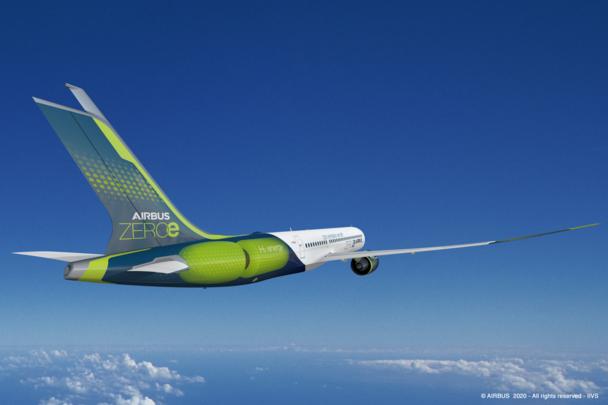
Britain is accelerating its ambitions to become a global leader in sustainable aviation, with the UK Government announcing a major £219 million investment package aimed at supporting the next generation of cleaner aircraft technologies.
The funding forms part of a broader strategy to strengthen the country’s aerospace sector while advancing the transition towards net-zero aviation. At a time when airlines, manufacturers and governments are searching for ways to reduce the environmental impact of air travel, the investment represents one of the most significant commitments yet to Britain’s future aviation ecosystem.
The initiative is expected to support cutting-edge research into low-carbon aircraft, advanced propulsion systems, sustainable aviation technologies and the manufacturing capabilities needed to bring these innovations to market. It also reinforces the UK’s ambition to remain at the forefront of aerospace innovation as global competition intensifies.
“The race to decarbonise aviation is no longer a distant ambition. It is becoming one of the defining industrial challenges of the 21st century.”
Investing in the Future of Flight
The funding package includes government support alongside industry investment through the Aerospace Technology Institute Programme, helping accelerate the development of technologies that could transform commercial aviation over the coming decades.
Projects are expected to focus on areas including zero-emission aircraft concepts, hydrogen propulsion systems, sustainable aviation fuel technologies and next-generation aircraft efficiency improvements. Together, these innovations have the potential to significantly reduce aviation’s carbon footprint while supporting high-value manufacturing jobs throughout the UK.
For an industry responsible for connecting economies, businesses and communities around the world, achieving meaningful emissions reductions remains one of aviation’s greatest challenges.
A Strategic Industry for Britain

The aerospace sector contributes billions of pounds to the UK economy and supports thousands of highly skilled jobs across engineering, manufacturing and research.
By investing in future technologies today, policymakers hope to ensure Britain remains a key player in the global aerospace industry while creating new opportunities for growth. The latest funding announcement is expected to support hundreds of organisations across the supply chain, from major aerospace manufacturers to specialist technology companies and research institutions.
Beyond environmental benefits, the investment is also intended to strengthen Britain’s industrial competitiveness in a market increasingly focused on sustainability.
“The future of aviation will be defined not only by how far aircraft can fly, but by how sustainably they can get there.”
The Push Towards Net Zero
The aviation industry faces a unique challenge compared with other sectors pursuing decarbonisation. Unlike road transport, where electrification has rapidly gained momentum, commercial aviation requires solutions capable of delivering long-range performance, safety and operational reliability.
As a result, multiple technologies are being developed simultaneously.
Hydrogen-powered aircraft, sustainable aviation fuels, hybrid-electric propulsion and lightweight materials are all expected to play important roles in reducing future emissions. The UK’s latest investment recognises that achieving net-zero aviation will require breakthroughs across several areas rather than a single technological solution.
A Global Competition Underway
Countries around the world are investing heavily in sustainable aviation technologies as they seek to secure leadership positions in one of the most important industrial transitions of the coming decades.
The United States, European Union and several Asian nations have all introduced programmes designed to accelerate low-carbon aviation development. Britain’s latest commitment signals its intention to remain among the frontrunners in this increasingly competitive landscape.
For manufacturers and airlines alike, the stakes are significant. The organisations that successfully develop scalable sustainable aviation technologies could help shape the future of global air travel for generations.
Video:
From hydrogen-powered aircraft to sustainable aviation fuels and electric propulsion systems, the next generation of aviation technology is already taking shape. This video provides an excellent overview of the innovations that are expected to transform the industry in the years ahead.
Innovation Beyond the Runway

The impact of the funding extends beyond aircraft themselves. Advances in materials science, manufacturing techniques, digital engineering and energy systems developed through aerospace research often generate benefits across multiple industries.
Historically, aviation innovation has driven wider technological progress, from advanced composites and safety systems to navigation technologies and manufacturing efficiencies. Support for aerospace research therefore carries implications far beyond the aviation sector alone.
Looking Ahead
The UK’s £219 million investment represents more than a funding announcement; it is a statement of intent. As governments and industries worldwide work towards net-zero goals, aviation remains one of the most complex sectors to decarbonise.
By supporting next-generation technologies today, Britain is positioning itself at the centre of one of the industry’s most important transformations. Whether through hydrogen propulsion, sustainable fuels or entirely new aircraft architectures, the innovations emerging from this investment could help define how the world flies in the decades ahead.
For the aerospace sector, the message is clear: the future of aviation is not only about connecting the world—it is about doing so sustainably.