



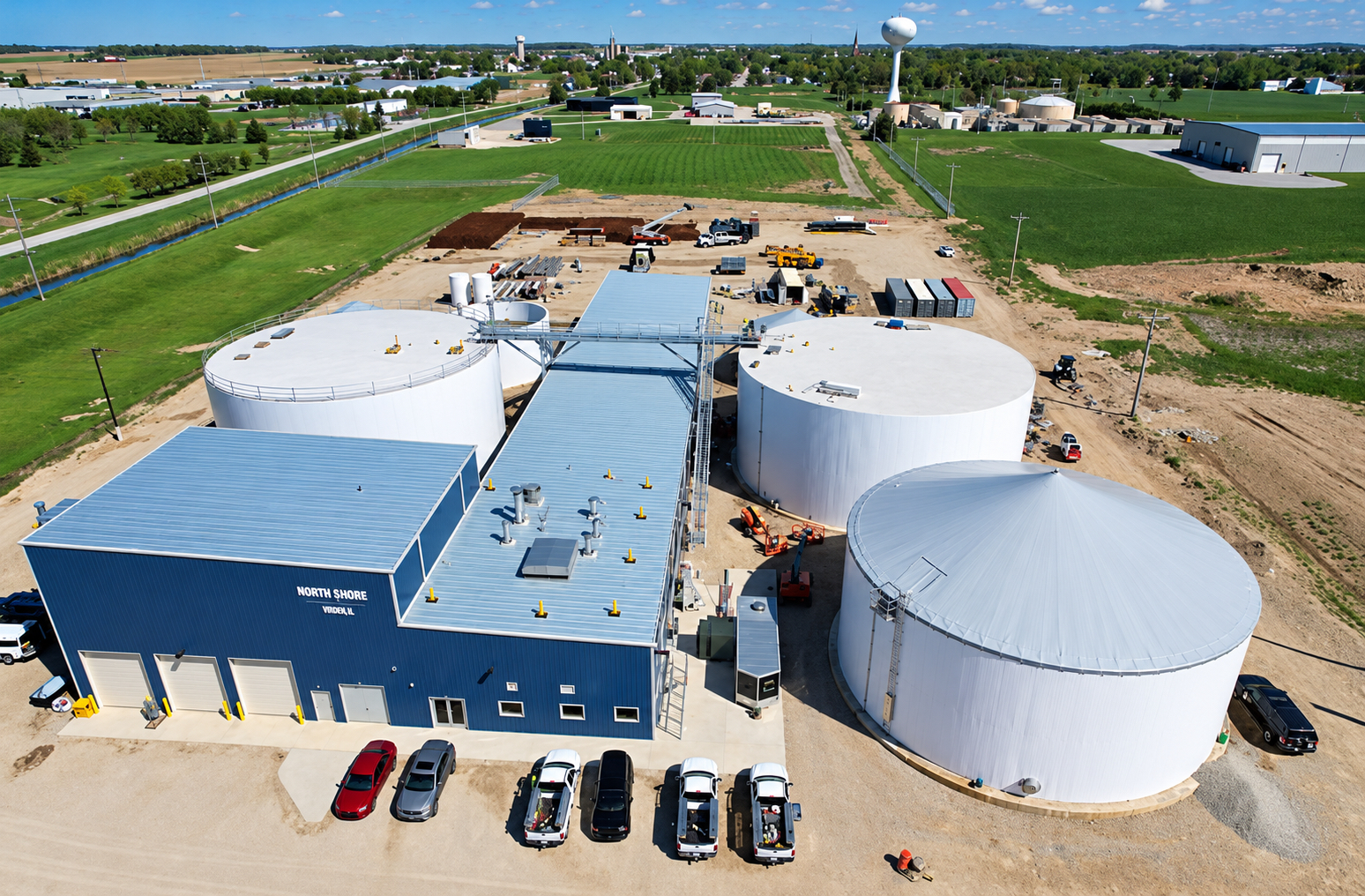
A $40m Investment in Sustainable Manufacturing
PurposeEnergy has commissioned a new industrial food waste and wastewater treatment facility in Minster, Ohio, following an investment of more than $40 million. Developed in partnership with Danone USA and the Village of Minster, the facility transforms organic waste from food and beverage manufacturing into renewable energy and other useful resources.
The project is PurposeEnergy’s first collaboration with Danone and is designed to support more sustainable manufacturing while reducing the environmental impact of industrial waste. It receives wastewater and high-strength organic residuals piped directly from Danone’s largest US yoghurt manufacturing facility, alongside waste from other regional food and beverage producers.
Turning Organic Waste into Renewable Energy
Designed to process up to 250,000 gallons of organic residuals per day, the facility uses anaerobic digestion to convert organic material into biogas. At full operation, it is expected to produce approximately 50,000 MMBtu of renewable biogas annually.
The gas is piped to a dedicated boiler at Danone’s Minster manufacturing plant, where it replaces conventional natural gas. PurposeEnergy estimates that this could avoid approximately 3,200 US tons of carbon dioxide equivalent emissions each year through reduced natural gas consumption.
The facility also produces treated water that meets municipal discharge standards, alongside nutrient-rich soil amendments. By recovering useful resources from industrial waste, the project demonstrates how food manufacturing by-products can contribute to a more circular economy.
Reducing Emissions and Supporting Local Infrastructure
The project is expected to deliver environmental benefits beyond renewable energy production. By piping organic residuals directly from Danone’s Minster plant to the nearby facility, PurposeEnergy estimates it will avoid around 720 US tons of carbon dioxide equivalent emissions annually compared with the previous off-site waste handling process.
The treatment process also removes surplus nutrients and dissolved solids before the water reaches the village’s municipal wastewater treatment works. This helps reduce pressure on local infrastructure while supporting more efficient management of industrial wastewater.
PurposeEnergy founder and chief executive Eric Fitch said the project demonstrates how food and beverage manufacturers can continue to grow production while meeting their environmental commitments.
Industry and Community Working Together
The development also reflects a shared commitment between industry and the local community to invest in more resilient infrastructure and sustainable growth.
Danone Americas chief operating officer Heiko Gerling described the facility as an example of the company’s Danone Impact Journey and its wider Re-Fuel energy excellence programme. The initiative supports the use of renewable biogas generated from organic material at the Minster plant, helping connect waste management directly with manufacturing energy needs.
For the Village of Minster, the project combines local investment with improved wastewater management and a new source of renewable thermal energy for a major industrial operation.
A New Model for Circular Manufacturing
The PurposeEnergy-Minster facility is now operational and increasing towards full capacity, with a grand opening celebration planned for spring 2027.
The project highlights the growing potential for industrial food waste to become a valuable resource rather than simply a disposal challenge. By integrating waste treatment, renewable energy generation and water management, PurposeEnergy and Danone are demonstrating how circular approaches can support manufacturing operations while helping to reduce emissions.
As manufacturers seek practical ways to improve resource efficiency, projects of this kind offer a model for connecting industrial production with more sustainable energy and waste management systems.
Source: PurposeEnergy via PR Newswire.
Image: Nick Didonna.