



Electric vehicle batteries could have a much longer life than their time on the road, with General Motors demonstrating how materials recovered from end of life batteries can be returned to the manufacturing process and used in new EVs.
GM has completed a closed loop recycling pilot in which materials recovered from end of life GM electric vehicle batteries were refined and used to produce new battery cells. The pilot has resulted in new EVs being built with battery cells containing cathode active material made with 100% recycled nickel, cobalt and manganese.
The project brings together recycling, materials processing and battery manufacturing, providing a practical example of how critical minerals can be recovered and reused rather than relying entirely on newly extracted materials.
Closing the Loop on Battery Materials
The pilot began with 80 end of life GM EV batteries, which were recovered and recycled through a partnership with Cirba Solutions.
The batteries were processed into black mass, a concentrated blend of materials created through the disassembly and separation of end of life lithium ion batteries. Black mass contains critical battery materials that can then be further processed and refined.
More than 12 metric tonnes of new cathode active material were produced through the pilot, using 100% recycled nickel, cobalt and manganese.
Cathode active material plays a central role in an EV battery cell, influencing factors including cost, safety and performance. Before the recycled material could be used in new batteries, it had to meet the same quality, safety and performance requirements expected of material produced from virgin sources.
Once the material had been validated, it was supplied to Ultium Cells, the battery manufacturing joint venture between GM and LG Energy Solution.
From Recycled Minerals to New EVs
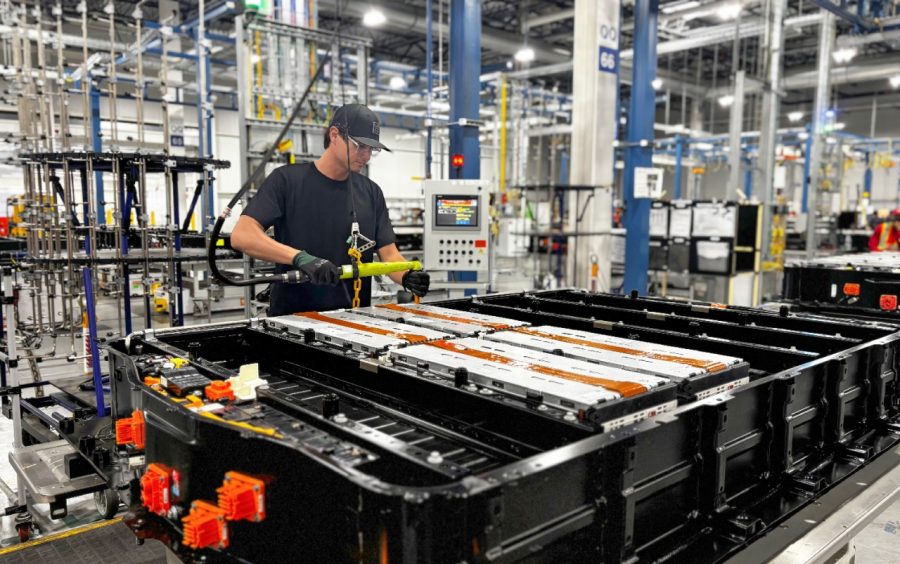
The recycled cathode active material was used to produce new EV battery cells, which were then assembled into battery modules and packs at GM facilities.
GM manufacturing teams assembled the cells at Factory ZERO in Detroit and at the company’s Spring Hill facility in Tennessee.
The first vehicles powered by battery cells containing the recycled materials have now rolled off production lines. These include the Cadillac LYRIQ, LYRIQ V, VISTIQ, ESCALADE IQ and IQL, Chevrolet Silverado EV Trail Boss and GMC Sierra EV AT4.
The development demonstrates how materials from existing EV batteries can potentially move through a complete cycle, from vehicle use and recycling through to refinement, battery manufacturing and eventually into another generation of electric vehicles.
Building a More Circular Battery Supply Chain
For GM, the pilot is part of a broader effort to explore how battery materials can remain in use for longer.
Recycling can help recover critical minerals such as nickel, cobalt, manganese and lithium from batteries that have reached the end of their useful life. According to GM, current recycling technologies can recover substantial quantities of these materials, although recovery rates vary depending on the process and battery chemistry.
Keeping these materials within the supply chain could help reduce reliance on newly extracted resources while supporting greater resilience across battery manufacturing.
The pilot has also highlighted the complexity involved in creating a closed loop system. GM says the programme required years of engineering, quality control, logistics, testing and manufacturing coordination across the company and its partners.
Recycling Is Part of a Wider Battery Lifecycle
Recycling represents one stage of GM’s broader battery lifecycle strategy, with the company also looking at ways to extend the useful life of batteries before their materials are eventually recovered.
Its remanufacturing and refurbishment programmes are designed to reuse more than 70% of pack components, helping extend battery life and reduce the need to manufacture completely new packs.
GM is also exploring second life applications for EV batteries, allowing them to continue providing energy storage after they are no longer suitable for vehicle use.
Working with Redwood Materials, GM is deploying approximately 10,000 second life batteries into real world energy infrastructure. This includes a large second life battery microgrid in North America, with further deployments planned across the company’s US manufacturing footprint.
A New Chapter for EV Battery Recycling
Not every EV battery will follow exactly the same lifecycle, but GM’s latest pilot demonstrates how recycling can become part of a wider circular approach to electric vehicle manufacturing.
The project connects end of life battery recovery with new battery production, showing how critical minerals can be processed and returned to the supply chain rather than being used only once.
As more electric vehicles reach the end of their first useful life, the ability to recover, refine and reuse the materials contained within their batteries is likely to become an increasingly important part of the EV manufacturing ecosystem.
For GM, the latest pilot provides both a working example and a foundation for further development as the company explores ways to reduce the environmental impact and cost associated with battery materials while keeping valuable resources in circulation.
Source: General Motors
Image: General Motors