



At a time when public services are under increasing pressure to deliver more with less, Norse Group offers a compelling example of how local authority-owned enterprise can combine commercial discipline with long-term community value.
Wholly owned by Norfolk County Council, the Norfolk-headquartered group operates across a broad range of public-facing services, from school catering and highways maintenance to waste management, construction project management and specialist education facilities. Yet despite its ownership structure, Norse is not a traditional in-house council provider. It competes, delivers and reports with the rigour of a commercially focused organisation.
For Justin Galliford, the principle underpinning that model is simple: transparency.
A Different Kind of Public Sector Model
Norse Group occupies a distinctive position in the public services landscape. While Norfolk County Council is its shareholder, the group also works with other councils and public sector partners across the country. This creates a relationship that is both local and commercial, accountable and flexible.
“The county council owns the Norse Group, but the Norse Group operates for the council and other councils across the country,” explains Galliford. “That gives us the ability to work with Norfolk County Council as a customer and a shareholder.”
That dual role is central to the organisation’s strength. Norse understands the priorities of its shareholder, but it cannot rely on ownership alone to secure work. Contracts still need to be earned, value still needs to be proven, and service delivery must stand up to market scrutiny.
“We don’t get exclusivity. We have to demonstrate in the market where we have good value. If we can’t do that, then they’ll award the work somewhere else.”
This structure, Galliford argues, helps create a healthier and more accountable form of public sector delivery. Norse must remain competitive, but it can also work in close collaboration with local government rather than operating at arm’s length through rigid outsourcing arrangements.
Transparency as a Foundation
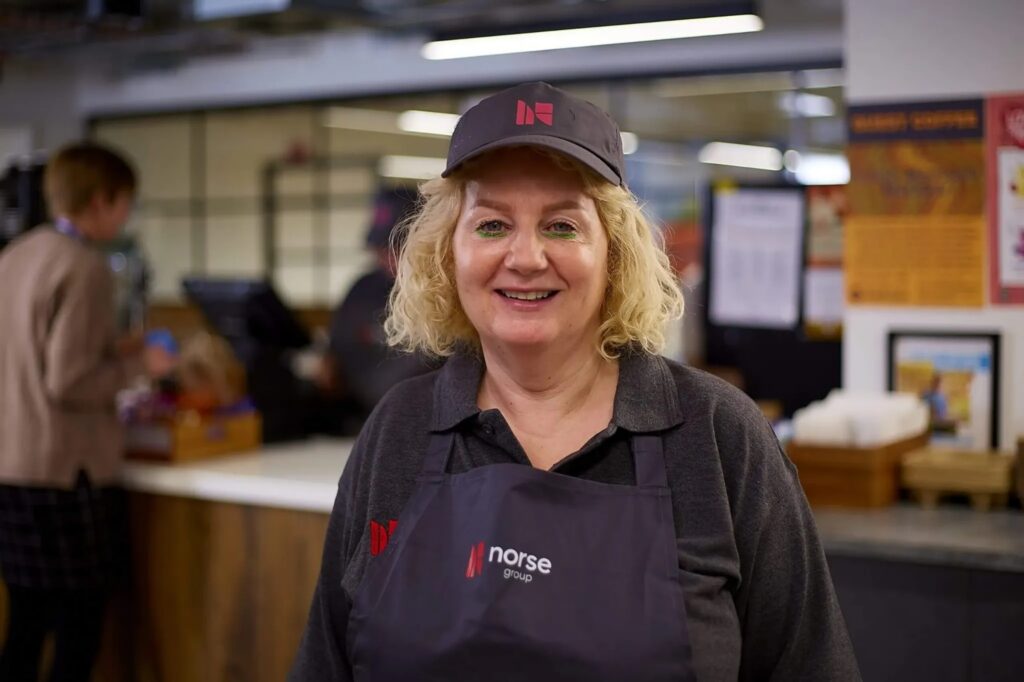
Once a contract is won, Norse operates on an open-book basis, giving the council clear visibility of financial performance, service outcomes and operational detail. For public sector organisations that are increasingly expected to justify spending decisions, this transparency is not simply a governance tool, it is a way of building trust.
Rather than waiting for annual reviews or contractual disputes to identify issues, Norse and its council partners can hold ongoing conversations about performance, improvement and changing community needs.
“It’s a very flexible arrangement and we can adapt it as they need us to,” says Galliford. “We can talk to them on a continual basis about how we can make the service better.”
“It all comes down to transparency and cooperative working.”
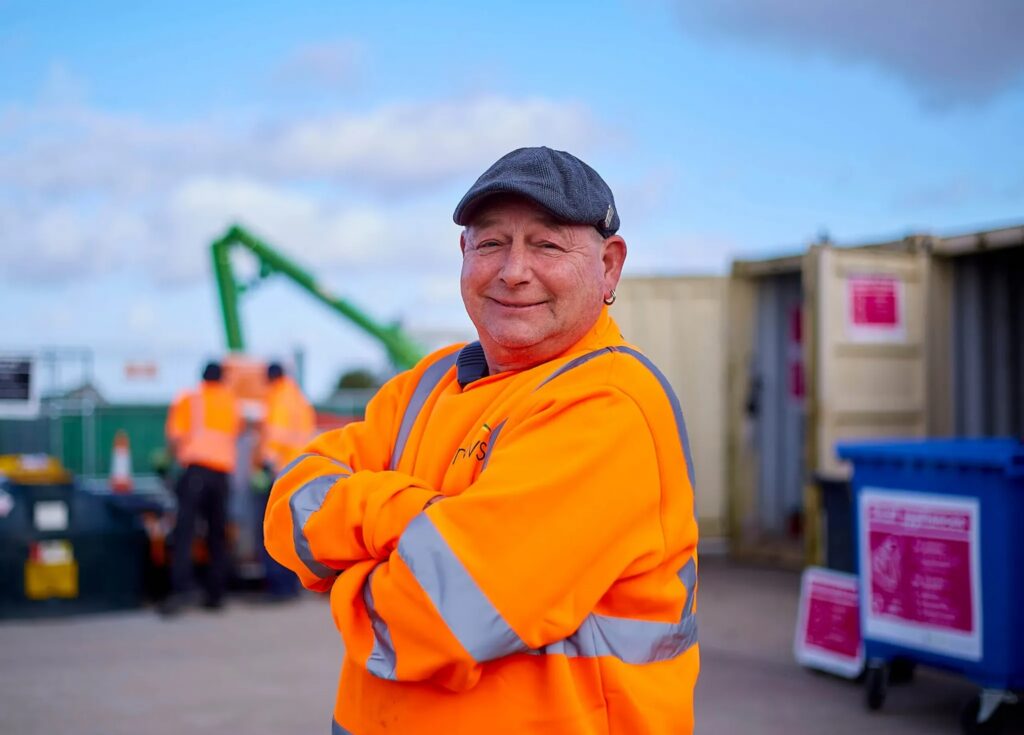
That cooperative approach is particularly important in areas where service delivery directly affects residents every day. In Norfolk, Norse’s work is visible across schools, roads, recycling centres and public buildings, making the quality and reliability of its services a matter of everyday community experience.
Services That Touch Everyday Life
The breadth of Norse Group’s work across Norfolk is striking. Its services are not abstract back-office functions, but essential parts of local life.
One of its flagship areas is schools catering, delivered across numerous Norfolk schools. The focus is on providing nutritionally balanced meals while ensuring value for money, a challenge that requires both operational efficiency and a clear understanding of public responsibility.
“We make sure that meals are nutritionally balanced at the best value we can deliver,” says Galliford. “That means we help the county ensure that schools are feeding children in the best way they can to help facilitate healthy minds and healthy lives from a young age.”
This balance between quality and cost is central to the Norse model. The group is expected to deliver commercially sound outcomes, but those outcomes are measured against community benefit as well as financial performance.
“We help the county ensure that schools are feeding children in the best way they can to help facilitate healthy minds and healthy lives from a young age.”
Highways maintenance is another major area of operation. Few public services are felt as immediately as road safety, particularly during winter months. Norse’s gritting and snow-clearing services help keep communities moving when bad weather threatens to disrupt daily life.
“When bad weather’s in, things can really grind to a halt,” Galliford notes. “It’s vital in terms of making sure that communities stay connected and that people can still move around freely.”
Alongside schools and highways, Norse also manages household waste recycling centres and provides design and construction project management services. This includes work on specialist facilities for pupils with special educational needs, demonstrating how the group’s role extends beyond routine service delivery into projects with long-term social value.

Sustainability With a Commercial Lens
Sustainability is now a defining issue for local authorities, as councils seek to reduce environmental impact while managing tight budgets and rising public expectations. For Norse, the approach is practical rather than performative.
Galliford is clear that environmental initiatives must make operational and financial sense. The group does not pursue green measures simply for appearances. Instead, it looks for solutions that reduce environmental impact while also delivering measurable value.
“Our approach is always to focus on value primarily, and of course think about how we can help from an environmental impact perspective,” he says. “There has to be a sound business case.”
That thinking is reflected in decisions around fleet replacement, fuel options and supply chain management. Alternative fuels such as HVO are considered when they are commercially viable, while tighter and more localised supply chains can help reduce both cost and emissions.
“Our approach is always to focus on value primarily, and of course think about how we can help from an environmental impact perspective.”
It is a pragmatic view of sustainability, one that recognises the importance of environmental responsibility while remaining grounded in the financial realities facing public services.
Flexibility in a Challenging Climate
Local authorities across the UK are operating in an increasingly difficult environment. Demand for services continues to grow, budgets remain under pressure, and communities expect accountability, responsiveness and value.
Galliford acknowledges these challenges clearly.
“At the moment in the world we’re in, the economic climate is difficult. That can mean that services come under strain,” he says. “So we’re always open minded about conversations about redesigning services, new or existing, to deliver them in a different way.”
This willingness to rethink delivery is one of Norse Group’s defining strengths. Because the relationship with its shareholder and public sector partners is built around transparency and cooperation, the group can adapt more quickly than a conventional outsourced provider locked into a rigid contract.
Where traditional outsourcing models can sometimes create distance between provider and client, Norse’s model is designed to encourage ongoing dialogue. Services can be reviewed, redesigned and improved in response to changing needs, rather than being constrained by fixed assumptions made at the start of a contract.
“We’re always open minded about conversations about redesigning services, new or existing, to deliver them in a different way.”
A Partnership Built on Value
For Galliford, the Norse model is not complicated. Its strength lies in being transparent, commercially disciplined and focused on delivering services that matter to communities.
The group’s ownership by Norfolk County Council gives it a clear public purpose, but its need to compete and prove value ensures it remains commercially accountable. This combination allows Norse to operate with the flexibility of a business and the responsibility of a public sector partner.
In a landscape often defined by stretched budgets, rising expectations and complex procurement models, Norse Group presents a different proposition: a local authority-owned enterprise that earns its place, opens its books and works collaboratively to improve outcomes.
At its core, the model is about building better communities through services that are practical, responsive and accountable.
As Galliford puts it, it all comes down to transparency and cooperative working. For Norse Group, that is not simply a principle. It is the foundation of how public sector partnership can work better.
Visit: www.norsegroup.co.uk