



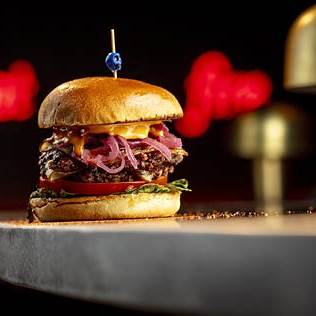
London’s burger scene has entered a new era of culinary confidence. From French smash burger imports and retro Soho counters to dry aged British beef and Michelin inspired creations, the capital’s most exciting restaurants are proving that luxury can be served in a toasted bun.
There was a time when London’s burger landscape could be divided neatly between fast food chains and traditional restaurants. That distinction has almost disappeared.
Across the capital, chefs and hospitality entrepreneurs are transforming the humble burger into a carefully engineered dining experience. Beef is being selected for its provenance and ageing, buns are being developed with specialist bakeries, sauces are prepared in house and restaurant interiors are designed to look as considered as the food.
Central to this evolution is the smash burger. Rather than forming a thick patty, the beef is pressed firmly onto an extremely hot cooking surface. The pressure creates a deeply caramelised crust, while the short cooking time helps preserve moisture within the meat.
It is a technique that appears straightforward but leaves little room for error. The quality of the beef, the temperature of the grill and the timing of the cook all become immediately noticeable.
From Junk’s unapologetic simplicity to Heard’s chef led approach, London’s newest burger destinations demonstrate how a familiar comfort food can become something far more ambitious.
Luxury does not always arrive beneath a silver cloche. Sometimes it comes wrapped in paper, layered with melted cheese and accompanied by perfectly salted fries.
Junk
Born in France before expanding internationally, Junk has established its reputation through a focused interpretation of the smash burger.
The restaurant avoids an unnecessarily complicated menu. Its signature creation brings together premium British sourced beef, American style cheese, a soft brioche bun and the company’s homemade Junk sauce. Customers can choose different burger sizes, progressing from a single patty to substantially larger combinations.
Junk’s approach is based on the idea that indulgence does not need to mean excess ingredients. The richness comes from the crust of the smashed beef, the melted cheese and the sauce running into the bun.
For diners seeking something more extravagant, its truffle option introduces a deep, earthy flavour without abandoning the simple structure that defines the restaurant.
Having first launched in 2021, Junk expanded through several major French cities before opening in London in 2024. Its arrival reflects the international appeal of London’s restaurant market, where successful concepts from Paris and beyond increasingly view the capital as a natural destination for growth.
Supernova
Supernova has helped turn the smash burger into one of Soho’s most photographed dining experiences.
The concept is built around a deliberately concise offering of burgers, fries and sundaes. Rather than overwhelming customers with endless combinations, the restaurant places its attention on a small number of carefully prepared dishes.
Its burgers combine thin, crisp edged patties with melted cheese, pickles, onions and sauce inside a soft bun. Every element is designed to complement the beef rather than compete with it.
The food is only part of Supernova’s appeal. Its retro influenced interiors have positioned the restaurant at the centre of a wider movement in which casual dining spaces are receiving the same design attention once reserved for luxury hotels and destination restaurants.
Warm lighting, chrome detailing and nostalgic shapes create a setting that feels somewhere between a classic American diner and a stylised vision of the future. The result is a burger restaurant that feels playful, polished and immediately recognisable.
Supernova’s success suggests that today’s diners are not simply looking for something to eat. They want a complete experience in which flavour, architecture, branding and atmosphere work together.
Manna
Manna brings the energy of American diner culture to Arcade’s chef led London food halls.
Its menu centres on smashed beef patties, American cheese, pickles, onions and sauces, accompanied by crispy fried chicken, waffle fries and thick shakes. The concept currently operates through Arcade locations, including Tottenham Court Road and Battersea.
While many London burger restaurants favour an extremely minimal approach, Manna embraces the generous spirit of regional American fast food.
The burgers are rich and deliberately messy. Cheese melts over the edges of the patties, sauces soak into the brioche and the fries are designed to be loaded, seasoned and shared.
Operating within Arcade also gives Manna a distinctive advantage. Diners can combine its burgers with dishes from several other specialist kitchens, allowing groups to explore different cuisines during the same meal.
Despite being part of a wider food hall, Manna maintains a strong identity. The unmistakable combination of beef, fried chicken, pickles and bold sauces makes it one of Arcade’s most recognisable offerings.
Black Bear Burger
Black Bear Burger represents one of London’s most successful independent burger stories.
The business began as a market stall before developing into a collection of restaurants and food hall counters across the capital. Its founders took inspiration from Canadian hospitality and a family beef farm in Devon, placing British beef and carefully prepared ingredients at the centre of the brand.
Black Bear’s signature burger combines a deeply flavoured beef patty with cheese, onion, pickle relish and house sauce. Freshly prepared buns, hand cut fries and rich side dishes reinforce the company’s commitment to making familiar food with greater attention.
The restaurant is particularly known for its Miso Bacon Burger, which introduces a powerful savoury quality through the combination of beef, bacon and miso inspired flavours.
What distinguishes Black Bear is its willingness to remain approachable. The burgers are substantial, but the company avoids novelty for novelty’s sake. Each ingredient is intended to intensify the flavour of the beef rather than simply increase the height of the finished burger.
The brand now operates a mixture of full service restaurants and more streamlined food hall sites around London, demonstrating how an independent concept can expand while retaining a clear culinary identity.
Heard
Heard takes London’s luxury burger movement into distinctly chef driven territory.
The concept was created by Jordan Bailey from a desire to transform an everyday comfort food into something exceptional. Its approach brings fine dining precision to the familiar combination of beef, cheese, sauce and bread.
The signature Heard burger contains double smash patties, aged Cheddar, white onion, pickles and the restaurant’s house sauce. The buns were developed with Seven Seeded, a bakery known for supplying prominent London kitchens.
More indulgent creations push the formula further. Truffle, speciality cheese, hot honey and caviar have all appeared within Heard’s menu, presenting the burger as a platform for ambitious flavour combinations rather than a fixed recipe.
The restaurant’s interiors continue that philosophy. Warm timber, glazed tiles, carefully selected lighting and contemporary Art Deco references provide a setting that feels more like a modern neighbourhood restaurant than a conventional fast food counter.
Heard demonstrates that informality and sophistication do not need to be opposites. Diners can eat with their hands while enjoying ingredients, preparation and surroundings influenced by Michelin level hospitality.
London’s Burger Renaissance
The success of these restaurants reveals a wider change taking place across London hospitality.
Customers increasingly expect casual food to demonstrate the same values associated with more formal dining. Ingredient quality, responsible sourcing, specialist suppliers, distinctive interiors and strong storytelling have become important at every level of the market.
A burger may still be fast, familiar and comforting, but it can also reflect serious culinary thought.
Junk offers stripped back French precision. Supernova combines simplicity with destination design. Manna channels the generosity of the American diner. Black Bear celebrates British beef and independent growth, while Heard brings a chef’s discipline to every layer.
Together, they are redefining what luxury dining can look like.
There may be no white tablecloth, extensive tasting menu or formal dress code. Instead, the experience is measured through the quality of the crust, the softness of the bun, the sharpness of the pickles and the moment melted cheese reaches the edge of the wrapper.
London’s most indulgent burgers prove that culinary luxury is no longer defined by formality. Sometimes, the city’s greatest pleasures really can be found between two buns.