



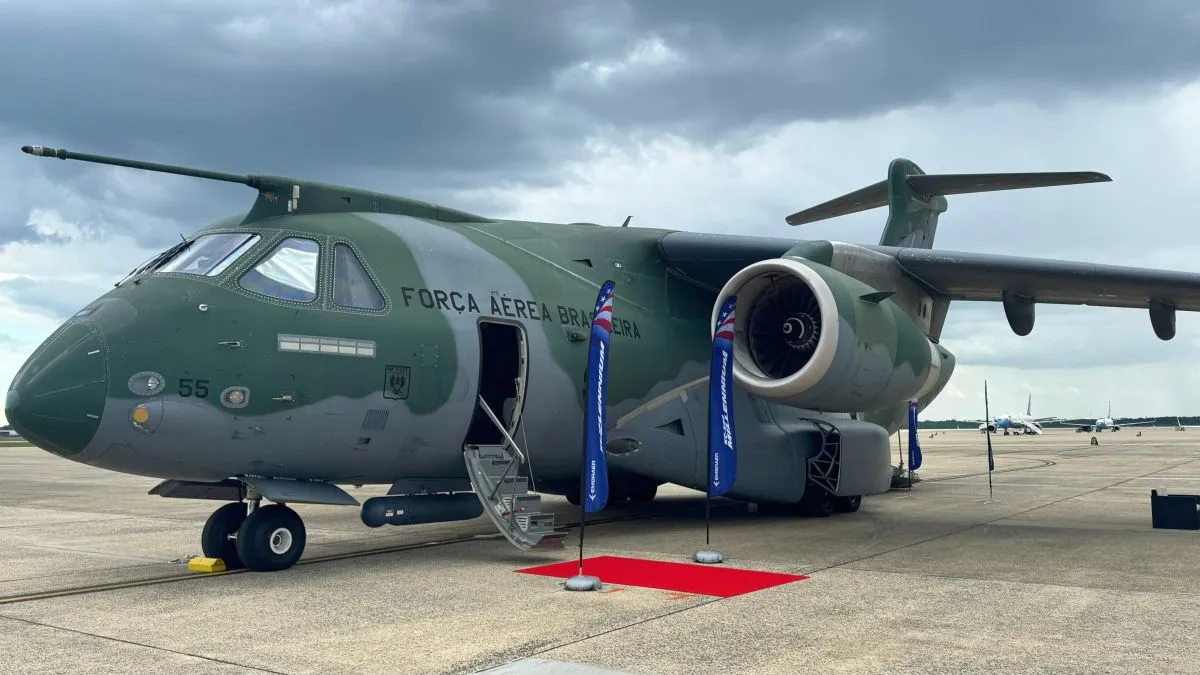
Brazilian aerospace manufacturer Embraer is strengthening its industrial presence in the Netherlands, with several collaborative projects underway involving Dutch companies, research institutions and the country’s defence industry. Announced at the NEDS 2026 defence and security exhibition in Rotterdam, the programme reflects how major aircraft procurement agreements can create opportunities extending well beyond the aircraft themselves.
Dutch partnerships expand beyond aircraft procurement
The partnerships are connected to the Netherlands’ decision to acquire five Embraer C-390 Millennium military transport aircraft, replacing its ageing Lockheed Martin C-130H Hercules fleet. The Netherlands and Austria have also placed a joint order for nine aircraft in total, with Austria accounting for four.
The industrial cooperation is intended to strengthen domestic expertise while creating new opportunities for Dutch businesses within Embraer’s international aerospace supply chain.
Technology, AI and advanced training
The programme includes projects involving technology transfer, software development and advanced engineering. One initiative is focused on enhancing a virtual reality training system for the A-29 Super Tucano, Embraer’s light attack and training aircraft.
Artificial intelligence is also playing an increasingly important role, with Dutch partners involved in projects covering cybersecurity, maritime surveillance and data fusion. These technologies are particularly relevant to modern defence operations, where the ability to analyse large quantities of information and identify threats quickly is becoming increasingly important.
The collaborations highlight how aerospace partnerships are evolving beyond traditional aircraft manufacturing towards digital systems, advanced software and interconnected defence technologies.
Building a Dutch aerospace supply chain
For the Netherlands, industrial participation is an important element of major defence procurement. Government agreements encourage international manufacturers to work with domestic suppliers, engineering businesses and research organisations, helping retain a proportion of investment within the national economy.
Dutch businesses are being brought into areas including maintenance, repair and overhaul (MRO), logistics, configuration management, training and fleet support. This creates opportunities for local companies to develop expertise that could potentially extend into future aerospace and defence contracts.
Long-term maintenance and fleet support
Alongside technology development, Embraer and its Dutch partners are preparing for the long-term operational requirements of the C-390 Millennium fleet. Establishing local maintenance capabilities, technical training and logistics systems will be essential as the Netherlands prepares to introduce the aircraft towards the end of the decade.
Developing these support structures early could help improve aircraft availability while building a skilled workforce capable of supporting increasingly complex military aviation systems.
Looking beyond the initial contracts
While the industrial participation programme is already progressing through several projects, its longer-term economic impact will depend on how these partnerships develop. The potential for Dutch businesses to secure further commercial opportunities within Embraer’s global supply chain could prove particularly significant.
For Embraer, the Netherlands represents more than an aircraft customer. It is an opportunity to deepen European industrial relationships, strengthen its international partnerships and demonstrate how defence procurement can support innovation, technology development and wider aerospace business growth.
Source: Aviation.Direct.
Image: Embraer KC-390 Millennium aircraft. Image courtesy of Embraer.