



Lead Hero Is Making “Who Should I Call Next?” a Question SDRs No Longer Have to Answer.
For outbound sales teams, making calls is only part of the job. Deciding which prospects to call, when to follow up, and how to manage hundreds of leads can take up a surprising amount of an SDR’s day.
Justin Devries, founder of Lead Hero, wants to change that. His company has introduced a Smart Call Priority Algorithm that allows sales representatives to start a continuous, automatically prioritized calling queue with a single click. We spoke with Devries about why he started Lead Hero, the challenges facing outbound sales teams, and why he believes the next step in sales productivity is taking the administrative work away from SDRs.
Q What is Lead Hero, and who is it for?
Lead Hero is a calling platform built primarily for B2B lead generation agencies and outbound SDR teams. We help companies turn the prospects they’re already generating into actual phone conversations and booked meetings. A lot of our customers run high-volume outbound campaigns through platforms like Instantly, Smartlead, HeyReach, PlusVibe, and Email Bison. They’re generating interested replies, but they still need someone to warm call those prospects, follow up, and get meetings booked. That’s where we come in. We provide the calling infrastructure, phone number enrichment, caller ID protection, and integrations to make that process easier.
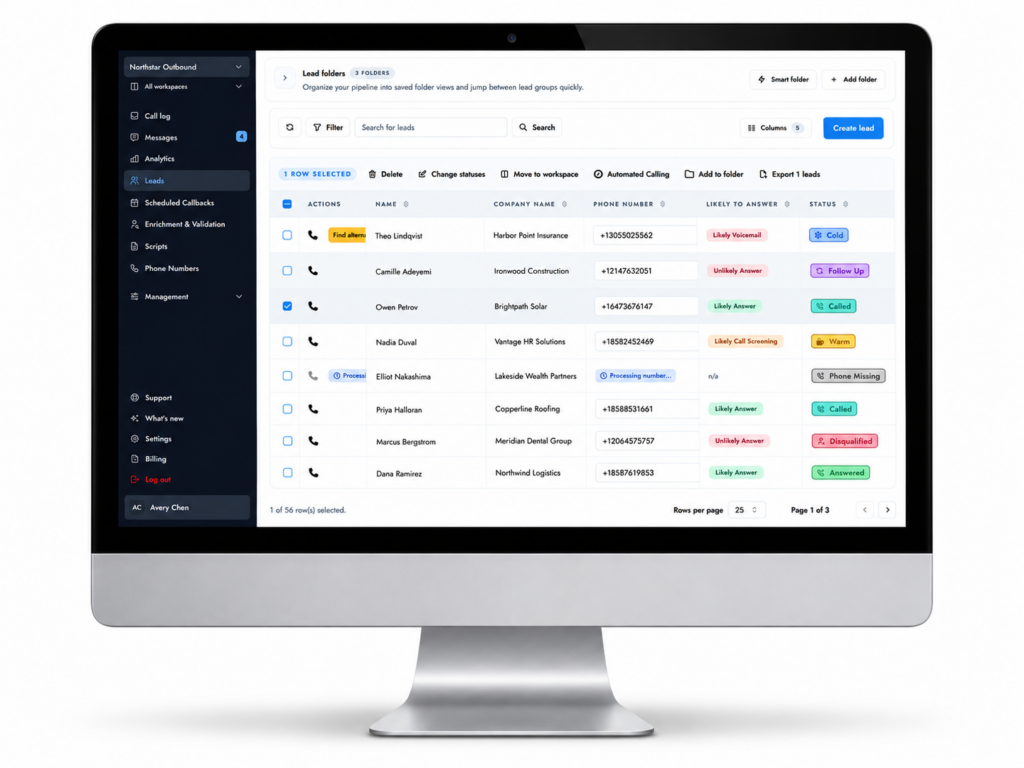
One of our newest features is something we’re particularly excited about: our Smart Call Priority Algorithm. Essentially, an SDR can click one button, and Lead Hero continuously works through their calling queue, prioritizing the prospects who should be contacted first. If a new interested lead comes in, that prospect can automatically jump to the top of the queue for the next call. If there aren’t any new leads available, the system moves on to follow-ups and previously unanswered calls. The rep doesn’t need to constantly switch between lists or figure out who to call next. They can just focus on calling.
Q Why did you start it, and what problem were you out to fix?
Before Lead Hero, I spent years running outbound campaigns, booking thousands of sales appointments, and training hundreds of SDRs. I also built GrowthGiants.org, a B2B lead generation agency that worked with 60 enterprise clients. One thing I kept noticing was how much time SDRs were spending doing things that had nothing to do with actually selling. They’d be finding phone numbers, moving leads between platforms, checking who needed a follow-up, and deciding which list to work through next. You could have a really good SDR, but if they’re spending a big portion of their day organizing who to call, you’re not getting the most out of them.
We initially built Lead Hero to make calling easier and improve pickup rates. But as we worked with more agencies, we realized there was another problem worth solving. Why should the SDR have to decide who to call next in the first place? If you’ve got 200 prospects to contact, some who just replied, some who asked for a callback, and others who haven’t answered yet, there should be a system that automatically works out the order. That’s the thinking behind our new calling algorithm. Our goal is to let SDRs spend their time speaking with prospects instead of managing calling lists.
Q What does a fast call to a warm lead do that an email or a LinkedIn message does not?
The biggest difference is that you can have an actual conversation right away. Let’s say a prospect replies to a cold email saying they’re interested in learning more. You could send another email asking when they’re available, wait for a response, then go back and forth trying to organize a meeting. Or you could call them while that interest is still fresh. In a two-minute phone conversation, an SDR can understand what the prospect needs, answer questions, handle objections, and potentially book a meeting. That doesn’t mean every interested prospect wants to be called immediately, but when calling is appropriate, it’s a very effective way to move things forward.
And this is also why we’re putting so much focus on call prioritization. If a new positive reply comes in while an SDR is calling through a list of older prospects, we want the new lead to be prioritized automatically. The rep shouldn’t have to notice the reply, stop what they’re doing, and manually move that person into a different queue. The faster you can turn interest into a real conversation, the less opportunity there is for that interest to go cold.
Q What does the first month look like for a new client?
Getting started is pretty straightforward. Lead Hero has native integrations with Instantly, Smartlead, HeyReach, Email Bison, and PlusVibe, so customers can connect the outbound tools they’re already using without changing how they generate leads. When a prospect replies positively, Lead Hero can automatically find their mobile number using our enrichment waterfall of over 100 data vendors and add them straight into the SDR’s calling queue. From there, the SDR just clicks Start. Our calling algorithm automatically prioritizes new interested prospects, scheduled callbacks, and older leads that need following up. The rep doesn’t have to manually organize lists or decide who to call next.
During the first month, we’re mainly focused on helping customers turn more of their existing positive replies into booked meetings. From what we’ve seen across our users, the percentage of positive replies that turn into booked meetings often increases from around 20% to 35% with a consistent warm-calling process. So for a team generating 100 positive replies, that’s potentially going from 20 booked meetings to 35 without needing to generate any additional leads. That’s the kind of improvement we’re trying to help teams achieve.
Q What result from a client are you proudest of?
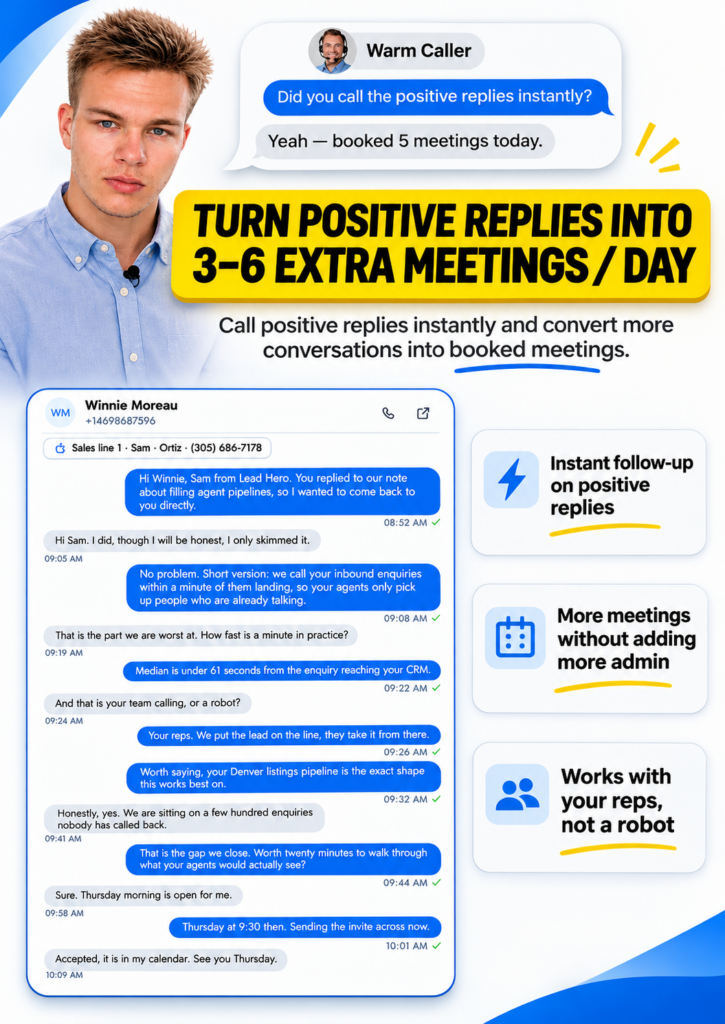
One example I’m really proud of is Peeker.ai. Before working with us, they didn’t have a good system for warm calling the interested prospects coming through their outbound campaigns. They were generating positive replies, but there wasn’t a consistent process for getting those prospects on the phone. After implementing Lead Hero and building a proper warm-calling workflow, they started booking five to six new appointments per day just from calling interested leads.
Another great example is Rookmont.com. They were previously booking around 20 to 30 appointments per month. After introducing a dedicated warm caller using Lead Hero, that increased to approximately 100 booked appointments per month. What I like about both examples is that these companies were already generating interest through outbound. They didn’t necessarily need to send more emails or find more prospects. They needed a better way to turn the interest they were already getting into actual sales conversations. And that’s really the opportunity we see with a lot of outbound teams. Sometimes the biggest improvement doesn’t come from generating more leads. It comes from doing a better job with the leads you already have.
Q What comes next for Lead Hero?
One of our biggest priorities right now is making the SDR’s daily workflow as efficient as possible. We’ve spent a lot of time building the infrastructure around calling, including phone number enrichment, pickup intent, caller ID protection, and integrations with outbound platforms. Now we’re focusing more on what happens when an SDR actually starts working. Our Smart Call Priority Algorithm is a big part of that. Traditionally, a power dialer helps you call through a list faster. But it still leaves the responsibility of choosing the right list, managing callbacks, and deciding when to retry someone to the SDR. We want Lead Hero to handle as much of that as possible.
With one click, a representative can start a calling session where the platform continuously prioritizes new interested prospects, due callbacks, and follow-ups based on configurable rules. And because it’s built around our existing Smart Folders, teams can customize those rules based on how they operate. An agency with 20 SDRs might have a completely different calling strategy from a small team with two representatives. We want both to be able to configure the system to their needs.
Longer term, we’re working toward a platform where the administrative side of outbound calling becomes increasingly automated. The SDR should still be the person building relationships, asking questions, and booking meetings. But deciding which prospect needs to be contacted next shouldn’t require constant manual work. Our vision is simple: SDRs should spend their day having conversations, not figuring out who to call.