



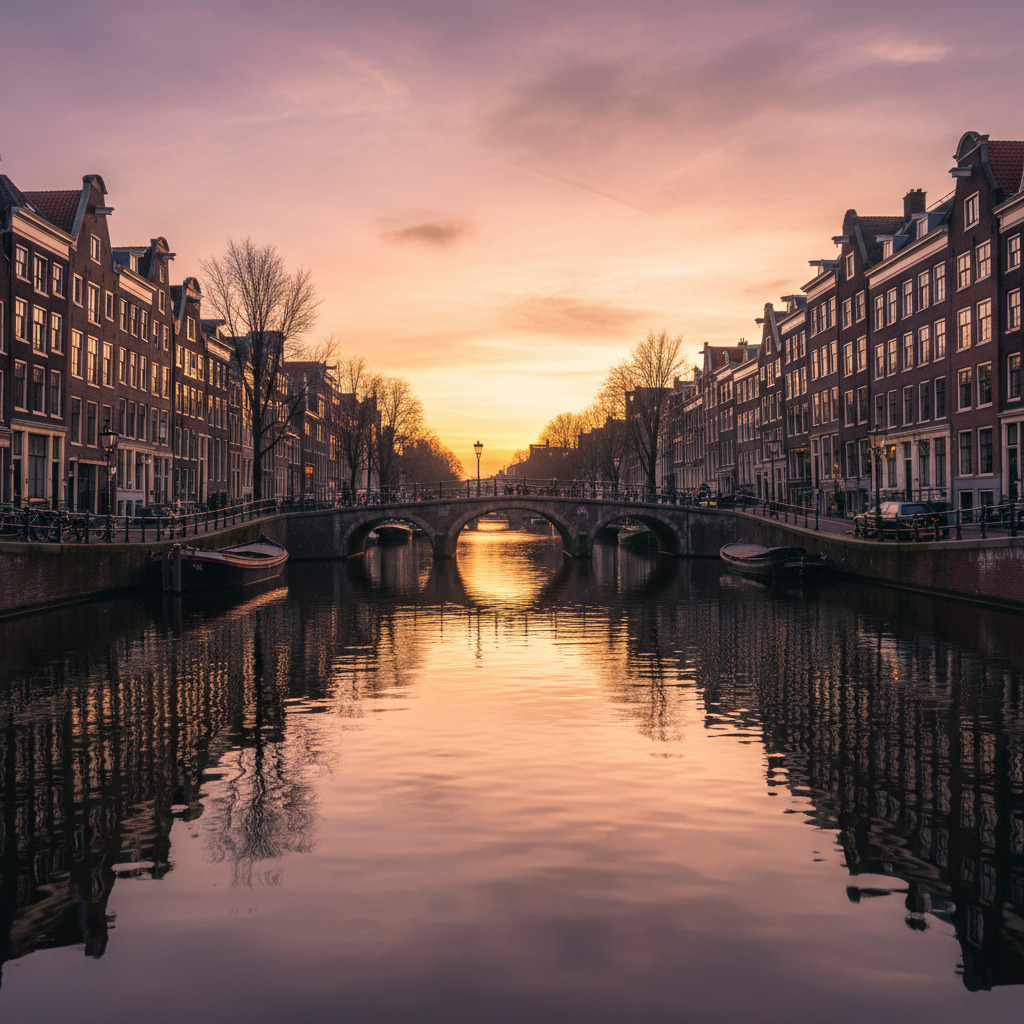
Amsterdam does not reveal itself all at once. It rewards those who slow down, step away from the obvious, and follow its quieter rhythm.
A perfect day here is not about ticking off landmarks. It is about sequencing moments—food, culture, atmosphere, and movement—into something that feels effortless, yet considered. The city is compact, walkable, and layered, making it uniquely suited to a day that unfolds naturally from morning to night.
Morning: Arrival, Atmosphere, and Indulgence

4
The day begins not in a rush, but in transition. Arrival into Amsterdam Centraal Station sets the tone—Gothic, imposing, and unmistakably European.
From there, the city opens quickly. A short journey leads into neighbourhoods like De Pijp, where Amsterdam feels more lived-in than performed. Streets are lined with independent cafés, understated boutiques, and a pace that invites wandering rather than planning.
There is a rhythm to the morning: walking without direction, stopping where something feels right. Eventually, it leads to small rituals—coffee, conversation, and, if done properly, something indulgent.
Few places capture this better than Winkel 43, known less as a café and more as a destination for a single dish: apple pie. It is a small detail, but it sets the tone. In Amsterdam, perfection often lives in the specifics.
Afternoon: Exploration Beyond the Obvious

4
As the day shifts, so does the setting.
Leaving the centre behind, the city becomes more expansive, more textured. A ferry across the IJ river introduces a different Amsterdam—industrial, creative, slightly raw. Areas like NDSM Wharf offer a contrast to the polished canal belt, filled with street art, open spaces, and a sense of reinvention.
It is here that the city feels less curated and more real.
From there, the afternoon settles into something slower. Green space replaces concrete. Frankendael Park offers a pause—quiet, open, and deliberately removed from the pace of the centre.
Set within it is De Kas, where the experience becomes more deliberate. Dining here is less about the menu and more about the philosophy: ingredients grown on-site, prepared simply, served in a glasshouse filled with natural light. It is a reflection of the city itself—considered, seasonal, and quietly confident.
Evening: Design, Dining, and Atmosphere
4
By evening, Amsterdam changes again.
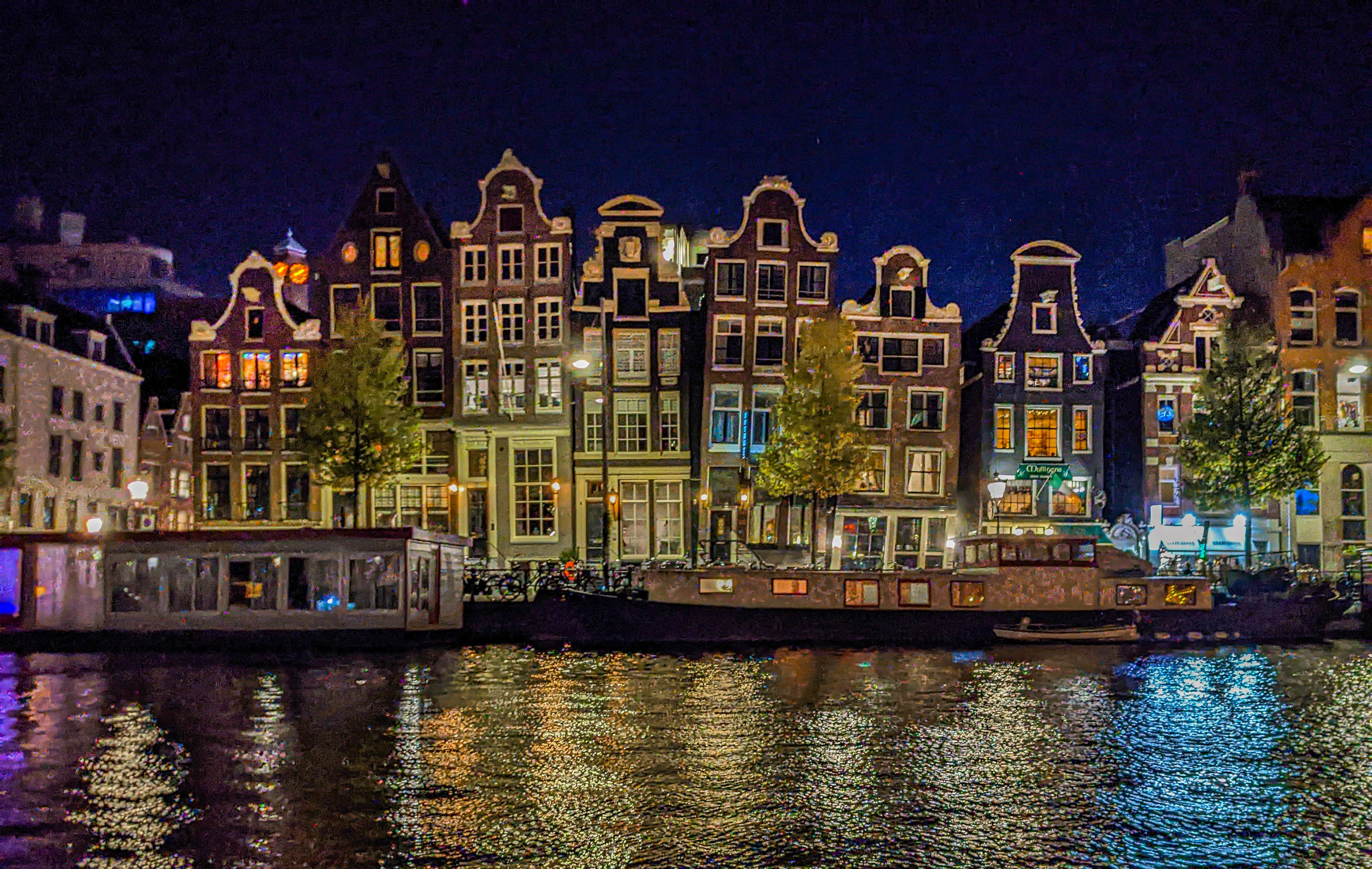
The canals soften under low light, reflections replacing movement, and the city leans into atmosphere. This is where design, food, and social energy converge.
A stop at Super Lyan introduces a more playful side—bold interiors, inventive cocktails, and a crowd that moves easily between elegance and informality. It is social without being overwhelming, curated without being exclusive.
Dinner follows at Jansz., set within the Pulitzer Amsterdam. Here, the experience becomes more refined. Interiors are warm, detailed, and quietly luxurious, while the food leans into simplicity executed at a high level—ingredients allowed to speak without unnecessary complexity.
It is the kind of dining that does not need to announce itself.
Night: The City Slows Down
Amsterdam at night is not defined by spectacle, but by atmosphere.
The final moments of the day unfold almost incidentally—walking along canals, stopping for a last drink, moving without urgency. Places like The Hoxton Amsterdam offer that final note: relaxed, social, and slightly nostalgic.
There is no clear ending. The city simply softens.
The Bigger Picture
A perfect day in Amsterdam is not about seeing everything. It is about experiencing enough of the right things, in the right order, to understand the city’s character.
It is a place that rewards movement, but not speed. Detail, but not excess.
And above all, it reminds you that the most memorable travel experiences are rarely the loudest.
They are the ones that unfold naturally—one moment at a time.