



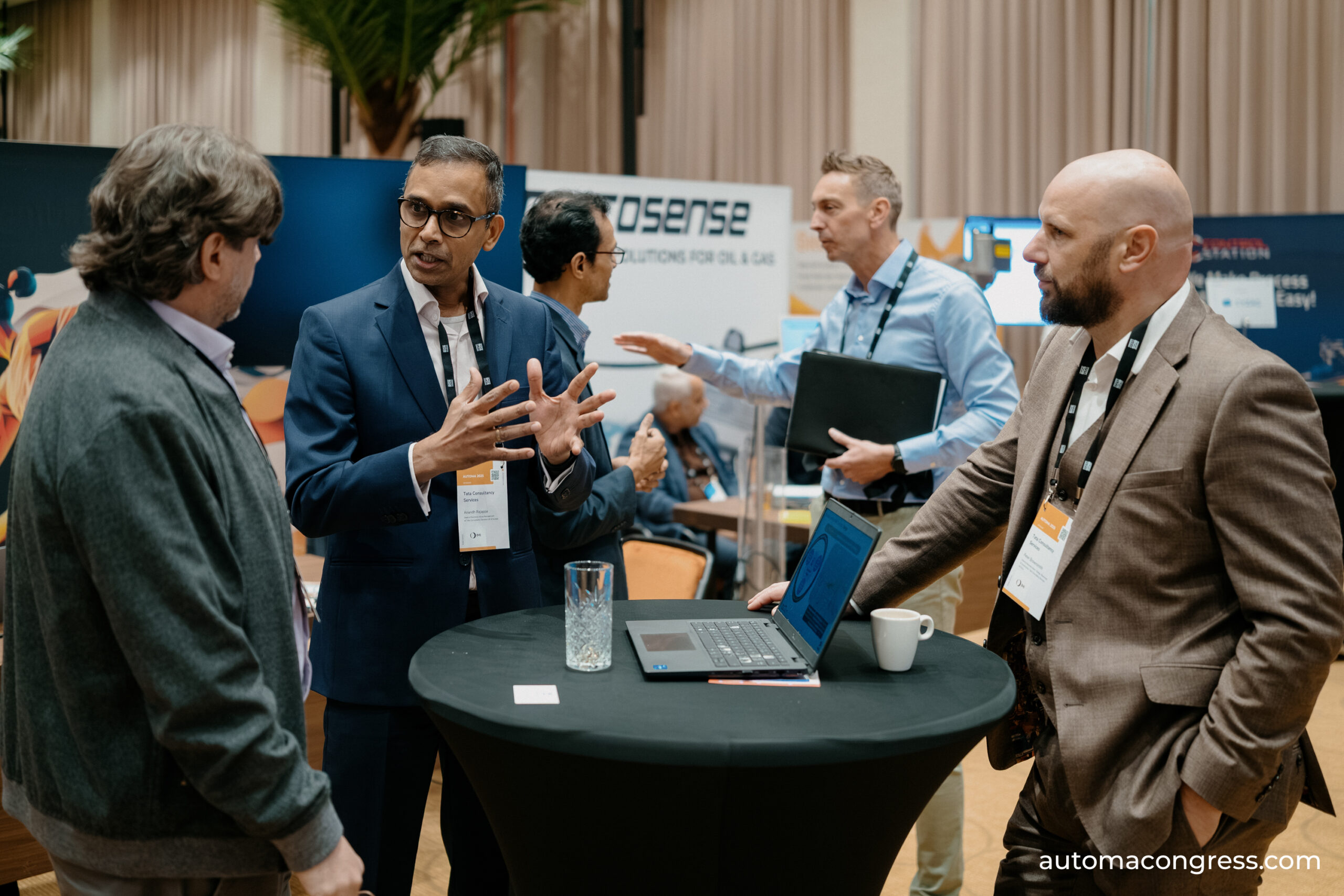
As AI, autonomous labs and digital twins reshape chemical research, AUTOMA Chem 2026 assembles industry leaders in Berlin, 26-27 October, to define practical strategies for integrating these technologies, share real-world implementation insights and set the agenda for the next era of R&D innovation in a featured session.
The chemical industry’s R&D landscape in 2026 is defined by a major contradiction: while demand for sustainable materials, circular formulations and accelerated drug-to-market pathways has never been higher, traditional development models are reaching their structural limits.
Bringing a new patented chemical or advanced material to commercial scale still takes an average of 5-7 years, with R&D costs consistently outpacing inflation. Compounding the pressure, evolving regulatory frameworks around emissions, PFAS restrictions and circularity mandates are adding new compliance layers to early-stage development.
Meanwhile, most of the chemical R&D data remains siloed or unstructured, limiting AI, predictive modelling and collaboration. Combined with legacy infrastructure, lengthy scale-up cycles and a talent gap, this slows innovation – driving R&D leaders to demand measurable ROI from digital investments.
In response, chemical manufacturers, pharmaceutical companies and technology providers are moving from gradual digitalisation to integrated, AI-driven R&D. Autonomous labs, generative design and digital twins are shifting from pilots to core operations. Yet, scaling these tools across complex pipelines – while ensuring data integrity, compliance and system interdependence – remains a significant challenge.
In light of this, AUTOMA Chem 2026 brings together industry leaders, scientists and digital engineers to tackle real-world tech integration. Co-hosted by Evonik with support from WACKER, Covestro, LyondellBasell and Worley as Regional Partners, the event focuses on implementation roadmaps, data governance and cross-functional collaboration.
Among the core tracks of the business programme, the R&D session focuses on how digital tools compress discovery cycles, de-risk scale-up and transform research and development from cost centre to growth engine – led by industry experts, including:
- Jose Seoane, Technology Advisor at Repsol – self-driving labs for product discovery;
- Dr. Dennis Krause, Program Manager Digital R&D at Covestro – AI & simulation for materials;
- Dr. Miriam Mathea, Global Scientific Discipline Lead Cheminformatics at BASF – AI-driven cheminformatics automation;
- Alexis Torreele, Director, Process & Technology at Worley – digital tools for tech scaling;
- Dr. Ewa Gajewska, Head of Product Management, SYNTHIA® at Merck – digital solutions for synthesis & drug discovery.
The future of chemical R&D belongs to organisations that scale integrated, data-driven workflows. AUTOMA Chem 2026 bridges that gap through expert sessions and structured networking – forward-thinking discussions and technology matchmaking where R&D leaders and solution providers align roadmaps and accelerate time-to-market.
Join the transformation: https://sh.bgs.group/464