



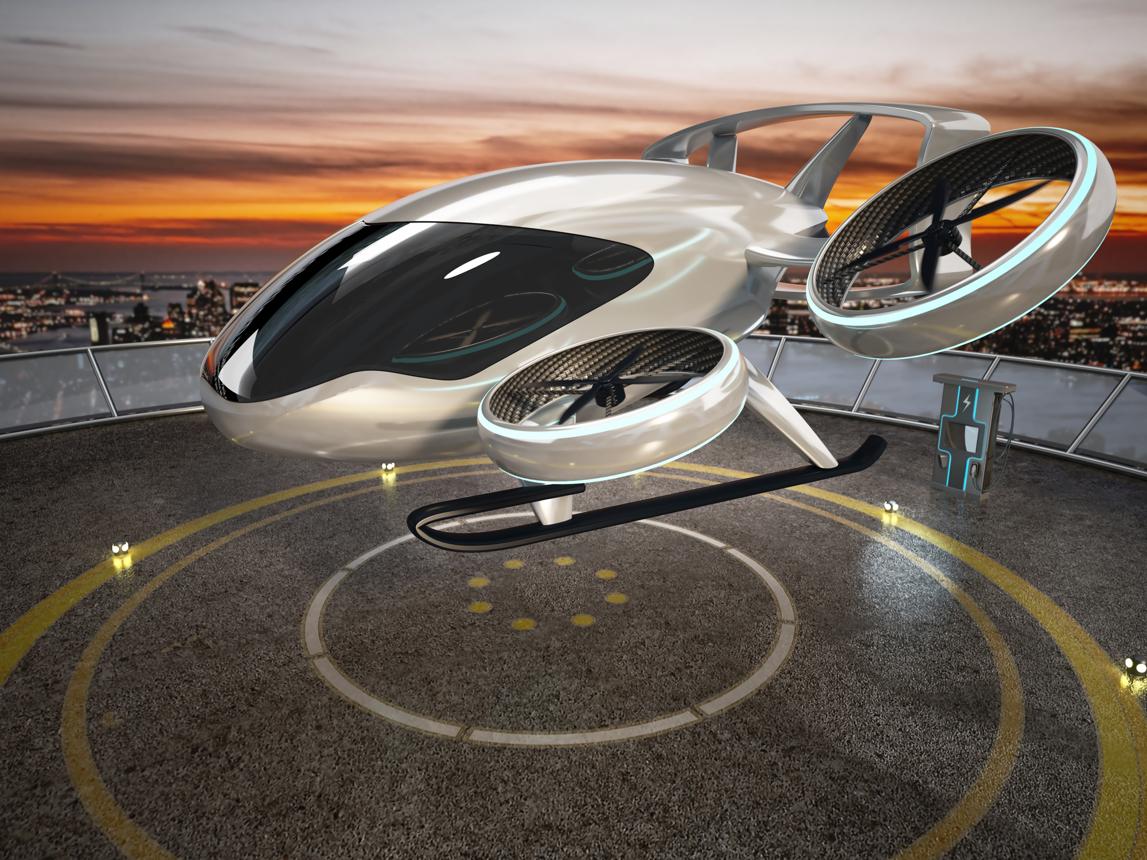
New York City has long been a proving ground for the future of transport, but even by its own standards, this week marks something different. Electric air taxis, once confined to concept videos and speculative timelines, are now flying real routes between Manhattan and John F. Kennedy International Airport. The shift is subtle in execution but profound in implication. This is no longer a question of if urban air mobility will arrive, but how quickly it will scale.
Demonstration flights carried out by Joby Aviation have successfully connected Manhattan heliports with JFK, offering a glimpse of what a fully operational network could look like. The aircraft, part of a broader electric vertical takeoff and landing (eVTOL) movement, are designed to function like helicopters but operate with significantly less noise and zero in-flight emissions.
What makes these flights notable is not simply the technology, but the practicality. Journeys that can take over an hour by car or public transport are being reduced to under ten minutes in the air, fundamentally reframing how distance is experienced in a city like New York.
Electric Air Taxi Test Flights Over NYC
The aircraft themselves are compact but purpose-built. Typically carrying four passengers and a pilot, they are engineered for short, high-frequency routes rather than long-haul travel. Speed, efficiency, and integration into existing infrastructure are the priorities. In many ways, they resemble a natural evolution of services already offered by companies like Blade Air Mobility, which has long operated helicopter transfers across the city, but with a cleaner and quieter operational model.

Behind the scenes, the project is part of a broader regulatory and infrastructure push. These flights are being conducted under a federal integration programme designed to test how next-generation aircraft can operate safely within controlled airspace. The Port Authority of New York and New Jersey, alongside city agencies, is actively exploring how existing heliports can be adapted into “vertiports” capable of supporting electric aviation.
There is also a clear commercial ambition. Early pricing is expected to sit in line with premium ground transport, roughly comparable to high-end rideshare services, with the potential to decrease as adoption increases and production scales. This positioning is deliberate. The goal is not to create an exclusive novelty, but to integrate air travel into the everyday mobility ecosystem.

What remains uncertain is how quickly this transition can move from demonstration to deployment. Regulatory approval from the Federal Aviation Administration is still required before commercial passenger services can begin, and infrastructure upgrades will need to keep pace with demand. Yet the trajectory is clear. Partnerships with major players, including airlines and ride-hailing platforms, suggest a future where booking an air taxi could become as seamless as ordering a car.
More broadly, the emergence of electric air taxis signals a shift in how cities think about mobility itself. Ground transport has always been constrained by roads, congestion, and geography. Air mobility introduces a new layer, one that operates above those limitations. For a city like New York, where time is often the most valuable currency, that shift carries real weight.
The flights taking place today are still demonstrations, carefully controlled and limited in scale. But they are also something else. They are proof that a concept once dismissed as futuristic is now operational, visible, and increasingly viable. If the remaining hurdles are cleared, the daily commute could soon include a route that begins not on the street, but in the sky.