



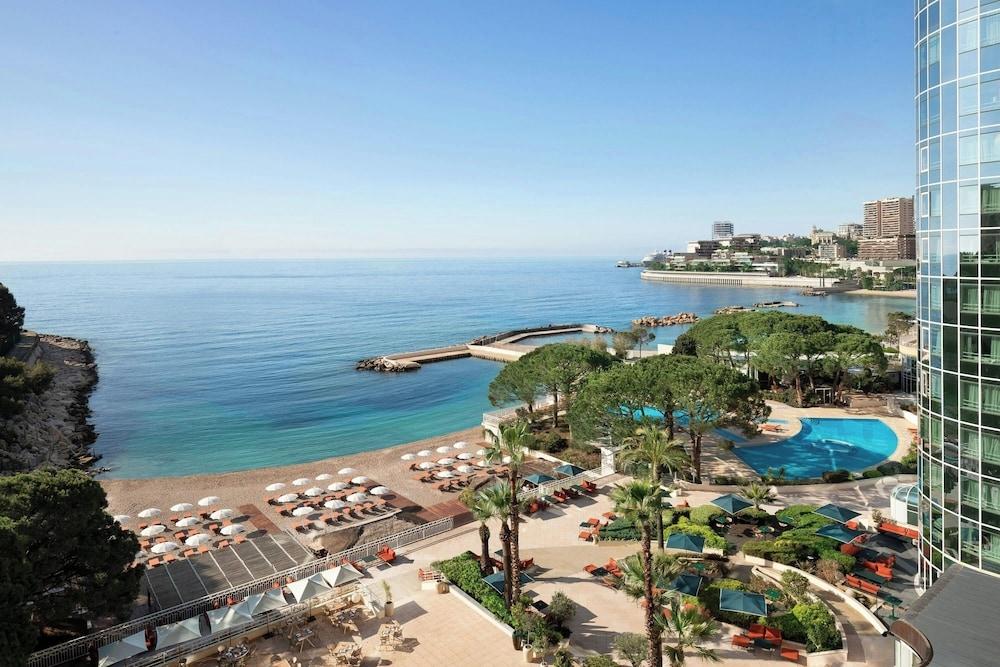
There are luxury destinations, and then there are places that seem to exist outside of time entirely.
Monte-Carlo Beach belongs firmly in the second category.
Set against the sparkling backdrop of the Mediterranean and positioned just moments from the centre of Monaco, the property has become one of the Riviera’s most enduring symbols of understated glamour. More than a hotel, Monte-Carlo Beach represents a lifestyle philosophy rooted in elegance, slowness, privacy and the timeless appeal of the Côte d’Azur.
And in 2026, that kind of luxury feels more relevant than ever.
While modern hospitality increasingly races toward spectacle, technology and hyper-connectivity, destinations like Monte-Carlo Beach are moving in the opposite direction. The emphasis is no longer simply on excess. It is on atmosphere, emotional calm and creating spaces that allow guests to disconnect from noise while remaining immersed in beauty.
That subtle shift is redefining luxury travel across the Riviera.

Originally opened in the 1920s during the golden age of Riviera travel, Monte-Carlo Beach has long attracted royalty, celebrities, entrepreneurs and international tastemakers drawn to Monaco’s unique balance of glamour and discretion. The property still carries that old-world Riviera identity today, blending art deco influence with contemporary Mediterranean sophistication.
Recent posts shared by Monte-Carlo Société des Bains de Mer continue reinforcing that positioning, describing the property as an “epitome of glamour” and a place where “Riviera elegance” still defines the experience.
What makes the destination particularly interesting now is how closely it aligns with wider changes taking place within luxury travel itself.
Affluent travellers are increasingly seeking emotional luxury rather than visible luxury alone. Privacy has become more valuable than visibility. Calm has become more desirable than excess. Experiences centred around wellness, slowness and psychological restoration are now shaping some of the world’s most exclusive hospitality trends.
Monte-Carlo Beach naturally fits within that evolution.

One recent Monte-Carlo Société des Bains de Mer feature highlighted the property’s private beach cabins overlooking the Mediterranean, describing them as spaces designed around “tranquility, privacy and spectacular views.” That language reflects a broader industry movement toward what many now describe as “quiet luxury” — experiences built around emotional comfort, discretion and exclusivity without overt performance.
The French Riviera has become one of the defining locations for this transition.
Across Monaco, Saint-Tropez, Cap Ferrat and the wider Côte d’Azur, luxury hospitality is increasingly evolving away from traditional maximalism and toward more curated, experience-driven living. Wellness integration, low-density environments, private villas and slower lifestyle experiences are becoming central to how premium hospitality brands position themselves.
This is influencing not just tourism, but property, design and cultural identity throughout the region.
Monte-Carlo itself has been undergoing a wider lifestyle transformation in recent years, with major investment into dining, wellness, cultural programming and luxury infrastructure. New hospitality concepts, redesigned restaurants and elevated wellness experiences are increasingly shaping Monaco’s positioning as a year-round luxury destination rather than simply a seasonal playground.
Monte-Carlo Beach sits directly at the centre of that identity.

Unlike many contemporary luxury resorts built around scale and spectacle, the appeal of Monte-Carlo Beach lies in restraint. The architecture never overwhelms the landscape. Interiors lean into Riviera softness rather than aggressive opulence. The Mediterranean remains the focal point at almost every angle.
That restraint is precisely what makes the property feel timeless.
In many ways, Monte-Carlo Beach represents the original Riviera dream: sea air, understated elegance, long lunches overlooking the coast, private terraces, soft architecture and a lifestyle centred around presence rather than urgency.
And increasingly, that slower rhythm has become aspirational again.
Luxury travellers are now placing greater emphasis on emotional wellbeing, privacy and meaningful atmosphere. Technology saturation and hyper-connected lifestyles have created growing demand for destinations capable of delivering mental stillness rather than simply entertainment volume.
Hospitality itself is beginning to respond accordingly.
Industry conversations increasingly focus on concepts such as “slow travel,” restorative hospitality and experiential calm. The idea is not simply to provide luxury amenities, but to create environments that genuinely change how people feel during their stay.
Monte-Carlo Beach appears naturally designed for that purpose.
The Riviera has always sold fantasy, but today the fantasy is evolving. It is no longer purely about visibility, yachts and social status. Increasingly, it is about access to calm, space and effortless living.
That may explain why destinations rooted in timeless elegance continue resonating so strongly despite dramatic changes across global luxury culture.
Because while trends evolve constantly, true Riviera living has always been built around something far simpler: beauty, atmosphere and the feeling that time itself slows down beside the Mediterranean.