



The global mining industry is entering a new era, and increasingly, companies are beginning to reposition themselves not simply as miners, but as long-term suppliers of the materials powering the modern economy.
Taseko Mines’ decision to rebrand itself as Trekor Metals reflects exactly that shift.
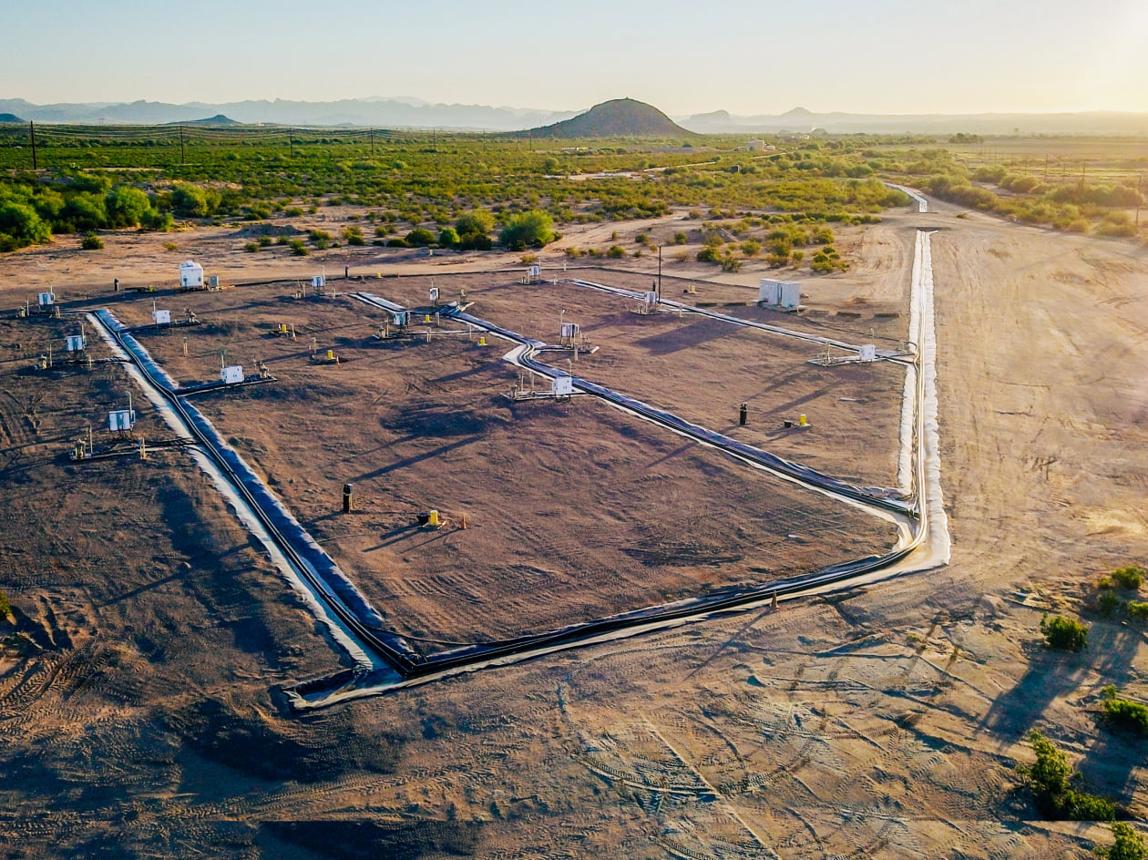
The Canadian copper producer announced plans to rename the company as it continues expanding its North American operations and production profile, with shareholders set to vote on the proposed change at the company’s upcoming annual meeting in Vancouver this June. The move comes during a major growth phase for the business, particularly following the advancement of its Florence Copper project in Arizona and continued development of its wider copper portfolio across Canada and the United States.
While corporate rebrands are often dismissed as cosmetic, this one carries broader strategic meaning.
Mining companies globally are increasingly repositioning themselves around the future of electrification, critical minerals and long-term industrial supply security. Copper in particular has become one of the world’s most strategically important commodities as governments and industries accelerate investment into renewable energy infrastructure, EV production, data centres and electrified transport systems.
And companies want their branding to reflect that future.

Taseko’s transformation into Trekor Metals reflects how dramatically the company itself has evolved over the past two decades. Once primarily associated with a smaller regional mining footprint, the business now positions itself as a growing North American copper platform with multiple operating and development assets spread across stable mining jurisdictions.
Its Gibraltar Mine in British Columbia remains a foundational asset and one of Canada’s largest open-pit copper operations, while Florence Copper in Arizona represents a major expansion milestone. The Florence project is expected to produce approximately 85 million pounds of copper annually across a projected 22-year mine life, helping significantly increase the company’s long-term production capacity.
That growth trajectory explains why management believes the time is right for a new identity.
According to CEO Stuart McDonald, the rebrand is designed to reflect both the company’s current scale and its future ambitions as it expands its role within North America’s copper sector.
Importantly, this is not happening in isolation.
Across the global mining industry, companies are increasingly reshaping their corporate narratives around energy transition materials rather than traditional resource extraction. Copper, lithium, nickel and rare earths are no longer viewed simply as industrial commodities. They are now strategic materials central to global decarbonisation efforts and future industrial competitiveness.
That shift is changing how mining companies present themselves to investors, governments and the wider public.
Copper sits directly at the centre of that transformation. Widely referred to as “the metal of electrification,” copper demand is forecast to rise dramatically over the next decade as nations build renewable grids, EV charging infrastructure and large-scale energy storage systems. Industry forecasts continue warning of significant long-term copper supply shortages unless major new production capacity comes online globally.
This is creating enormous strategic value for producers operating within politically stable regions like Canada and the United States.
Governments are increasingly prioritising domestic and allied supply chains for critical minerals, reducing reliance on overseas production and strengthening industrial resilience. Companies capable of supplying large-scale copper production from North American operations are therefore attracting growing investor and policy attention.
Taseko’s rebrand appears carefully aligned with that narrative.
The proposed Trekor identity signals a broader metals-focused positioning rather than a company associated primarily with a legacy corporate name. It also reflects a wider trend where mining firms increasingly market themselves less as traditional extractive businesses and more as infrastructure enablers for the global energy transition.
That distinction matters in today’s investment environment.
Mining companies now face growing pressure to demonstrate sustainability strategies, long-term environmental planning and alignment with global decarbonisation goals. Investors increasingly want exposure to critical minerals growth while simultaneously expecting stronger ESG performance and more responsible resource development.
Copper producers occupy a particularly interesting position within that debate.
On one hand, mining remains environmentally intensive and politically sensitive. On the other, copper is fundamentally essential for electrification itself. Renewable energy systems, electric vehicles, battery infrastructure and data-driven economies all require enormous amounts of mined material to function.
In many ways, mining has become both part of the climate challenge and part of the climate solution simultaneously.

Florence Copper itself represents part of that evolving operational strategy. The Arizona project uses in-situ copper recovery technology, which differs significantly from conventional open-pit mining and is positioned as a lower-impact extraction method compared to traditional operations. The project has already produced its first copper cathodes following the start of SX/EW plant operations earlier this year.
That operational diversification is important because the mining industry itself is changing rapidly.
Investors are increasingly favouring producers capable of combining large-scale resource exposure with operational efficiency, lower environmental impact and stable jurisdictional positioning. The days of mining companies competing purely on resource volume alone are gradually fading.
Instead, scalability, geopolitical reliability and long-term supply relevance are becoming key differentiators.
The proposed Trekor name appears designed to communicate exactly that kind of future-facing positioning.
More broadly, the rebrand also reflects growing confidence across the North American copper sector itself. Rising long-term demand expectations, combined with concerns around global supply constraints, are driving renewed investment into copper exploration, development and production projects throughout Canada and the United States.
And timing matters.
As global governments accelerate industrial policy around electrification, energy infrastructure and critical minerals security, mining companies supplying these materials are becoming strategically important not just commercially, but geopolitically as well.
That changes how the entire sector is perceived.
Mining companies are no longer operating solely within commodity cycles. Increasingly, they are becoming part of broader conversations surrounding national infrastructure, energy independence, manufacturing resilience and long-term economic security.
Taseko’s transition toward Trekor therefore represents more than a simple name change.
It reflects how the mining industry itself is evolving from a traditional resource sector into one of the foundational pillars supporting the next generation of global industrial growth.