



The race to decarbonise aviation has produced countless innovations, from sustainable aviation fuels and hydrogen propulsion to battery-powered aircraft. Yet one of the biggest obstacles remains the same: how do you generate enough power for flight without adding too much weight?
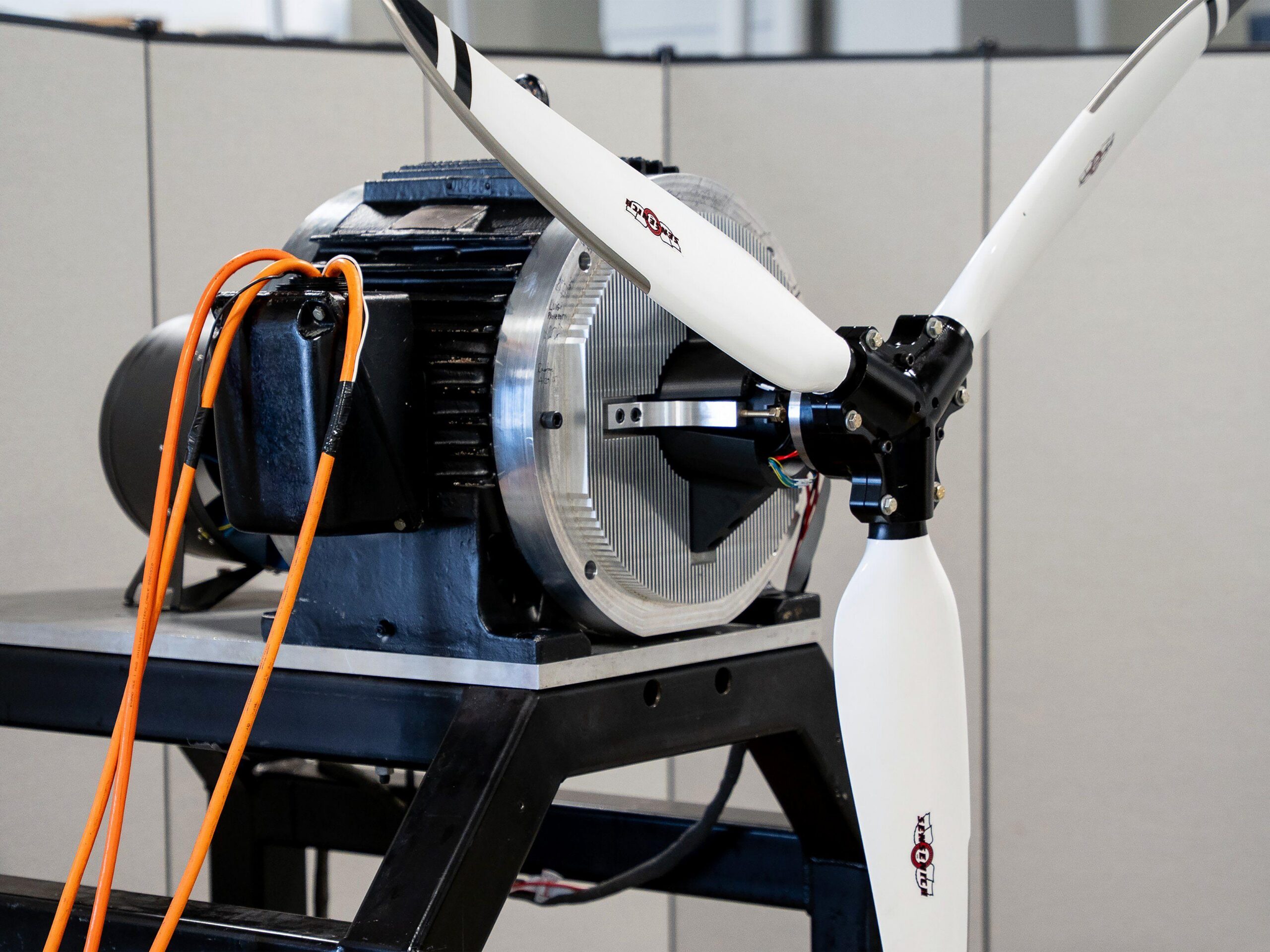
Researchers at the University of Strathclyde in Glasgow may have taken an important step towards solving that problem with the successful demonstration of a 100kW fully superconducting aviation motor, a breakthrough that could help pave the way for the next generation of electric and hydrogen-electric aircraft.

Why Weight Matters in Electric Aviation
Unlike cars, aircraft face an unforgiving challenge. Every kilogram added to an aircraft impacts efficiency, range and payload capacity. While electric propulsion offers significant environmental benefits, current electric motors and battery systems remain too heavy for larger commercial aircraft.
This is where superconducting technology becomes particularly exciting.
Superconductors are materials capable of carrying extremely large electrical currents with virtually no electrical resistance when cooled to very low temperatures. The Strathclyde team’s motor uses high-temperature superconducting (HTS) technology operating at around 20 Kelvin, approximately -253°C. At these temperatures, energy losses become almost negligible, allowing engineers to create motors that are significantly lighter and more powerful than conventional electrical machines.
For aviation, higher power density means more power from a smaller and lighter motor, a crucial requirement if electric aircraft are ever to become commercially viable.
A World-First Design
The prototype developed by the Applied Superconductivity Laboratory (ASL) represents one of the world’s first attempts to build a fully superconducting axial-flux motor specifically for aviation applications. Unlike traditional electric motors, axial-flux designs are known for delivering exceptional torque and power density while maintaining a compact footprint.
The system integrates several advanced technologies into a single platform, including superconducting windings, brushless excitation systems and rotational cryogenic operation. Together, these components create a proof-of-concept machine capable of demonstrating how superconductivity could transform future aircraft propulsion systems.
According to Professor Min Zhang, who leads the Applied Superconductivity Laboratory, superconducting technology offers a promising route towards lighter and more efficient propulsion systems, although major engineering challenges remain in cooling, protection and system integration.
The Hydrogen Connection
One reason superconducting aviation is attracting increasing attention is its natural compatibility with hydrogen-powered aircraft.
Hydrogen must already be stored at extremely low temperatures, creating an opportunity for future aircraft designs to utilise that cryogenic environment for cooling superconducting motors and electrical systems. Rather than treating cooling as an additional burden, future aircraft could potentially integrate fuel storage, cooling systems and propulsion into a unified architecture.
This concept has become a major focus across the aviation industry, with companies and research institutions including Airbus, Toshiba, Hinetics and multiple European aerospace programmes exploring superconducting propulsion technologies for future hydrogen-electric aircraft.

Beyond 100kW: The Road to Megawatt-Class Flight
While 100kW may sound modest compared to the power requirements of commercial airliners, this demonstration is not about powering passenger aircraft today. It is about proving technologies that could eventually scale to megawatt-class propulsion systems.
Future regional aircraft, hydrogen-powered airliners and advanced electric aircraft concepts are expected to require motors capable of producing several megawatts of power while maintaining extremely low weight. Researchers believe superconducting machines may be one of the few technologies capable of delivering the necessary performance.
The Strathclyde project forms part of the Aerospace Technology Institute-funded ZEST programme led by Airbus and also builds upon wider European research into zero-emission aviation technologies. The successful operation of the demonstrator strengthens the case for larger superconducting propulsion systems in the future.
Engineering Challenges Still Ahead
Despite the breakthrough, significant hurdles remain before superconducting motors find their way onto commercial aircraft.
Maintaining cryogenic temperatures during flight, ensuring system reliability, managing cooling requirements and integrating superconducting machines into complete aircraft architectures are all substantial engineering challenges. Researchers must also address issues such as AC losses, thermal management and certification standards before the technology can move beyond the laboratory.
Yet the aviation industry increasingly views superconductivity as one of the most promising pathways towards larger zero-emission aircraft, particularly when combined with hydrogen propulsion systems.
A Glimpse of Aviation’s Next Era
For decades, electric aviation has been constrained by the simple reality that batteries, motors and power systems have struggled to achieve the performance required for meaningful commercial flight. Superconducting technology changes that equation.
The successful demonstration of a fully superconducting 100kW aviation motor by the University of Strathclyde may not grab headlines in the same way as a new aircraft launch, but it represents something potentially more important: a glimpse of the propulsion technologies that could define aviation’s future.
If researchers can successfully scale these systems from hundreds of kilowatts to multiple megawatts, the industry may move significantly closer to a future where electric and hydrogen-electric aircraft become practical alternatives to today’s fossil-fuel-powered fleets. For an industry under growing pressure to reduce emissions, that future cannot come soon enough.