



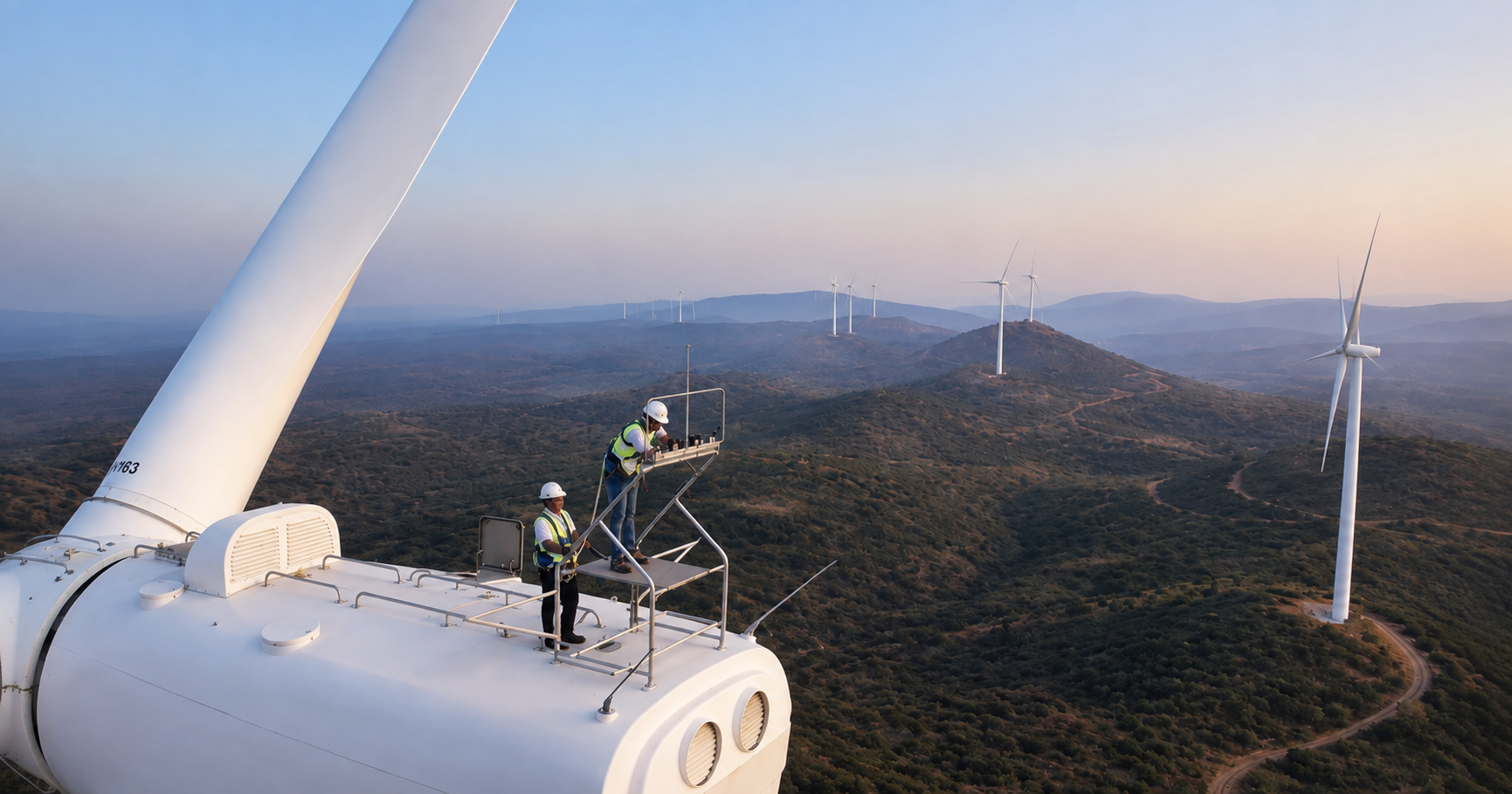
India’s renewable energy sector is showing how business growth and sustainability can work alongside one another, with ReNew reporting significant progress in cutting emissions while expanding its clean power generation.
The company, described as India’s second largest renewable energy company, has published its annual report for the 2025/26 financial year, highlighting reductions in operational emissions, increased clean electricity generation and a growing focus on wider environmental and social impact.
ReNew exceeds emissions reduction target
According to the report, ReNew reduced its Scope 1 and 2 emissions by 25.6% compared with its 2021 baseline. This exceeded the company’s target of a 23.5% reduction and reflects its efforts to accelerate decarbonisation across its operations.
During the financial year, ReNew generated 24.7 billion units of clean electricity. According to the company, this was enough to power more than 21 million homes across India.
The company also reported that its renewable energy portfolio helped prevent nearly 20.8 million tonnes of CO₂ equivalent from entering the atmosphere during the period.
The figures highlight the potential for clean energy sustainability to deliver measurable environmental benefits while supporting the continued expansion of renewable power.
Moving beyond renewable power
ReNew’s annual report, titled Beyond Boundaries: Decarbonising Value Chains to Deliver Climate Value at Scale, sets out the company’s ambition to become more than a renewable power producer.
The company describes itself as a “decarbonisation solutions provider”, with its sustainability strategy increasingly extending into areas including green hydrogen, battery storage, solar manufacturing and emissions management.
Vaishali Nigam Sinha, ReNew’s Co Founder and Chair of Sustainability, said the company believes climate value requires businesses to look beyond clean power generation and consider the wider value chains influencing environmental and social impact.
ReNew currently operates a 12.8 GW portfolio covering solar, wind, hydropower and storage. It also plans to add 4 GW of solar cell capacity by the end of 2026, subject to rollout timelines.
Water conservation and the circular economy
ReNew’s sustainability work also extends beyond emissions.
The company reported saving 617 million litres of water during the financial year and has set a target of becoming water positive by the end of the decade.
Its circular economy programme, Project Revival, restored around 621 tonnes of spare parts during the reporting period. By extending the useful life of existing equipment, the initiative has the potential to reduce waste and support more efficient use of resources.
The company has also increased its focus on sustainability across its supply chain. ESG assessments now cover 100% of its critical suppliers, helping ReNew assess environmental, social and governance standards beyond its own direct operations.
Sustainability and technology
Technology is another part of ReNew’s evolving approach. Its latest report includes details of a Responsible AI Policy designed to provide a governance framework for the use of artificial intelligence across operations and decision making.
The company has also introduced its first ESG Data Book, reflecting a wider focus on measuring and reporting sustainability performance.
Together, these initiatives demonstrate how sustainability is increasingly being integrated into business operations, supply chains and corporate governance rather than being treated as a standalone environmental objective.
A broader vision for clean energy
ReNew’s latest results demonstrate the scale of change taking place across India’s renewable energy sector. Its focus is not only on producing more clean electricity, but also on reducing operational emissions, conserving resources, improving supply chain standards and exploring technologies that could support wider decarbonisation.
As businesses around the world face increasing pressure to reduce their environmental impact, ReNew’s approach offers an example of how investment in clean energy can be combined with broader sustainability goals.
For ReNew, the next stage is about expanding that impact beyond electricity generation and towards a wider model of decarbonisation, resource efficiency and responsible growth.
Source: Sustainability Magazine / ReNew Energy Global
Images: ReNew