



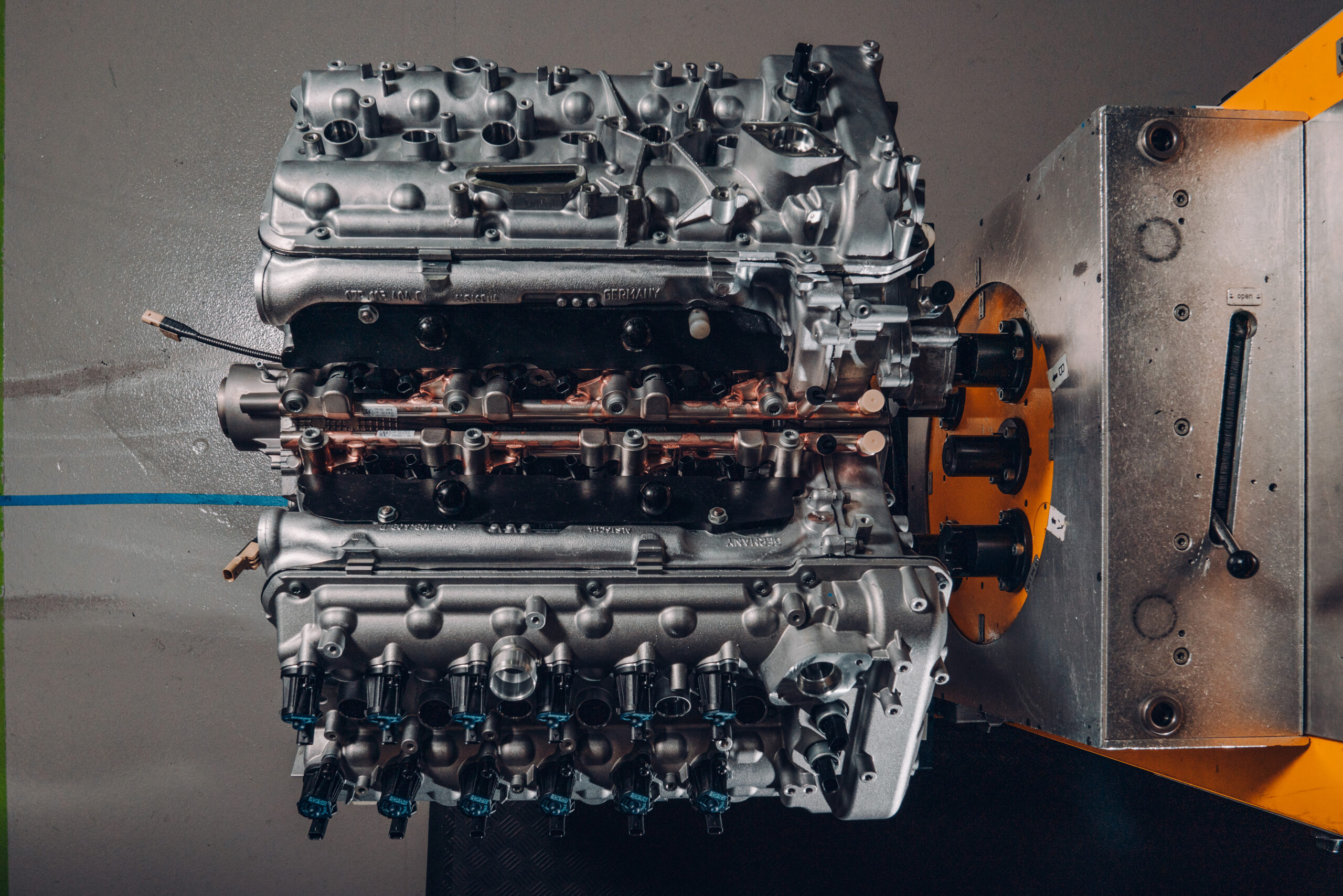
Britain’s advanced manufacturing sector has received a major boost with nearly £130 million of government and industry investment set to accelerate the development of next-generation vehicle technologies and support more than 1,800 skilled jobs across the country.
The investment will support a broad range of projects spanning electric vehicles, battery technology, advanced materials, automated manufacturing and connected mobility, strengthening the UK’s position within the rapidly evolving global automotive industry.
Around £65 million of government support is being matched by industry investment, with funding being delivered largely through the UK Government’s DRIVE35 programme. The initiative forms part of a wider £4 billion commitment designed to support automotive electrification and advanced vehicle manufacturing through to 2035.
More than 30 automotive projects are receiving support through the latest funding round, bringing together established manufacturers, technology specialists, SMEs and research organisations.
Among the businesses benefiting are Bentley Motors, Turntide Technologies, YASA, Q5D Technologies, Cornish Lithium and Nexperia UK.
From Innovation to Manufacturing
A key focus of the investment is helping British businesses move promising technologies beyond research and development and into commercial production.
Five projects alone will receive £26.9 million through the DRIVE35 Scale-up Fund, representing more than £55 million when combined with industry investment.
Projects include Turntide Technologies’ plans to increase production of advanced electric motors, with the company targeting manufacturing cost reductions of 59 per cent.
Cornish Lithium will continue work aimed at developing a domestic source of lithium from geothermal waters, while Watercycle Technologies is developing processes to recover and refine lithium from waste streams for use in battery manufacturing.
Strip Tinning is also scaling production of components used in electric vehicle battery packs.
Elsewhere, Bentley Motors and Ionetic are collaborating on a project designed to localise the manufacture of battery packs for battery electric and plug-in hybrid vehicles in the UK. Q5D Technologies is working alongside JLR, Artifex Interior Systems and the University of Warwick to industrialise automated manufacturing technology for automotive wiring harnesses.
“The ambition is not simply to develop the technologies behind the next generation of vehicles, but to manufacture them at scale on home soil.”
Building a Stronger UK Supply Chain
The programme extends beyond vehicle production itself, targeting the technologies, materials and manufacturing capabilities required to create a more resilient domestic automotive supply chain.
Projects range from next-generation battery management systems and recyclable vehicle materials to rare-earth-free electric motors and automated EV battery disassembly.
Advanced Propulsion Centre UK Chief Executive Ian Constance said the projects demonstrate the depth of innovation and engineering expertise across Britain’s automotive industry.
He said DRIVE35 was helping companies take technologies towards commercial deployment and manufacturing at scale, while strengthening the UK’s ability to design and manufacture the systems that will define future vehicles.
Connected and automated mobility is another important element of the investment. A further £17 million is being directed towards nine projects developing technologies including sensors, artificial intelligence simulation, automated public transport and autonomous systems for airports, construction and highway maintenance.
The government estimates that the combined investment announced in August will support more than 1,800 high-value manufacturing jobs alongside thousands of additional positions throughout the automotive supply chain.
With electrification, automation and advanced materials transforming vehicle manufacturing worldwide, the latest investment represents a concerted effort to ensure that British engineering expertise is converted into long-term industrial capacity, manufacturing employment and export opportunities.
For the UK automotive sector, the ambition is increasingly clear: not simply to develop the technologies behind the next generation of vehicles, but to manufacture them at scale on home soil.