



Agriculture faces a complex challenge. As the global population grows and demand for reliable food supplies increases, producers must protect crops, maintain animal health and ensure food safety, all while responding to mounting pressure to reduce reliance on conventional chemicals and antibiotics.
For Phagelux AgriHealth, part of the answer lies in nature itself. By harnessing bacteriophages, naturally occurring viruses that target and kill bacteria, the company is developing biological solutions designed to address bacterial challenges across crop science, animal health and food safety.
Speaking with Jamie Waite, Group CEO of Enquirer Media Group, Matthew Tebeau, Chief Operating Officer of Phagelux AgriHealth, discussed the company’s international growth, the challenges of bringing biotechnology to commercial scale and its ambitions to expand the use of bacteriophage solutions worldwide.
“The opportunity is not simply to develop promising science, but to turn it into practical products that address genuine customer needs.”
An Unconventional Route into Biotechnology
Tebeau’s route into biotechnology began outside the laboratory. Raised in St Louis in the United States, he studied at Dartmouth College before completing an executive MBA at Harvard. His early career took him to Central Europe, where he helped businesses expand in the period following the collapse of communist systems across the region.
Although this work offered valuable commercial and international experience, Tebeau became increasingly interested in how he could make a broader contribution through entrepreneurship and innovation.
Bacteriophages provided an opportunity to combine those ambitions. Their ability to target bacteria, together with their potential applications in agriculture and other industries, attracted his attention. He subsequently spent several years working with early-stage biotechnology companies, gaining experience in product development before joining Phagelux AgriHealth just over three years ago.
Today, the company operates as a commercial-stage bacteriophage business, with approximately a dozen products sold internationally. Its operations span the United States and China, supported by manufacturing and research capabilities, alongside partnerships across Europe, South Korea, Brazil and Southeast Asia.
With revenue generated in around 15 countries, Phagelux has established a growing international presence, with the United States representing its largest market.
For Tebeau, this commercial foundation is essential. The opportunity is not simply to develop promising science, but to turn it into practical products that address genuine customer needs across different agricultural and food production environments.
Understanding the Science Behind Bacteriophages
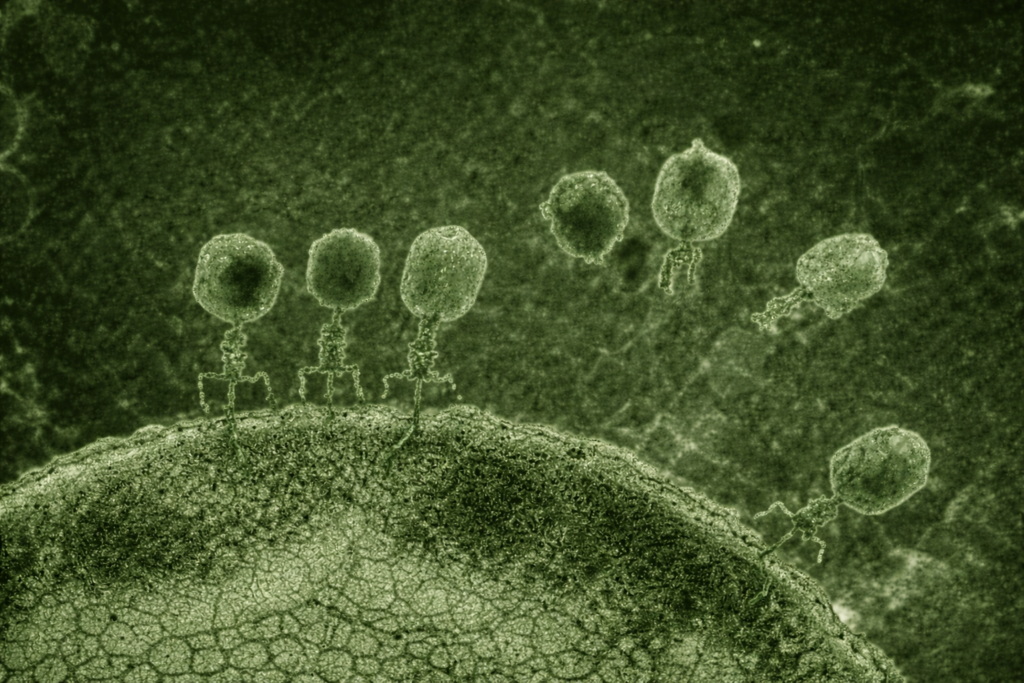
Bacteriophages, often shortened to phages, are viruses that infect specific bacteria. They occur naturally throughout the environment and play an important role in regulating bacterial populations.
Unlike antibiotics, which can affect a wider range of bacteria depending on the compound used, bacteriophages can be selected for their ability to target particular bacterial strains. This specificity makes them an area of growing interest for applications where controlling harmful bacteria without unnecessarily disrupting beneficial microbial communities is important.
Although bacteriophages were discovered before antibiotics, their wider development was historically limited by the technology available to researchers. Advances in genomic sequencing, fermentation and biological manufacturing have since created new opportunities to develop, produce and commercialise phage-based solutions.
Phagelux is applying this science to three core areas: crop science, food safety and animal health.
Across these sectors, the objective is to manage harmful bacteria while developing alternatives that can complement existing production methods. The commercial opportunity rests on making the technology reliable, accessible and suitable for the practical demands of farms, food producers and animal health professionals.
From Laboratory Discovery to Commercial Scale
One of the principal challenges for biotechnology companies is moving from successful laboratory research to consistent commercial production.
For bacteriophages, this involves more than identifying a suitable biological agent. Manufacturers must also establish reliable production methods, maintain product purity, select phages that can be produced efficiently and ensure formulations remain effective during storage and use.
Phagelux has placed these considerations at the centre of its development process. Rather than treating manufacturing as a separate stage after research, the company considers scalability from the outset, alongside an understanding of market requirements.
Its approach involves developing a platform that allows products to move through comparable manufacturing processes. Fermentation and filtration
are important elements, helping to establish consistent production and product quality.
Stability is another critical factor. Agricultural and animal health products may spend considerable time in storage before being applied in the field or administered to animals. They must also withstand different environmental conditions, including exposure to sunlight and the demands of their intended applications.
Tebeau explained that Phagelux has made substantial improvements in this area, with the aim of ensuring its products have a shelf life comparable to conventional crop and animal health products.
These capabilities are central to commercial adoption. Even an effective biological solution will struggle to gain traction if it cannot be manufactured consistently, transported efficiently and used reliably by customers.
Supporting More Sustainable Crop Production
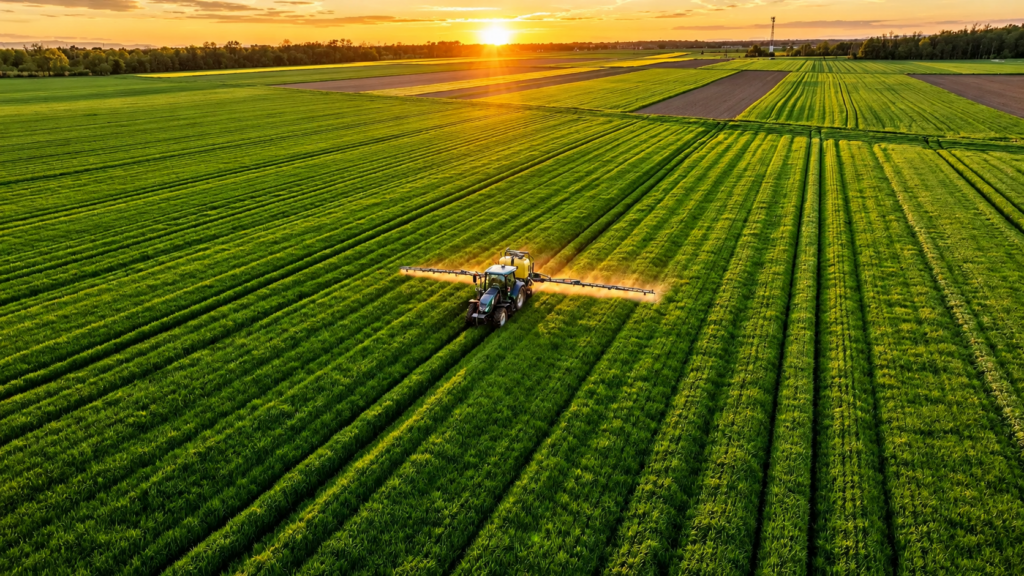
The potential benefits of bacteriophages are particularly evident in crop protection, where bacterial diseases can reduce yields, damage produce and create significant financial losses for farmers.
Tebeau highlighted bacterial diseases affecting speciality crops, including tomatoes, where visible lesions can make otherwise usable produce less attractive to consumers and retailers.
Phage-based treatments are already being used in parts of the United States to manage certain bacterial diseases in tomato production. By targeting the bacteria responsible for these problems, such treatments can help protect crop quality and reduce losses.
Their potential environmental advantages are also significant. Because bacteriophages target particular bacteria, they may offer a more selective approach than some conventional chemical treatments. Depending on the product and its application, this can help reduce chemical inputs and avoid unwanted residues.
Tebeau also outlined the economic benefits that effective bacterial disease management can bring to farmers. Better crop quality, improved yields and reduced disease-related losses can support stronger commercial returns, particularly where crops represent a substantial long-term investment.
Apple production provides another example. Fire blight, a bacterial disease affecting apple trees, can cause serious damage and reduce productivity for years after infection. In severe cases, affected trees may die, leaving growers with the cost of replacement and lost future harvests.
Solutions that help manage this disease could therefore protect not only a single season’s crop, but also the long-term value of orchards.
For Phagelux, sustainability and commercial performance are closely connected. Helping growers protect their crops while using resources more efficiently can support both environmental objectives and the economic resilience of agricultural businesses.
Expanding Across Animal Health and Food Safety
Beyond crop science, Phagelux is developing its position in animal health and food safety, where bacterial control remains a significant challenge.
In animal health, bacteriophages offer the potential to target specific harmful bacteria and support efforts to maintain animal wellbeing. This is particularly relevant as producers and regulators continue to examine how antibiotics are used and how the risks associated with antimicrobial resistance can be addressed.
Food safety represents another important application. Controlling harmful bacteria at appropriate stages of food production and processing can help businesses protect product quality and strengthen food safety practices.
However, these are distinct markets, each with its own technical requirements, regulatory considerations and customer expectations. Success depends on developing solutions suited to individual applications rather than assuming a single product can address every bacterial challenge.
Phagelux’s strategy is therefore to expand its product offering across all three business areas, building on its existing commercial experience and manufacturing platform.
A Global Vision for the Future
Looking ahead, Tebeau outlined three priorities for the company: expanding into additional international markets, strengthening Phagelux’s reputation as a specialist in bacteriophage technology and developing complementary products that address related customer needs.
Building on its established operations in the United States and China, the company sees opportunities across the Americas, Southeast Asia and Europe. International growth will depend on working with partners who understand local markets and on ensuring products meet the requirements of each region.
At the same time, Phagelux intends to broaden its portfolio across crop science, animal health and food safety, creating a more comprehensive offering for customers.
For Tebeau, this customer-focused approach remains central to the company’s ambitions. The long-term opportunity is to combine scientific innovation with practical solutions that improve performance and help businesses respond to changing production demands.
Away from his work in biotechnology, Tebeau enjoys kayaking, hiking and running, alongside playing golf. He also has an academic interest in American literature, particularly nineteenth-century writing about the sea.
His career reflects a broader lesson about innovation: progress does not always come from following a conventional path. Commercial experience, curiosity and a willingness to explore emerging technologies can be equally important in bringing new ideas to market.
As agriculture and food production face growing pressure to become more efficient and sustainable, bacteriophages offer a promising area of development. For Phagelux AgriHealth, the next stage is to build on its commercial foundations, expand its international reach and demonstrate how nature-inspired biotechnology can deliver practical value across the global food system.