



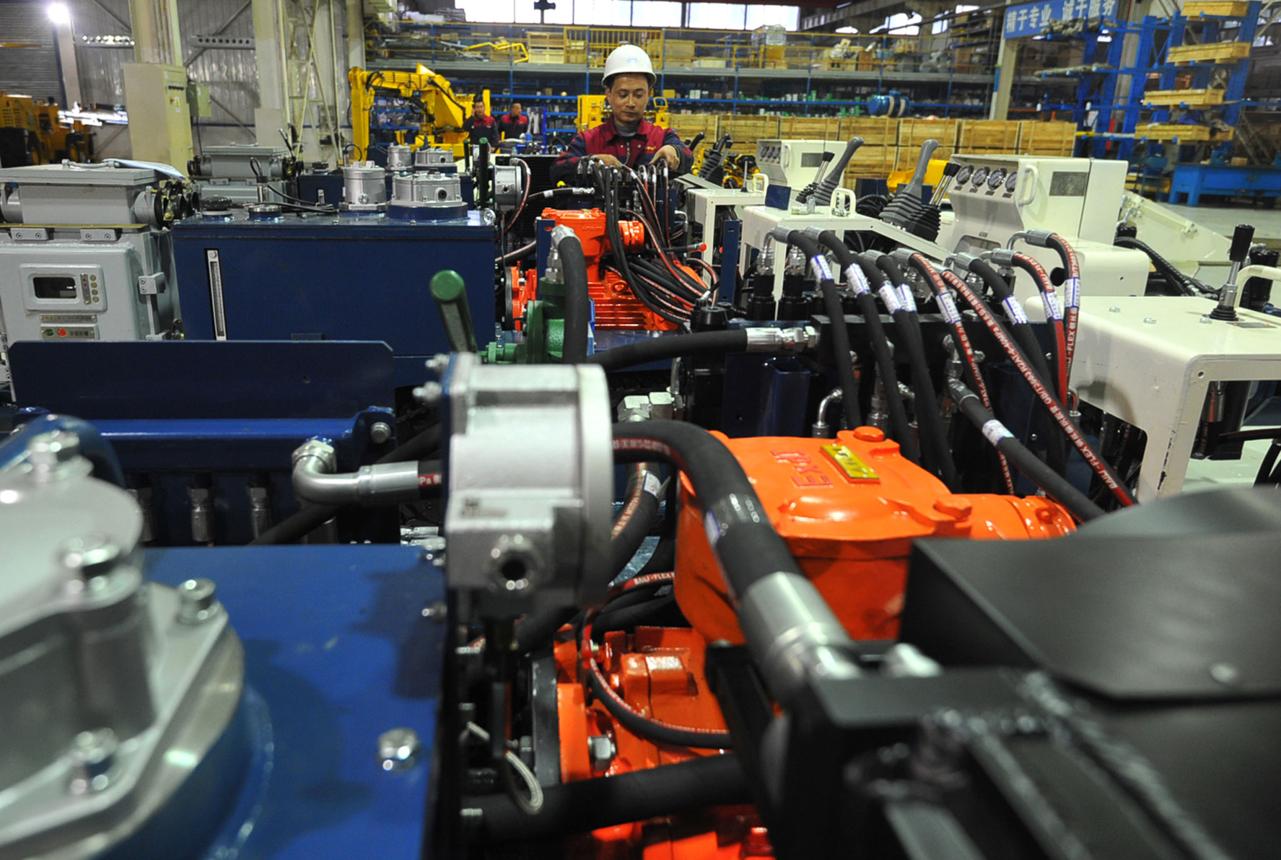
China’s manufacturing sector delivered a surprise boost at the start of June after a closely watched private survey showed factory activity performing better than expected in May. The data offered a more optimistic view of the country’s industrial momentum, even as official figures suggested growth across the sector is beginning to soften.
The mixed signals highlight a broader reality facing the Chinese economy. While advanced manufacturing, technology exports and AI-related industries continue to provide support, policymakers are increasingly navigating weaker domestic demand, rising costs and a more uncertain global economic environment.
According to a private manufacturing survey compiled by S&P Global, China’s factory activity expanded for a sixth consecutive month in May, with the Purchasing Managers’ Index coming in at 51.8. Although slightly lower than April’s reading of 52.2, the figure remained above expectations and comfortably above the 50-point level that separates expansion from contraction.

The result stood in contrast to China’s official manufacturing PMI, which showed activity slowing significantly and effectively stalling in May. The government survey fell to 50 from 50.3 in April, reflecting weaker demand conditions and growing pressure on parts of the manufacturing sector.
The difference between the two surveys is important.
Official PMI data tends to focus more heavily on larger state-owned manufacturers, while private surveys often provide greater visibility into smaller and privately owned businesses. In this case, the private data suggests that segments of China’s manufacturing economy are proving more resilient than broader official figures imply.
That resilience is being driven by several factors.
Production continued expanding during May, supported by demand for investment goods, technology products and AI-related infrastructure. China’s export sector has remained relatively strong despite wider economic challenges, with demand linked to semiconductors, computing equipment and advanced electronics continuing to support overseas sales. Analysts cited by major financial institutions estimate AI-related products accounted for a significant share of export growth earlier this year.
The rise of artificial intelligence is becoming an increasingly important part of China’s industrial story.
As global investment into AI accelerates, demand for servers, semiconductors, networking equipment and power infrastructure has increased sharply. China remains one of the world’s largest manufacturing hubs for many of these components, helping offset weakness in more traditional sectors.

However, the broader economic picture remains far more complex.
One of the biggest concerns is demand.
While exports have continued to provide support, domestic consumption remains uneven. China’s property sector slowdown continues to weigh on confidence, while retail spending and industrial production have shown signs of cooling in recent months. Economists increasingly view domestic demand as one of the most important challenges facing policymakers.
Export markets are also becoming less predictable.
The private PMI survey showed new export orders declining for the first time in several months, reflecting softer global demand conditions. Rising energy costs, geopolitical uncertainty and continued trade tensions are creating additional pressures for manufacturers dependent on international markets.
At the same time, manufacturers continue dealing with higher input costs.
Although inflationary pressures eased slightly during May, businesses still face rising costs linked to raw materials, logistics and global supply chain disruptions. Ongoing instability in the Middle East and energy markets has added another layer of uncertainty for industrial producers around the world, including those in China.
One area offering encouragement is the performance of higher-value manufacturing industries.
China’s high-tech manufacturing and equipment production sectors continue to outperform more traditional industrial categories. Official data showed stronger readings in advanced manufacturing segments linked to semiconductors, electronics and AI infrastructure, highlighting the country’s ongoing push toward more technologically sophisticated production.

This shift reflects a broader transformation taking place across the Chinese economy.
For years, China’s growth model was heavily tied to property development, infrastructure spending and low-cost manufacturing exports. Increasingly, policymakers are attempting to transition toward higher-value industries, advanced technology, domestic innovation and consumption-driven growth.
The challenge is managing that transition while maintaining economic stability.
To support activity, Chinese authorities have introduced additional stimulus measures in recent months. The People’s Bank of China has lowered key lending rates, while policymakers have announced initiatives designed to improve public services and encourage household spending. These efforts are aimed at supporting growth without relying entirely on large-scale infrastructure stimulus.
Global investors are watching closely.
China remains the world’s second-largest economy and one of the most important drivers of global manufacturing demand. Any significant slowdown can affect everything from commodity prices and shipping volumes to supply chains and corporate earnings across international markets.
At the same time, China’s ability to maintain industrial growth despite external pressures continues to demonstrate the scale and adaptability of its manufacturing base.
Inside China’s Advanced Manufacturing Future
The latest PMI figures ultimately tell two different stories at once.
On one hand, China’s manufacturing sector continues to expand, supported by technology exports, AI-related demand and resilient production activity. On the other, slowing domestic demand, softer export orders and ongoing economic uncertainty suggest that growth is becoming increasingly uneven.
Rather than signalling either a boom or a downturn, the data points toward an economy in transition.
China’s factories are still moving forward, but the path ahead is likely to depend less on traditional growth drivers and more on how successfully the country can navigate the next phase of industrial and technological transformation. As global competition intensifies and economic conditions evolve, that transition may become one of the most important economic stories of the decade.