



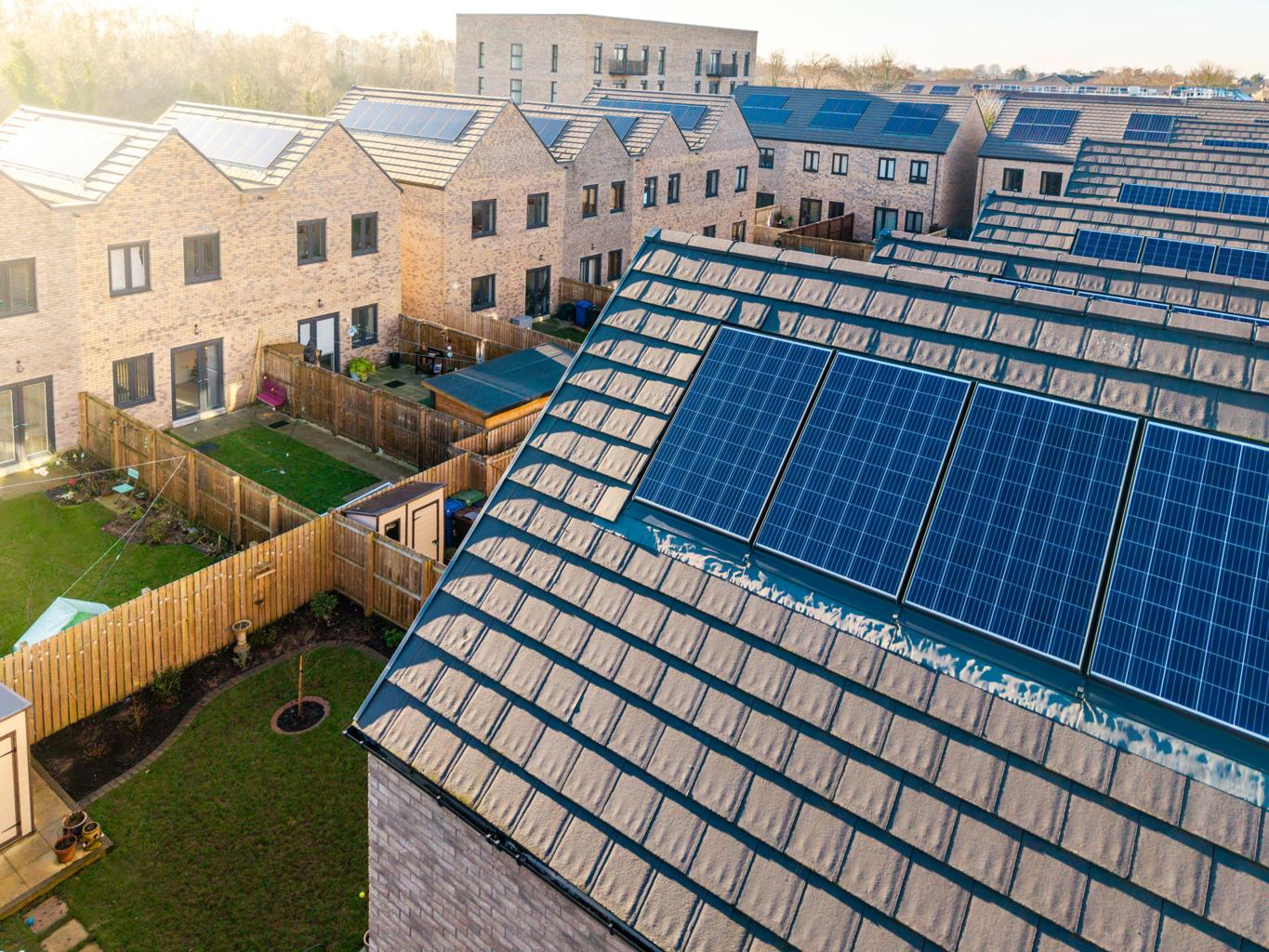
Solar power has emerged as the most desirable energy feature for people buying newly built homes in the UK, reflecting growing consumer demand for energy efficiency and protection from volatile electricity prices.
A nationally representative survey of 2,500 adults conducted by E.ON found that 75% of people would prefer to buy a new-build property with solar panels rather than one without them. In addition, 68% believe solar panels should be mandatory on all newly built homes.
The findings underline how renewable energy technology is moving from a “nice-to-have” feature to an expected standard in modern housing developments.
Solar Leads the List of Low-Carbon Technologies
The research shows solar power has overtaken other low-carbon technologies as the feature most buyers want to see in new homes.
According to the survey:
- 72% of respondents want solar panels installed in new homes
- 41% support heat pumps
- 41% favour electric vehicle charging points
- 38% want home battery storage systems
This preference likely reflects the immediate and visible financial benefits of solar technology. By generating electricity directly from rooftops, homeowners can reduce their reliance on the grid and cut long-term energy costs.
In fact, two-thirds of respondents said they would consider paying a slightly higher purchase price for a new home if it meant lower energy bills in the future.
Energy Costs Driving Buyer Behaviour
Rising energy bills have dramatically increased awareness of household running costs. Buyers are now paying closer attention to how a home generates and uses energy, rather than focusing solely on its size or location.
Survey data indicates 85% of potential buyers consider predictable energy costs an important factor when choosing a property.
Solar panels help address this concern by producing clean electricity directly at home, reducing exposure to fluctuating energy prices.
Government analysis suggests that installing rooftop solar on a typical UK home could save households around £530 per year on energy bills, making it one of the most practical energy upgrades available.
The Future Homes Standard and the Solar Push

4
The rising popularity of solar technology comes as the UK government prepares to implement the Future Homes Standard (FHS), a major update to building regulations aimed at improving the energy efficiency of new homes.
The new standard is expected to ensure that most new properties include rooftop solar panels as part of their design, alongside other low-carbon technologies such as heat pumps and improved insulation.
The policy aims to reduce household energy bills while helping the UK meet its long-term climate targets.
By integrating solar panels during construction rather than retrofitting them later, developers can significantly reduce installation costs and maximise efficiency.
A Shift Toward Energy-Smart Homes
The popularity of solar reflects a broader shift in how buyers evaluate property.
Modern homebuyers increasingly view housing not just as shelter but as an energy system capable of generating, storing and managing electricity. Technologies such as solar panels, battery storage and EV charging infrastructure are rapidly becoming key differentiators in the housing market.
Properties equipped with renewable energy systems often attract stronger buyer interest and can command higher values because they offer lower running costs and future-proof energy performance.
For developers, integrating these technologies is becoming essential to remain competitive as energy efficiency expectations rise.
The Bigger Picture
The growing demand for solar panels in new-build homes signals a deeper transformation within the UK housing market.
Rising energy costs, stricter environmental regulations and increasing awareness of climate issues are reshaping what buyers expect from modern homes. Renewable energy technologies are no longer niche upgrades—they are becoming core components of future housing design.
If current trends continue, solar power may soon become a standard feature across the majority of new homes in the UK, marking a significant step toward a more energy-independent and sustainable housing sector.