



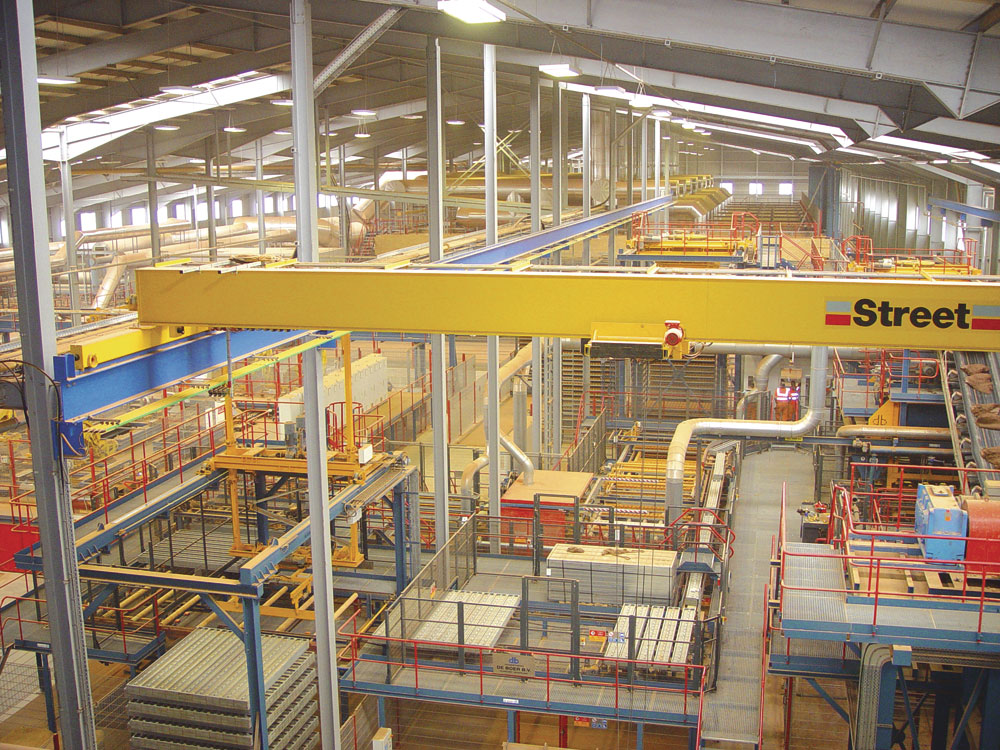
UK housebuilding giant Persimmon has increased production at its in-house brick factory to operate 24 hours a day, seven days a week as it responds to rising demand for materials across its housing developments.
The move forms part of a broader strategy to strengthen supply chains and reduce reliance on external building materials. By producing key materials internally, the company aims to improve cost control, construction efficiency and quality standards across its residential developments.
Persimmon’s latest financial results reveal that the company delivered around 60 million bricks in 2025, representing a 23% increase compared with the previous year, with the materials supplied to 258 building sites across the UK.
Scaling Up In-House Manufacturing
The company’s brickworks expansion reflects a growing trend among large housebuilders to bring key parts of the supply chain in-house.
Persimmon has invested heavily in three manufacturing operations:
- Brickworks – producing bricks for residential construction
- Tileworks – manufacturing roof tiles
- Space4 – its timber-frame housing production facility
According to the company, these internal supply operations are now the preferred source of materials across its developments, allowing it to maintain consistent product quality while reducing supply delays.
The shift also provides significant cost advantages, particularly at a time when construction materials and labour shortages continue to affect the UK building sector.
Adding a Third Shift
To meet the growing demand for its next-generation bricks, Persimmon introduced a third production shift at the brickworks facility during 2025.
This expansion means the plant now operates continuously around the clock. The company is also preparing for further growth, with plans to add another production line that could open in 2027.
Alongside the brick factory expansion, tile production rose sharply as well, with output increasing 54% to around 12 million tiles.
Digital Systems Driving Efficiency
Persimmon is also investing in digital systems to support its manufacturing and construction operations.
The company is rolling out new materials management software designed to automate material orders in line with construction schedules. This system will help:
- reduce material waste
- minimise theft and losses on site
- improve cash-flow management
- ensure materials arrive when needed during builds
At the same time, detailed data analysis of site progress and labour productivity is helping Persimmon identify efficiency improvements across projects.
Strong Housing Demand
The production ramp-up coincides with strong performance from the housebuilder.
For the year ending 31 December 2025, Persimmon reported:
- 11,905 homes completed, up from 10,664 the year before
- £3.75 billion in revenue, compared with £3.2 billion in 2024
- £397.3 million in pre-tax profit, rising from £359.1 million
Early 2026 sales have also started positively, with the company noting continued demand from both private buyers and the build-to-rent sector.
The Bigger Picture
Persimmon’s decision to run its brick factory around the clock highlights a broader shift in the construction industry. Large developers are increasingly investing in vertical integration, producing materials themselves to secure supply and manage costs.
For the UK housing sector—where supply chain disruptions and material shortages have been recurring challenges—such strategies could become more common.
As the country attempts to accelerate housebuilding to address its housing shortage, internal manufacturing capacity like Persimmon’s may play a crucial role in ensuring construction pipelines remain stable and scalable.