



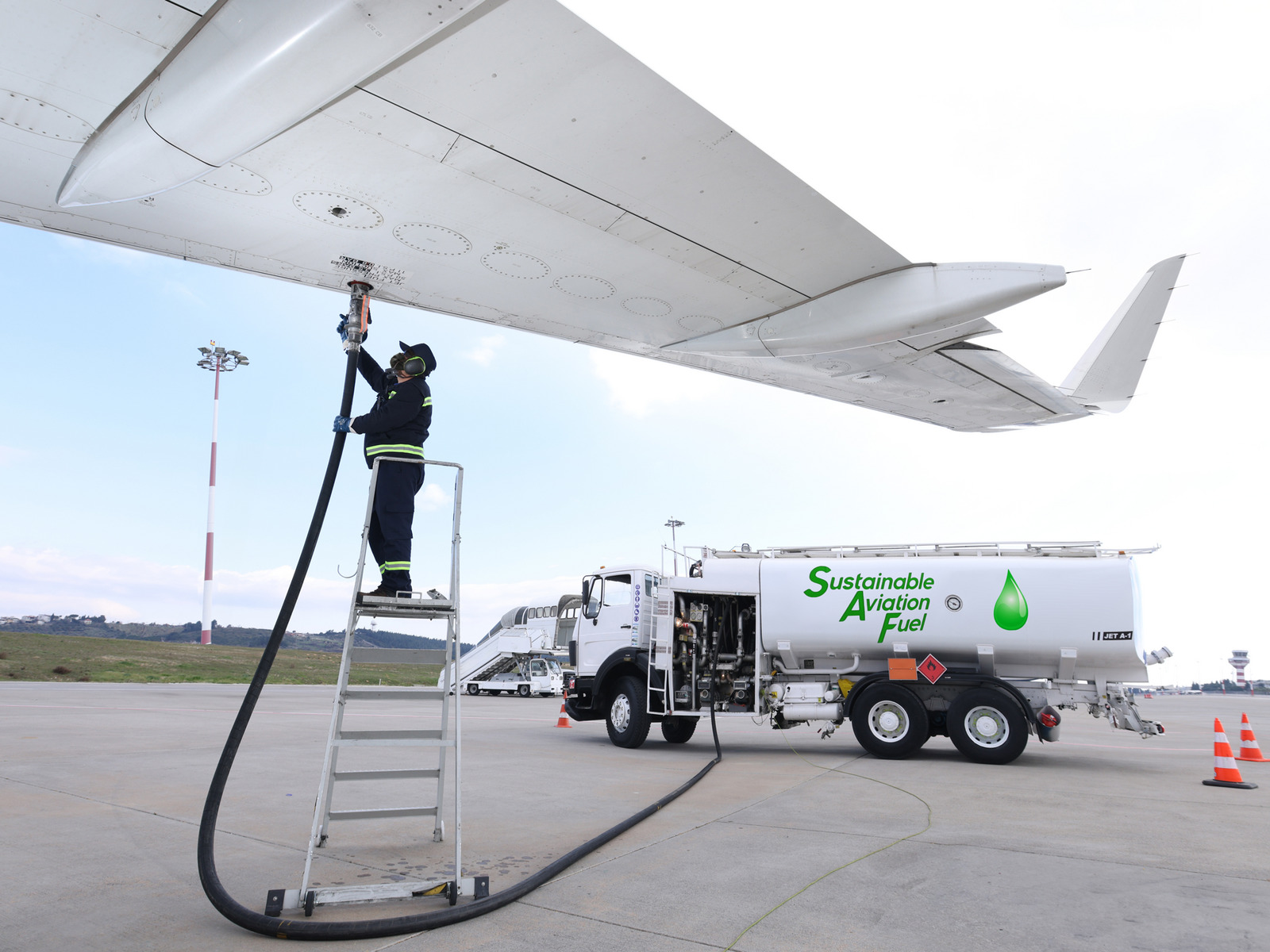
In aviation, decarbonisation is no longer a question of intent. It is a question of timing.
Singapore has positioned itself at the forefront of sustainable aviation fuel (SAF) adoption, introducing one of the world’s first passenger-funded levies to accelerate the transition. Yet its recent decision to defer that levy highlights a more complex reality: even the most progressive climate strategies must contend with immediate market pressures.
The Civil Aviation Authority of Singapore (CAAS) has postponed the rollout of its SAF levy, originally scheduled for April 2026, citing the economic impact of ongoing geopolitical instability, particularly in the Middle East.
The move reflects a broader tension facing the global aviation industry, between long-term sustainability goals and short-term operational realities.
What Has Changed
Under the revised timeline, the levy will now apply to tickets sold from October 2026, for flights departing from January 2027.
Originally, passengers would have begun paying the surcharge from April 2026 for travel later that year. The delay effectively shifts the financial burden on airlines and travellers by several months, offering temporary relief at a time of rising fuel costs.
The reason is clear.
Fuel markets have been destabilised by geopolitical tensions, with disruptions to key shipping routes such as the Strait of Hormuz pushing up jet fuel prices and increasing airline operating costs.
In this context, introducing an additional levy, even one tied to sustainability, risked compounding pressure on both carriers and passengers.
The Mechanics of the Levy
The SAF levy itself remains unchanged in structure.
Passengers departing Singapore will eventually pay between approximately S$1 and S$41.60 per ticket, depending on distance travelled and cabin class.
The funds will be used to purchase sustainable aviation fuel, a lower-emission alternative typically derived from waste materials such as used cooking oil and agricultural by-products.
The ambition behind the policy is significant.
Singapore aims for SAF to account for 1% of total aviation fuel use initially, rising to between 3% and 5% by 2030, subject to global supply and adoption.
The deferment shifts the first milestone to 2027, but crucially, it does not alter the long-term trajectory.
Balancing Sustainability with Market Reality
4
What makes this decision notable is not the delay itself, but the reasoning behind it.
CAAS described the move as a “pragmatic pause,” signalling that policy flexibility is now an essential part of sustainability strategy.
The aviation sector is uniquely exposed to global shocks:
- Fuel prices are highly volatile
- Demand is sensitive to economic conditions
- Margins are often narrow
- Supply chains are globally interconnected
Introducing additional costs during periods of instability risks unintended consequences, from reduced passenger demand to financial strain on airlines already navigating elevated operating expenses.
In this sense, the deferment is less a retreat and more a recalibration.
A Signal for Global Aviation
Singapore’s approach is being closely watched.
As one of the first aviation hubs to implement a SAF levy, its policy decisions carry influence beyond the region. The deferment underscores a broader lesson for governments and regulators: decarbonisation pathways must remain adaptable.
The aviation industry is under increasing pressure to reduce emissions, with SAF widely regarded as the most viable near-term solution. Yet supply remains limited, costs are significantly higher than conventional jet fuel, and adoption depends heavily on coordinated global policy.
This creates a delicate balance.
Move too quickly, and the economic burden risks undermining industry stability. Move too slowly, and climate targets become increasingly difficult to achieve.
The Strategic Implication
The deferment of Singapore’s SAF levy illustrates a broader shift in how sustainability is being implemented across complex industries.
It is no longer a linear transition.
Instead, it is becoming iterative, shaped by market conditions, geopolitical developments and technological readiness.
For aviation, this means:
- Decarbonisation will continue, but not uniformly
- Policy timelines will flex in response to external shocks
- Financial mechanisms will need to balance ambition with affordability
A Transition Defined by Timing
Singapore has not stepped back from its sustainability ambitions.
It has simply adjusted the pace.
That distinction matters.
The future of aviation will still be defined by lower emissions, alternative fuels and greater efficiency. But the path to that future will not be smooth or predictable.
It will be shaped by moments like this, where strategy meets reality, and where progress depends not just on ambition, but on timing.