



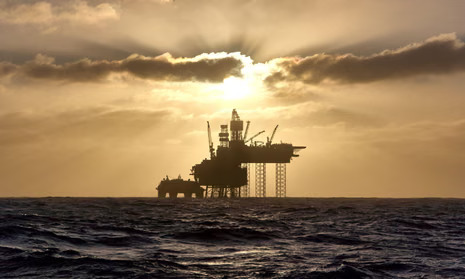
For more than a decade, the UK’s North Sea licensing strategy has been framed as a cornerstone of energy security. Grant more licences, the argument goes, and Britain reduces reliance on imports while stabilising costs for consumers.
New analysis now challenges that premise at its core.
Hundreds of oil and gas licences issued under Conservative governments between 2010 and 2024 have so far produced the equivalent of just 36 days’ worth of UK gas demand.
It is a figure that cuts through years of political rhetoric with unusual clarity.
Scale Versus Reality
The licensing rounds in question resulted in around 20 new or reactivated fields. Over their entire operational lifetimes, these projects are expected to generate roughly six months of UK gas supply.
To date, however, only a fraction of that potential has been realised.
This gap between expectation and output speaks to a deeper structural issue. The North Sea is no longer a frontier basin. It is a mature one.
- Around 90 percent of recoverable reserves are already depleted
- Production has declined by roughly 75 percent from its peak
What remains is harder to extract, more expensive to develop, and increasingly marginal in global supply terms.
The Limits of Domestic Drilling
4
At the centre of the debate is a question that extends beyond geology:
can domestic drilling meaningfully reduce energy bills?
The consensus among energy experts, reflected in the analysis, is largely no.
Oil and gas produced in the North Sea are sold into international markets, where prices are set globally rather than domestically.
This means:
- Additional UK supply does not translate into cheaper UK energy
- Consumers remain exposed to global price shocks
- Domestic production offers limited insulation from geopolitical volatility
In effect, Britain is a price taker, not a price maker.
Politics Versus Physics
The findings arrive at a moment of renewed political tension around energy policy.
Conservative figures have called for expanded drilling and the reversal of restrictions on new licences, framing the move as essential for national and economic security.
Critics, however, argue that such proposals misunderstand both the economics and the physical limits of the basin.
Energy analysts describe further licensing as a “sticking plaster”—a short-term gesture that does little to address the structural drivers of energy costs or long-term supply challenges.
The divide is no longer simply ideological. It is increasingly empirical.
A System Shaped by Global Forces
If the North Sea can no longer deliver scale, attention shifts to alternatives.
Campaigners and policy experts point toward:
- Accelerated investment in renewable energy
- Large-scale home insulation programmes
- Adoption of heat pumps and electrification technologies
The logic is straightforward.
Rather than attempting to increase supply in a declining fossil fuel basin, reduce dependence on fossil fuels altogether.
It is a shift from extraction to efficiency.
The Bigger Shift: From Resource to Strategy
The North Sea once defined Britain’s energy independence.
Today, it reveals its limits.
What this moment represents is not simply a debate about licences, but a broader transition in how energy security is understood.
- From domestic extraction to system resilience
- From volume to efficiency
- From short-term supply to long-term stability
In that context, the 36-day figure becomes more than a statistic. It becomes a signal.
The Outlook
The political argument over North Sea licences is unlikely to fade. If anything, rising global energy volatility will intensify it.
But the underlying reality is harder to ignore.
The basin is mature. The returns are diminishing. And the global market sets the price regardless.
For policymakers, the question is no longer whether the North Sea still matters.
It is how much it can realistically deliver in a world that has already begun to move beyond it.