



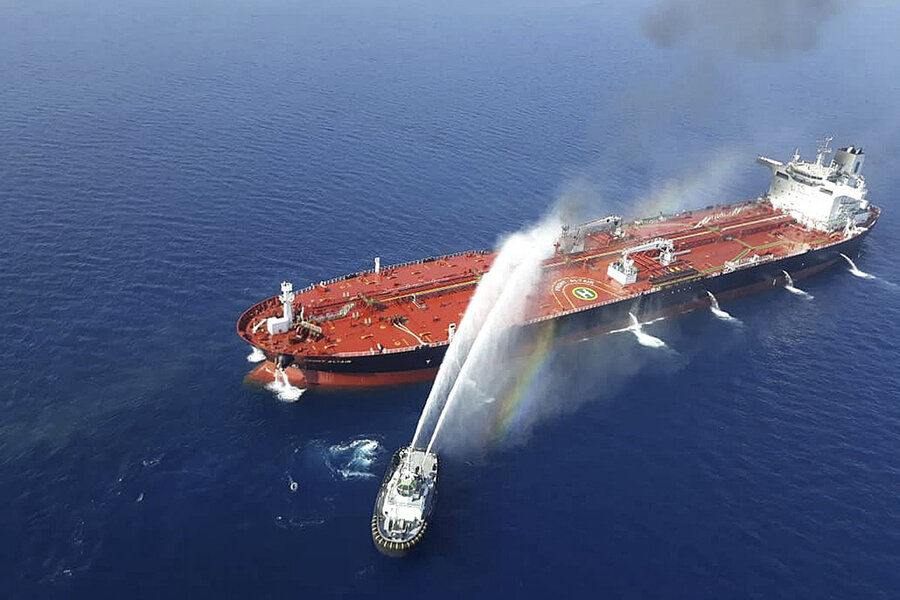
There are moments when geopolitics moves from the abstract into something immediate and measurable. The current conflict involving Iran is one of them. Its focal point, the Strait of Hormuz, is not just a narrow stretch of water, but one of the most critical arteries in the global economy.
Roughly 20% of the world’s oil supply passes through this single corridor . When that flow is disrupted, the effects ripple quickly through markets, governments, and ultimately, consumers.
The war has done precisely that. Shipping through the strait has been severely restricted, in some cases almost entirely halted, as attacks, threats, and insurance withdrawals have made passage increasingly untenable.
Why Oil Companies Can’t “Control” Prices
A common assumption during crises like this is that oil companies are simply raising prices opportunistically. The reality is more structural.
Oil is priced on global commodity markets, not set directly by individual companies. When supply tightens, prices move—often sharply.
The current disruption is one of the most severe in modern history. The International Energy Agency has described it as the largest-ever shock to global oil supply, with up to 30% of flows affected at peak disruption.
With tankers unable or unwilling to pass through Hormuz, supply effectively shrinks overnight. That scarcity feeds directly into benchmark prices like Brent crude, which has surged well above $100 per barrel in recent weeks.
From there, the transmission is mechanical:
- Higher crude prices → higher refinery costs
- Higher refinery costs → higher fuel prices
- Higher fuel prices → visible increases at petrol stations
Oil companies are responding to these inputs, not independently dictating them.
The Strait Effect: Logistics, Risk, and Cos
What makes this crisis particularly acute is not just reduced supply, but elevated risk across the entire supply chain.
Even when oil can move, it becomes more expensive to do so:
- Insurance premiums for tankers have surged multiple times over
- Shipping companies have paused or rerouted vessels
- Some cargoes require military escort or alternative, longer routes
All of this adds layers of cost before oil even reaches a refinery.
At the same time, infrastructure across the region has been targeted, including refineries and export hubs, further tightening supply and amplifying uncertainty.
A Market Driven by Fear as Much as Supply
Oil markets do not wait for shortages to fully materialise. They price in expectations.
That is why prices have been so volatile. Brent crude has seen sharp swings, with monthly gains approaching 40–50% in some estimates.
Investors, traders, and governments are all attempting to answer the same question:
How long will the disruption last?
If the strait reopens quickly, prices may stabilise. If not, the consequences escalate—from inflationary pressure to potential physical shortages in certain regions.
Economists have already warned that the situation is approaching a “tipping point,” where disruption moves beyond price spikes into broader economic strain.
The Global Fallout
The effects extend far beyond oil markets.
- Fuel prices are rising globally, pushing up transport and logistics costs
- Inflation risks are increasing, particularly for energy-importing nations
- Supply chains—from chemicals to fertilisers—are being disrupted
- Renewable energy projects are even facing delays due to shipping constraints
In short, this is not just an energy story. It is a systemic one.
A Structural Vulnerability Exposed
What this moment reveals, more than anything, is the fragility of global energy infrastructure.
A single maritime corridor—geographically narrow, politically volatile—continues to underpin a significant portion of the world’s energy supply. When it falters, the entire system feels it.
There have long been discussions about reducing reliance on the Strait of Hormuz through alternative pipelines and diversified supply routes. Yet the current crisis shows how incomplete that transition remains.
The Road Ahead
For now, oil companies, governments, and markets are navigating a situation they cannot fully control.
Prices will continue to reflect three variables:
- The status of the Strait of Hormuz
- The scale of infrastructure disruption
- The trajectory of the conflict itself
Until those stabilise, volatility is not an anomaly. It is the baseline.
The Real Takeaway
The current surge in oil and fuel prices is not simply about corporate strategy or pricing decisions. It is about geography, conflict, and the mechanics of global supply.
When a system depends so heavily on a single chokepoint, disruption becomes inevitable—and costly.
What we are seeing now is that cost, unfolding in real time.