



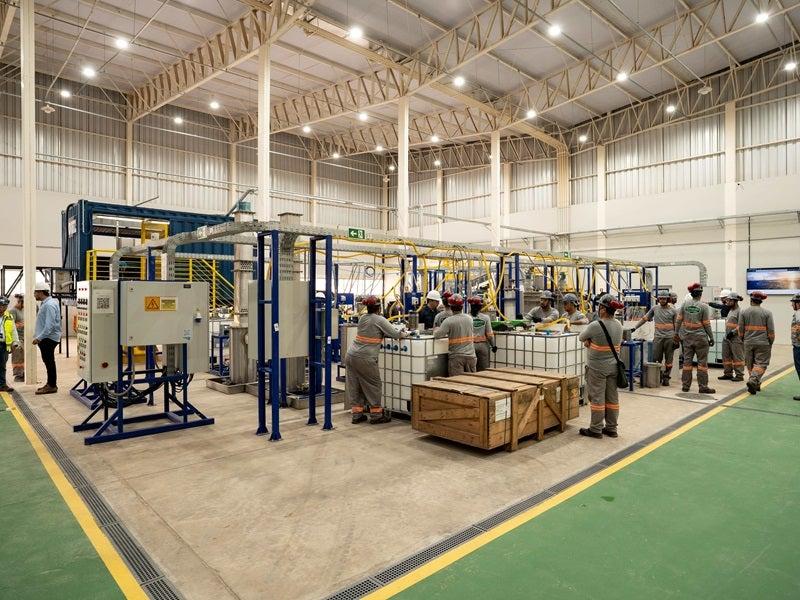
For years, one country has dominated one of the most strategically important industries in the modern global economy.
From electric vehicles and wind turbines to advanced defence systems and artificial intelligence infrastructure, rare earth minerals have become essential to the technologies shaping the future. Yet despite their importance, global supply chains remain heavily dependent on China, which controls a significant share of both rare earth mining and processing capacity.
Now, Brazil is positioning itself as a potential challenger.
According to reporting by Deutsche Welle, Brazil is accelerating efforts to develop its rare earth industry, aiming to capitalise on growing global demand for critical minerals while reducing international dependence on Chinese supply chains.

The timing is significant.
Rare earth elements have become one of the most strategically valuable resources in the global economy. Despite the name, many rare earths are relatively abundant in the Earth’s crust. The challenge lies in extracting, refining and processing them economically at scale. These minerals are essential for manufacturing high-performance magnets used in electric motors, renewable energy systems, advanced electronics and military technologies.
As the world accelerates toward electrification and digitalisation, demand for rare earths is rising rapidly.
That demand has transformed critical minerals into a geopolitical issue as much as an industrial one.
For decades, China invested heavily in building rare earth supply chains, developing both mining operations and the highly specialised refining infrastructure required to process the materials. Today, the country remains the dominant force across much of the sector, giving it significant influence over global supply.
Governments across North America, Europe and Asia are increasingly seeking ways to diversify that dependence.
The concern is not simply about market competition. Rare earths sit at the centre of industries considered critical to national security, energy transition strategies and advanced manufacturing. As geopolitical tensions continue to reshape global trade relationships, securing alternative supply sources has become a strategic priority.
That is where Brazil’s potential becomes increasingly important.
The country possesses some of the world’s largest known reserves of rare earth minerals. While Brazil has historically been recognised more for commodities such as iron ore and agriculture, its mineral resources position it as a potentially significant player in the next generation of global supply chains. According to industry estimates referenced by Deutsche Welle, Brazil holds the world’s second-largest rare earth reserves behind China.

What makes the opportunity particularly attractive is the broader shift taking place across global industrial policy.
Countries are increasingly pursuing supply chain resilience alongside economic growth. The pandemic, geopolitical tensions and trade disruptions exposed the risks associated with overreliance on concentrated production hubs. Since then, governments and corporations have invested heavily in reshoring, friend-shoring and diversifying supply networks across strategic sectors.
Critical minerals have become one of the clearest examples of that trend.
The energy transition is expected to drive significant increases in demand for rare earth elements over the coming decades. Electric vehicles require powerful permanent magnets. Wind turbines depend on advanced rare earth components. Defence systems, semiconductors and high-performance electronics all rely on access to specialised mineral inputs.
As a result, securing supply is increasingly viewed as a matter of economic competitiveness.
Brazil is now attracting attention from investors seeking exposure to that growing demand. Mining projects across the country are receiving increased interest as governments and corporations search for alternative sources of rare earth production outside China. However, developing a competitive rare earth industry involves far more than simply extracting minerals from the ground.
Processing remains the critical challenge.
One reason China achieved its dominant position is because it built extensive refining capabilities alongside mining operations. Rare earth processing is technologically complex, capital intensive and subject to significant environmental scrutiny. Without domestic refining capacity, countries often remain dependent on foreign processing infrastructure even if they control mineral reserves.
For Brazil, building a complete rare earth ecosystem will require substantial investment across extraction, processing, logistics and industrial infrastructure.

Environmental considerations also remain central to the discussion.
Mining projects increasingly face pressure to demonstrate sustainable practices, minimise environmental impact and engage responsibly with local communities. As demand for critical minerals grows, governments and investors are placing greater emphasis on balancing resource development with environmental protection.
This creates a complex dynamic.
The global transition toward cleaner energy technologies requires large quantities of critical minerals. Yet expanding mining activity can create environmental challenges of its own. Successfully managing that balance will be essential for countries seeking to establish themselves as long-term suppliers within the critical minerals economy.
Brazil’s ambitions arrive at a time when competition for resource security is intensifying.
The European Union, the United States, Japan and several other major economies have introduced policies aimed at strengthening access to critical minerals. Strategic partnerships, investment programmes and supply chain agreements are becoming increasingly common as nations seek to reduce vulnerabilities within key industries.
This has transformed rare earths from a niche mining topic into a central pillar of global economic strategy.
The conversation is no longer simply about commodities. It is about technology leadership, industrial competitiveness and national resilience.
Brazil’s emergence as a serious rare earth contender reflects that reality.
While China is unlikely to lose its dominant position overnight, the global market is clearly moving toward greater diversification. New mining projects, processing investments and international partnerships are gradually reshaping the competitive landscape.
For Brazil, the opportunity extends beyond mining revenues alone. Developing a stronger position within the critical minerals sector could help attract manufacturing investment, strengthen industrial capabilities and increase the country’s strategic importance within global supply chains.
Why Rare Earth Minerals Matter More Than Ever
The coming decade is likely to determine how successfully countries can position themselves within the emerging critical minerals economy. Demand continues to rise, geopolitical competition is intensifying and governments are placing increasing emphasis on securing access to essential resources.
In that environment, Brazil’s rare earth ambitions represent more than an industrial expansion strategy.
They reflect a much larger shift taking place across the global economy, where control of critical minerals is becoming one of the defining factors shaping the future of energy, technology and geopolitical influence.
As nations race to secure the materials powering the next generation of industries, Brazil may be preparing to move from resource-rich supplier to strategic global player.