



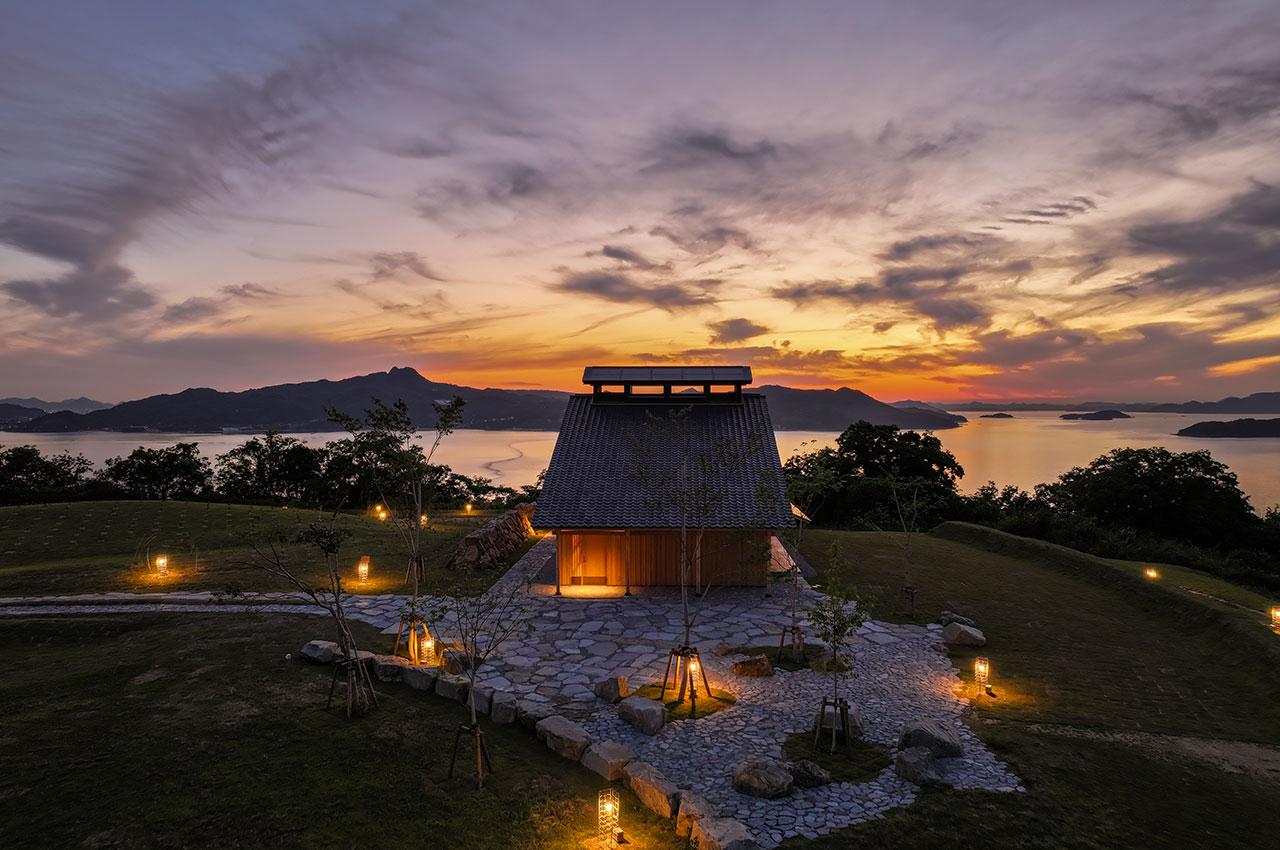
Beyond Tokyo’s skyline and Kyoto’s celebrated temples lies a quieter expression of Japanese luxury, shaped by private islands, contemporary art, powder-covered mountains and wilderness retreats designed around space, craftsmanship and stillness.

Japan’s best-known destinations offer extraordinary experiences, but the country’s most compelling luxury is increasingly being found beyond the conventional tourist trail.
Across the Seto Inland Sea, Hokkaido’s mountains and Japan’s forested countryside, a different style of high-end travel is emerging. It is less concerned with visible extravagance and more closely connected to privacy, architecture, seasonal food and a highly considered sense of place.
These destinations reveal a Japan where luxury can mean sailing between remote islands, sleeping beside a private hot spring, viewing internationally significant art without city crowds or waking in a snow-covered chalet beneath the mountains.
Private island escapes in the Seto Inland Sea
Scattered between Honshu, Shikoku and Kyushu, the islands of the Seto Inland Sea offer one of Japan’s most serene coastal experiences.
The region combines fishing communities, art destinations, historic ports and carefully designed retreats, creating an alternative to the energy of the country’s major cities. Official regional itineraries increasingly present Setouchi as a destination for island hopping, contemporary culture and locally rooted experiences.
Among its most distinctive luxury experiences is Guntû, a floating hotel designed to travel slowly across the Inland Sea. With only 19 cabins, the vessel combines the atmosphere of a contemporary ryokan with the changing scenery of a private cruise. Timber interiors, open views and highly personalised dining allow the islands themselves to become part of the accommodation.
Elsewhere, secluded ryokans and private villas offer gardens, open-air bathing and direct views across the water. The appeal is not isolation for its own sake, but the feeling of moving through a landscape at a more deliberate pace.
“Japan’s most distinctive luxury is often found not in excess, but in stillness, craftsmanship and complete attention to place.”
Tokyo as a capital of design and private retail
Tokyo’s luxury shopping districts are well known, but the experience extends far beyond a familiar collection of international labels.
Ginza and Omotesando are home to architecturally ambitious flagship stores where fashion, interiors and contemporary art meet. Alongside major European houses, visitors can discover independent Japanese designers, specialist leather workshops, precision watchmakers and artisans producing objects in small quantities.
The strongest shopping experiences are highly personal. Private appointments, made-to-measure clothing and limited collections introduce customers to a culture in which presentation and service carry as much importance as the product itself.
Rather than functioning simply as retail streets, districts such as Ginza have become living galleries of international architecture and Japanese design. Their polished storefronts sit beside specialist stationery businesses, traditional confectioners and generations-old craft houses, offering a contrast that few other luxury capitals can replicate.
Niseko’s world-class winter escape
On the northern island of Hokkaido, Niseko has developed into one of Asia’s leading luxury ski destinations.
Its reputation begins with snow. Cold weather systems crossing the Sea of Japan regularly bring light, dry powder to the region, creating conditions that attract skiers and snowboarders from around the world.
The destination surrounding the slopes has changed considerably. High-end chalets, private residences, internationally recognised hotels and chef-led restaurants have transformed Niseko into a complete winter resort rather than a destination visited exclusively for skiing.
Private instructors, guided backcountry experiences and in-residence dining allow guests to build highly personalised stays. After a day on the mountain, traditional onsen bathing provides a distinctly Japanese alternative to the conventional après-ski experience.
The most successful new properties combine international standards with local identity, using timber, stone and generous windows to frame views towards Mount Yotei.
Glamping among Japan’s forests and lakes
Japan’s countryside offers another form of understated luxury through architect-designed cabins, forest camps and lakeside retreats.
These properties preserve the connection with nature associated with camping while replacing its inconveniences with private bathrooms, carefully designed interiors, climate control and restaurant-quality food.
Some retreats centre on individual domes or tents, while others use freestanding timber villas placed between trees. Experiences can include private saunas, stargazing, guided forest walks and meals prepared from produce grown or gathered nearby.
The appeal reflects Japan’s wider approach to seasonal awareness. Accommodation is often designed around the landscape rather than imposed upon it, allowing mist, changing leaves, snowfall and birdsong to become part of the stay.
A new generation of rural hospitality is also directing travellers towards regions that receive only a small proportion of Japan’s international visitors. Azuma Farm Koiwai in Iwate, for example, combines minimalist cabins, mountain scenery, craft experiences and wellness within the grounds of a working farm.
Naoshima, Japan’s exclusive art island
Naoshima has transformed a small island in the Seto Inland Sea into one of the world’s most distinctive cultural destinations.
Museums, outdoor installations and architecture by Tadao Ando are integrated into the landscape, allowing visitors to encounter art across beaches, hillsides, former homes and purpose-built galleries. The wider art-island network also extends to neighbouring Teshima and other Setouchi communities.
Accommodation reinforces that relationship between culture and place. Naoshima Ryokan Roka contains just 11 suites, each combining contemporary Japanese materials with private open-air baths and a rotating collection of work by emerging artists.
Naoshima’s intimacy is central to its appeal. Visitors can move between internationally important artworks and quiet coastal scenery without the scale or formality of a major cultural capital.
Luxury defined by intention
What connects these experiences is not a single architectural style or level of formality.
The Seto Inland Sea offers seclusion and movement. Tokyo provides craftsmanship and design. Niseko combines dramatic winter conditions with private hospitality, while Naoshima turns an entire island into a cultural experience.
Traditional ryokans remain particularly influential. Their tatami interiors, seasonal kaiseki dining, hot-spring rituals and anticipatory approach to service demonstrate that Japanese luxury has always been built around detail rather than display.
As more travellers search beyond Tokyo, Kyoto and Osaka, destinations including Setouchi, Hokkaido, the Kiso Valley and rural Tohoku are becoming increasingly important. These regions offer the privacy sought by modern luxury travellers while distributing tourism more widely across the country.
Japan’s hidden luxury does not demand attention. It is experienced in the silence of a private onsen, the first tracks across untouched snow, a perfectly arranged seasonal meal or the slow movement of islands beyond a cabin window.
That restraint is precisely what makes it feel so exceptional.