



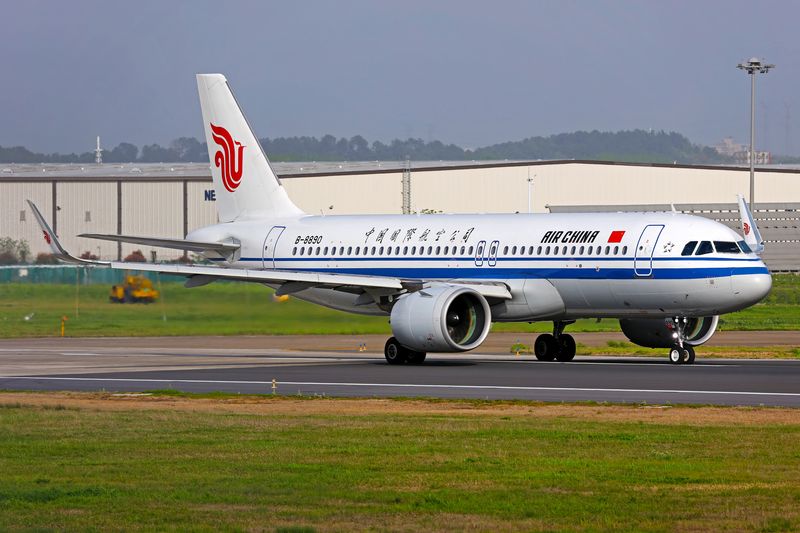
After years of disruption, one of Asia’s most strategically important aviation corridors is beginning to reconnect.
Air China is set to resume flights to India, marking its return to the market after a six-year hiatus. The move is part of a broader rebuilding of air connectivity between China and India—two of the world’s largest and most economically significant markets.
This is more than a route relaunch. It is a signal that capacity, confidence, and cooperation are slowly returning to a corridor shaped as much by geopolitics as by demand.
A Gradual Return to the Skies
The reinstatement of Air China’s Beijing–New Delhi service builds on a phased recovery that has been underway since 2025. Following diplomatic agreements between the two countries, airlines have begun restoring direct connections after years of suspension.
IndiGo relaunched routes in late 2025, followed by China Eastern and Air India in early 2026. Air China’s return adds another key player to the network, reinforcing momentum across the corridor.
Yet recovery remains partial. Weekly seat capacity between the two countries currently sits at around 11,600—roughly half of pre-pandemic levels.
The direction is positive. The pace is measured.
Why This Route Matters
4
The Beijing–New Delhi corridor is not just another international route. It connects two major economic centres with deep trade, tourism, and educational links.
Before 2020, nine nonstop routes linked China and India, carrying more than 1.25 million passengers annually.
That connectivity was effectively halted by a combination of pandemic restrictions and geopolitical tensions. The result was a sharp decline in passenger traffic, forcing travellers onto indirect routes via third countries.
The reopening of direct flights changes that dynamic.
It reduces travel time, lowers costs, and restores a level of efficiency critical for business and supply chain movement between the two markets.
Capacity, Competition, and Growth

4
Capacity is expected to rise steadily in the coming months.
With new routes planned—including China Eastern’s Kunming–Kolkata service—and Air China’s re-entry, total weekly seat capacity could reach nearly 17,000 by mid-2026.
Demand is already showing signs of recovery. Passenger traffic between the two countries reached approximately 753,000 in 2025, up 16% year-on-year, though still below pre-pandemic levels.
The competitive landscape is also shifting.
Chinese carriers historically dominated the market, accounting for the majority of capacity. Indian airlines are now playing a more active role in the rebuild, creating a more balanced and competitive environment.
The Geopolitical Undercurrent
Aviation does not operate in isolation.
The restoration of flights between China and India reflects a broader recalibration in diplomatic and economic relations. Agreements reached in 2025 paved the way for the resumption of direct services, alongside eased visa restrictions designed to stimulate travel demand.
In this context, aviation becomes a barometer of bilateral relations.
Routes reopen not just because demand exists, but because conditions allow them to.
That makes the return of Air China particularly significant. It signals a level of stability—however cautious—between two markets that have experienced sustained tension in recent years.
A Market Still Finding Its Balance
4
Despite the positive trajectory, the market remains in recovery mode.
Capacity is still below historical levels. Route networks are not yet fully restored. And demand, while improving, has not returned to its previous peak.
The rebuild is therefore incremental.
Airlines are re-entering cautiously, testing routes, adjusting frequency, and responding to evolving demand patterns. The success of this recovery will depend on sustained cooperation, stable policy frameworks, and continued passenger confidence.
The Bigger Picture
Air China’s return to India is not just about one airline or one route.
It is part of a wider reconstruction of global aviation networks following years of disruption.
More importantly, it reflects a shift in how connectivity is being rebuilt—deliberately, strategically, and often in alignment with broader geopolitical realities.
For passengers, it means shorter journeys and renewed access.
For airlines, it signals opportunity.
And for the region, it represents something more fundamental.
A reopening of connection.
Because in aviation, the routes that return often tell the story of relationships being rebuilt.