



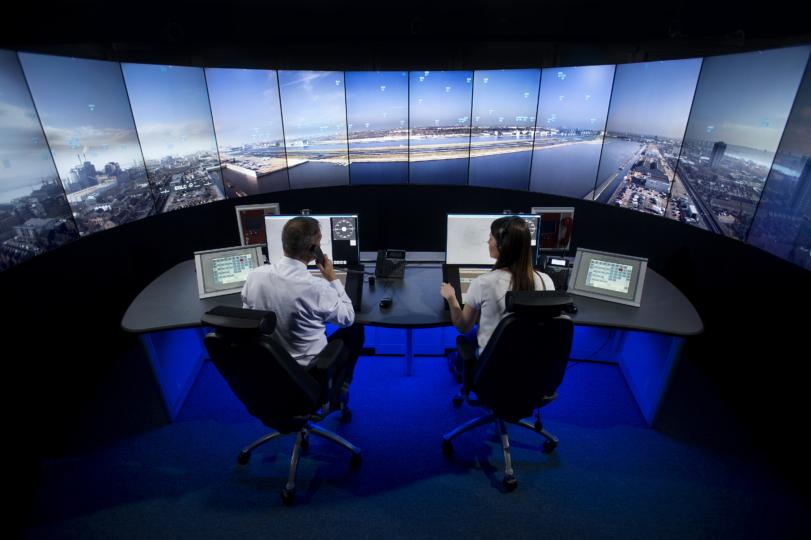
Every day, tens of thousands of aircraft cross European skies, connecting cities, businesses and economies across one of the busiest aviation regions in the world. Yet despite the scale and sophistication of modern air travel, Europe’s air traffic management system continues to face a challenge that has existed for decades: fragmentation.
National borders may be invisible to passengers, but they still influence how airspace is managed. Different systems, regulations and operational structures often create inefficiencies that can contribute to delays, increased fuel consumption and higher operating costs.
Now, a coalition of Europe’s leading aviation organisations is working to change that.
Under the banner of “Europe for Aviation” (E4A), nine major European institutions have outlined a shared vision for a more modern, connected and efficient air traffic management (ATM) system. The initiative was showcased at Airspace World 2026 in Lisbon, where industry leaders highlighted how greater collaboration and digital innovation could reshape the future of European aviation.

The ambition is significant.
Europe currently operates one of the world’s most complex aviation networks. While air traffic volumes continue to grow, the underlying management system remains divided across multiple national structures. According to aviation experts, this fragmentation can reduce efficiency, increase congestion and make it more difficult to optimise flight paths across the continent.
The Europe for Aviation initiative brings together the European Commission, EUROCONTROL, European Union Aviation Safety Agency, the SESAR Joint Undertaking and several other key aviation bodies. Together, they are working toward a common goal: creating a smarter and more integrated European sky.
At the heart of this effort is the modernisation of air traffic management.
ATM encompasses far more than air traffic control towers directing aircraft movements. It includes the systems, technologies and operational frameworks that manage flights from departure to arrival. As passenger numbers increase and new airspace users emerge, including drones and advanced air mobility vehicles, the demands on these systems are becoming more complex.
Industry forecasts suggest European air traffic could grow by more than 40% by 2050 compared with pre-pandemic levels. Accommodating that growth while maintaining safety, efficiency and sustainability will require substantial changes to how airspace is managed.
One of the key drivers of this transformation is digitalisation.
Modern ATM increasingly relies on real-time data sharing, advanced automation, predictive analytics and satellite-based navigation. These technologies allow aircraft to follow more efficient routes, reduce delays and improve coordination between different airspace users. They also help reduce emissions by minimising unnecessary flight time and fuel consumption.

A major component of the modernisation effort is the Single European Sky initiative.
Originally launched by the European Union to improve the performance of European airspace, the programme seeks to move beyond traditional national boundaries and create a more coordinated approach to air traffic management. The goal is to improve capacity, enhance safety, reduce costs and lower environmental impact.
Supporting this effort is the SESAR programme, which serves as the technological backbone of European ATM innovation.
SESAR has been developing and testing next-generation solutions designed to create what industry leaders describe as a Digital European Sky. These include advanced communication systems, predictive traffic management tools, automated operational support and system-wide information sharing capabilities. The programme has also played a key role in reducing technological fragmentation across European aviation networks.
The environmental implications are equally important.
Aviation remains under increasing pressure to reduce emissions and improve sustainability. More efficient air traffic management can contribute significantly to these goals by reducing holding patterns, minimising route inefficiencies and enabling more direct flight paths. Industry leaders increasingly view ATM modernisation as one of the fastest ways to improve aviation sustainability without waiting for major changes in aircraft technology.

Another emerging challenge is the integration of new types of airspace users.
The future aviation ecosystem is expected to include autonomous drones, advanced air mobility vehicles and other technologies that require entirely new approaches to airspace coordination. Existing systems were largely designed around conventional commercial aviation. Modernising ATM is therefore essential to safely accommodate the next generation of air transport solutions.
Security and resilience are also becoming increasingly important.
As aviation systems become more digital, protecting critical infrastructure from cyber threats and ensuring operational continuity during disruptions will be central to future ATM strategies. European institutions are therefore focusing not only on efficiency but also on technological sovereignty and long-term resilience.
What makes the Europe for Aviation initiative particularly noteworthy is the emphasis on collaboration.
Rather than individual organisations pursuing separate objectives, the programme seeks to align funding, innovation, regulation, deployment and operational expertise. Supporters argue that this coordinated approach offers the best chance of overcoming the structural challenges that have historically slowed European airspace reform.
Making Europe the Most Efficient and Environmentally Friendly Sky
The modernisation of Europe’s airspace may not attract the same attention as new aircraft programmes or airport expansions, but its impact could be just as significant.
More efficient routes mean fewer delays. Better coordination means greater capacity. Smarter systems mean improved sustainability. Together, these benefits have the potential to reshape how aviation operates across the continent.
As passenger demand grows and aviation technology continues to evolve, the success of initiatives such as Europe for Aviation may determine whether Europe can maintain its position as one of the world’s most efficient and connected aviation markets.
The future of European aviation may not be defined solely by the aircraft in the sky, but by the digital infrastructure guiding them.