




There are moments in policy and infrastructure that pass almost unnoticed, yet quietly redraw the future.
One such moment came in March 2026, when Britain’s combined wind, solar and tidal energy systems generated almost all of the country’s electricity demand for a period.
It did not dominate headlines. It should have.
Because it reframes the entire debate about energy, cost, and national strategy. What has long been described as aspiration is now demonstrably possible.
Beyond the Narrative of Cost and Constraint
For years, critics have argued that the transition to renewable energy—championed politically by figures like Ed Miliband—would drive up costs and weaken energy security.
The data increasingly suggests the opposite.
Renewables already supplied around one-third of the UK’s electricity over the past year, and capacity is accelerating rapidly, with new projects from recent auctions set to power around 16 million homes.
Even more striking is how renewables behave under real-world conditions.
On that same March day:
- Solar performed strongly despite overcast skies
- Wind output surged
- Gas, historically the backbone of UK energy, supplied just 2.3% of demand for a period
This is not theoretical modelling. It is operational reality.
The Shift from Scarcity to Abundance
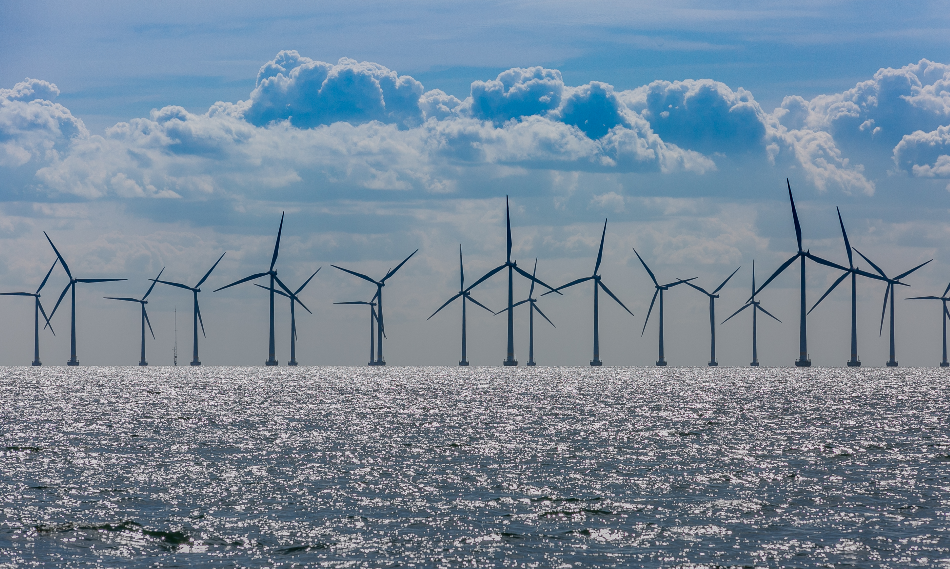
The deeper implication is philosophical as much as technical.
Energy policy in Britain has historically been shaped by scarcity:
- finite fossil fuel reserves
- volatile global markets
- dependency on imports
Renewables invert that logic.
Wind, solar and tidal energy introduce the possibility of domestic abundance—power generated locally, at scale, and increasingly at lower marginal cost once infrastructure is in place.
The transition, then, is not just about decarbonisation.
It is about changing the economic structure of energy itself.
The Missing Piece: Stability
There is, however, a crucial caveat.
Renewables are inherently variable. A system built on them must still guarantee stability.
This is where the next phase of the UK’s energy strategy becomes decisive:
- Nuclear projects such as Hinkley Point C
- The emergence of small modular reactors led by companies like Rolls-Royce
- Grid storage, interconnection and balancing technologies
Together, these form the backbone that allows a renewable-heavy system to function reliably—not just occasionally, but continuously.
Politics Caught Behind the Curve
Despite the technological progress, political discourse has lagged.
Much of the current debate remains anchored in older assumptions:
- that fossil fuels provide security
- that renewables are intermittent and expensive
- that energy independence requires continued drilling
Yet the evidence is beginning to undermine those claims.
If renewables can already meet near-total demand under the right conditions—and are rapidly scaling—then the argument shifts.
The question is no longer whether the transition is possible.
It is whether policy, investment and public understanding can keep pace with it.
A Transformation on the Scale of the NHS
Perhaps the most striking argument in the original analysis is not technical, but historical.
The transition to cheap, clean, domestically generated energy is framed as a transformation comparable to the creation of the NHS—something that reshapes everyday life, not just infrastructure.
That comparison may sound ambitious.
But consider the implications:
- Lower, more stable energy bills over time
- Reduced exposure to geopolitical shocks
- A reindustrialisation opportunity built around clean energy
- A shift in how households and businesses consume and produce power
This is not just an energy transition.
It is a societal one.
The Outlook
What happened on that March day was not a one-off anomaly.
It was a glimpse.
A glimpse of a system where fossil fuels are marginal rather than central, where energy is generated domestically at scale, and where the economics of power begin to tilt in favour of consumers rather than global markets.
The revolution is not coming.
It has already begun.
The real question now is how quickly Britain chooses to follow through.