




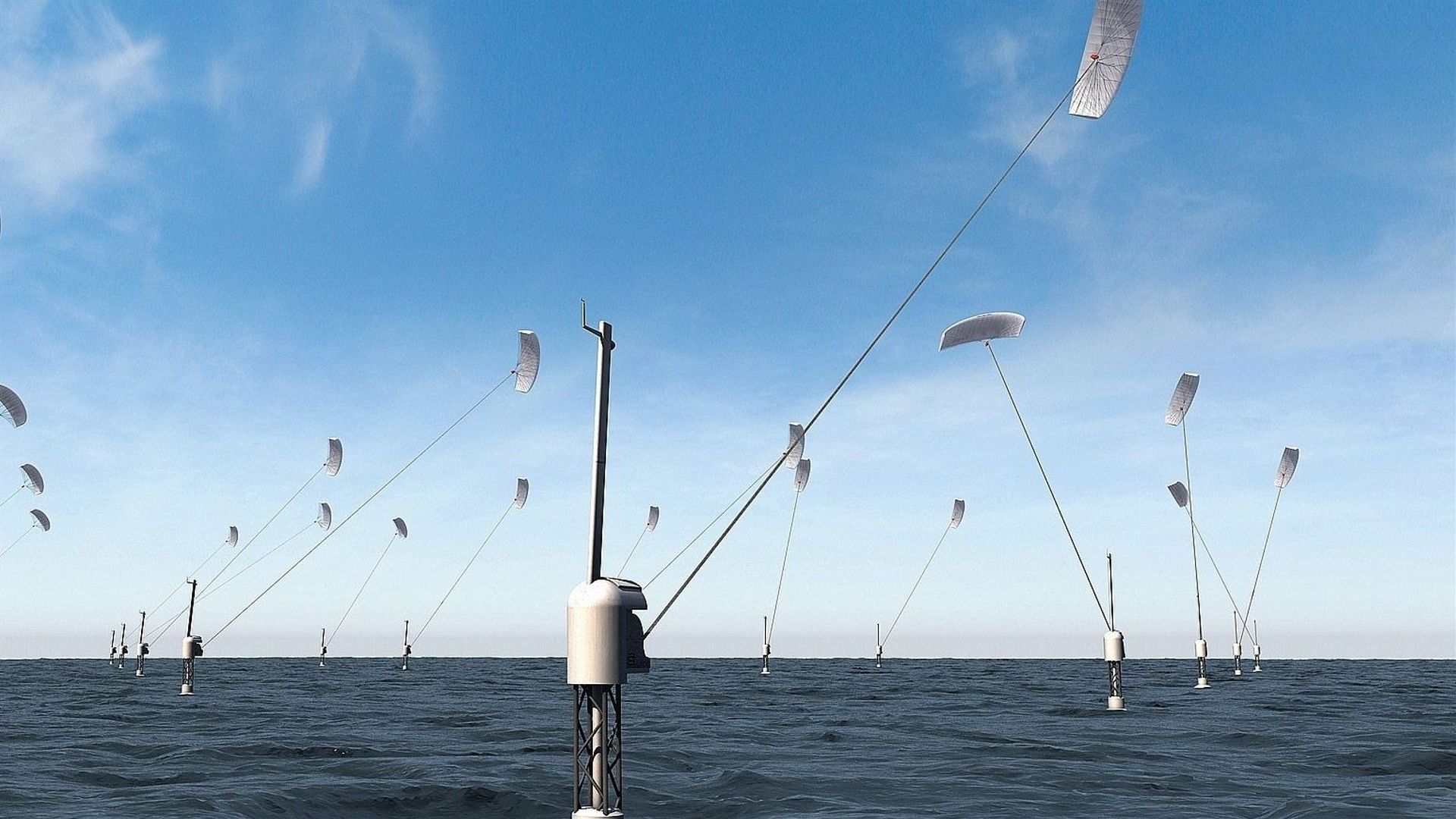
On the rugged Atlantic coast near Bangor Erris, County Mayo, a transformative clean energy experiment is underway. Researchers with Dutch firm Kitepower have deployed giant tethered kites—each with a wing area of 60 m²—to harness high-altitude winds and convert them into electricity in a mobile, sustainable system.
How the System Works
The kite operates via a pumping cycle resembling a yo-yo:
- In the reel-out phase, the kite flies in a controlled figure-eight pattern, generating drag that spins a ground-based winch connected to a generator.
- In the reel-in phase, the kite is depowered and retracted, consuming only a fraction of energy—yielding net electricity output.
Each kite flies autonomously at altitudes reaching ~350 m, guided by onboard software, while a ground-based operator monitors flight and performance in real time.
Technical Advantages & Innovation
According to Kitepower, its Airborne Wind Energy (AWE) systems:
- Use up to 90% fewer materials compared to traditional wind turbines.
- Offer higher capacity factors, allowing generation even in areas where conventional turbines are impractical.
- Can be installed within 24 hours, requiring minimal infrastructure and occupying less ground space (~6 × 2.5 m).
This flexibility makes the technology suitable for remote communities, construction sites, or off-grid microgrids—particularly where diesel generators have traditionally been relied on.
Perspectives from the Field
Padraic Doherty, Kitepower’s Ireland-based pilot, explains the system in practical terms:
“We use a kite to capture the wind and a generator at the bottom of it that captures the power. … It gets cast out and flies up, the tether pulls it back in, over and over again, creating energy.”
Andrei Luca, Kitepower’s operations lead, frames the broader potential:
“We are witnessing a revolution in wind energy… It took nearly 25 years for wind turbines to evolve from 30-kilowatt prototypes to megawatt scale.”
Why Tech Readers Should Watch This Space
Airborne wind energy blends aerospace control systems, real‑time autonomous control, and renewable computing—all in one modular package. Notable technological attributes include:
- AI-driven flight control optimizing crosswind trajectories.
- Real-time telemetry and tether-force monitoring.
- Autonomous software adjusting to wind conditions and flight efficiency.
Kitepower’s HAWK initiative, undertaken in partnership with University of Galway and funded by Ireland’s SEAI, is pioneering open-source composite airframe designs and testing lifecycle cost models toward certification readiness.
Market Traction & Forward Outlook
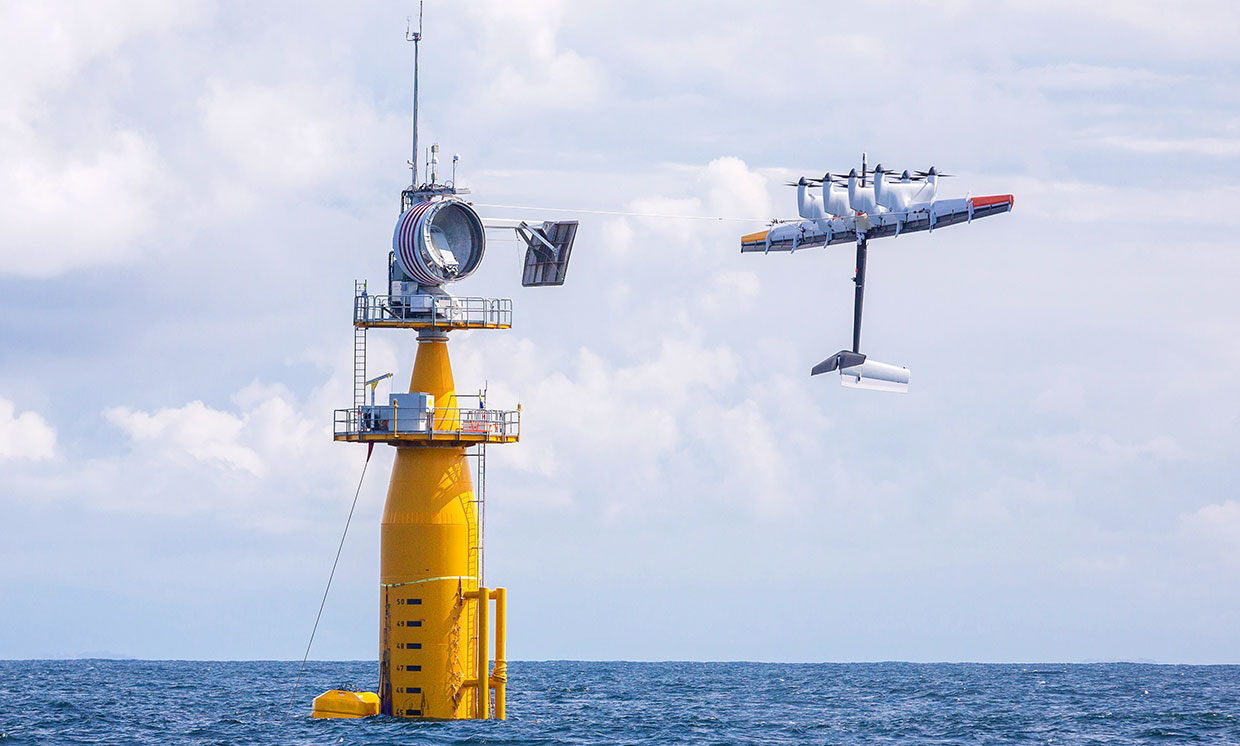
RWE, a leading European energy firm, is actively expanding its collaboration with Kitepower at the Irish test facility. At-site systems such as the Kitepower Falcon, capable of up to 100 kW generation, aim to validate grid connectivity and durability.
If successful, the technology offers scalable advantages:
- Rapid deployment without heavy civil engineering requirements.
- Lower visual impact, lacking towers or large rotating blades.
- Material efficiency, reducing embodied carbon.
- 24/7 operation, enabling power generation irrespective of sunlight hours.
Challenges to Navigate
- Airspace regulation and kite flight safety remain under active evaluation.
- Reliability in harsh coastal conditions is being stress-tested.
- Certification for utility-scale deployment and grid integration is still evolving.
Final Thought: Kite to Grid in Ireland
Ireland’s western test site may soon become a global showcase for airborne wind energy, a lightweight and portable paradigm in renewable power. For readers interested in renewable innovation, this project represents a convergence of crosswind aerodynamics, autonomous flight control, and distributed energy systems—delivering a compelling glimpse at wind power reimagined.