




There’s an art to seeing someone breathe out, relax, and become themselves in front of a lens—and Brazilian photographer Marcos Alberti set out to capture that shift, one glass of wine at a time.
A Simple Idea with Depth
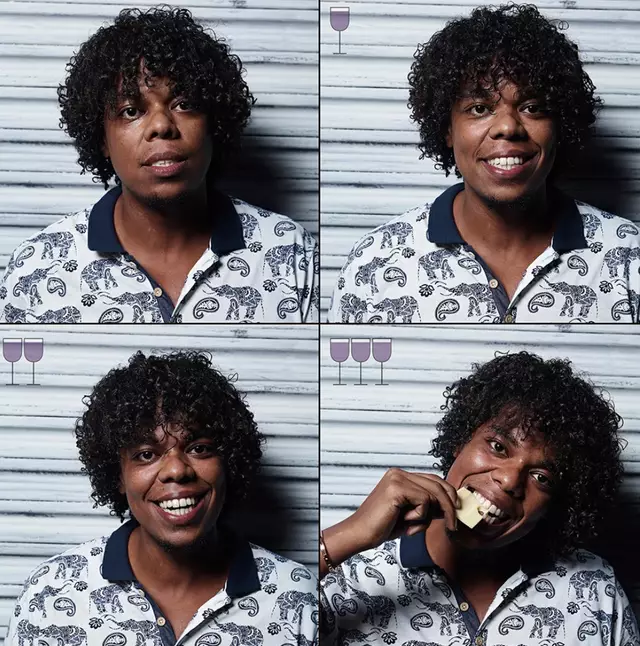
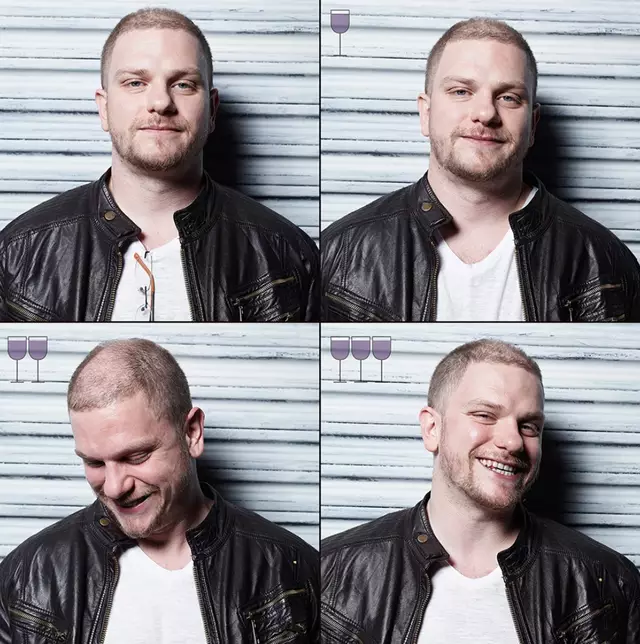
Alberti’s project takes a deceptively simple premise: photograph people at three moments—upon arrival (sober), after one glass of wine, and then again after a third. What follows is a visual study of how expression, presence, personality and social ease evolve.
The first image often shows fatigue, tension, or reserve—faces just off the rush hour, after work, after life. Each subsequent portrait loosens that mask: smiles emerge, eyes lighten, mouths open, gestures soften. By the third frame, many participants seem at ease, open, playful—even mischievous.
Alberti once remarked that he loves an old saying:
“The first glass of wine is all about the food, the second glass is about love, and the third glass is about mayhem.”
He wanted to test whether the images would echo that progression—whether the face truly tells that story.
Capturing “The Before & After”
The process was low-fluff, high honesty. Over the course of several nights, friends and acquaintances were invited to his Sao Paulo studio. He didn’t script their pace; he just photographed.
- First frame: upon arrival, before any wine, to catch the unguarded presence
- Second & third: taken after each glass, always framed simply—face and wall, same lighting, same composition
- Subjects: people from diverse walks of life—artists, designers, musicians, teachers, friends who didn’t always know each other
What’s striking is how quickly inhibitions fall. Bodies relax. Eyes close, tilt. Smiles deepen. Conversations shift. The third image often feels like a portrait of someone in mid-story—not fully unguarded, but more present.

Why It Resonates
- Honesty over glamour: The work isn’t about idealization. It’s about revealing what wine does to our face, our mood, our honesty.
- Relational context: These aren’t models—they’re friends. The vulnerability comes from real trust.
- Timeless simplicity: No props, no distractions: just the subject, a wall, and a moment in time. That focus allows changes to read clearly.
- Cultural commentary: Alberti aimed to shift how we see wine—not as vice, but as ritual, gathering, intimacy. In his words, he wanted to show “the good side of it … between friends drinking responsibly.”
A Few Favorite Takes
- In one sequence, a subject’s jaw relaxes, eyes open, and by the third photo they’re leaning forward, mid-laugh.
- Another starts guarded, then breaks into a grin, then raises eyebrows playfully—almost as if saying, I’m catching you looking now.
- Some portraits remain subtle—expression changes minimal, emotion quiet—but the shift is still there, in alignment, in shoulders.
What It Invites Us To See
- How we carry the day: impressions, fatigue, social armor
- The little release wine brings—not full transformation, but permission to let parts of ourselves breathe
- How trust, environment, and intention shape what we allow the camera to see
In the end, the Wine Project doesn’t celebrate inebriation—it celebrates a quiet vulnerability, the delight of slowing down, and the ways small rituals (like sharing a glass) shift how we show up in the world.