



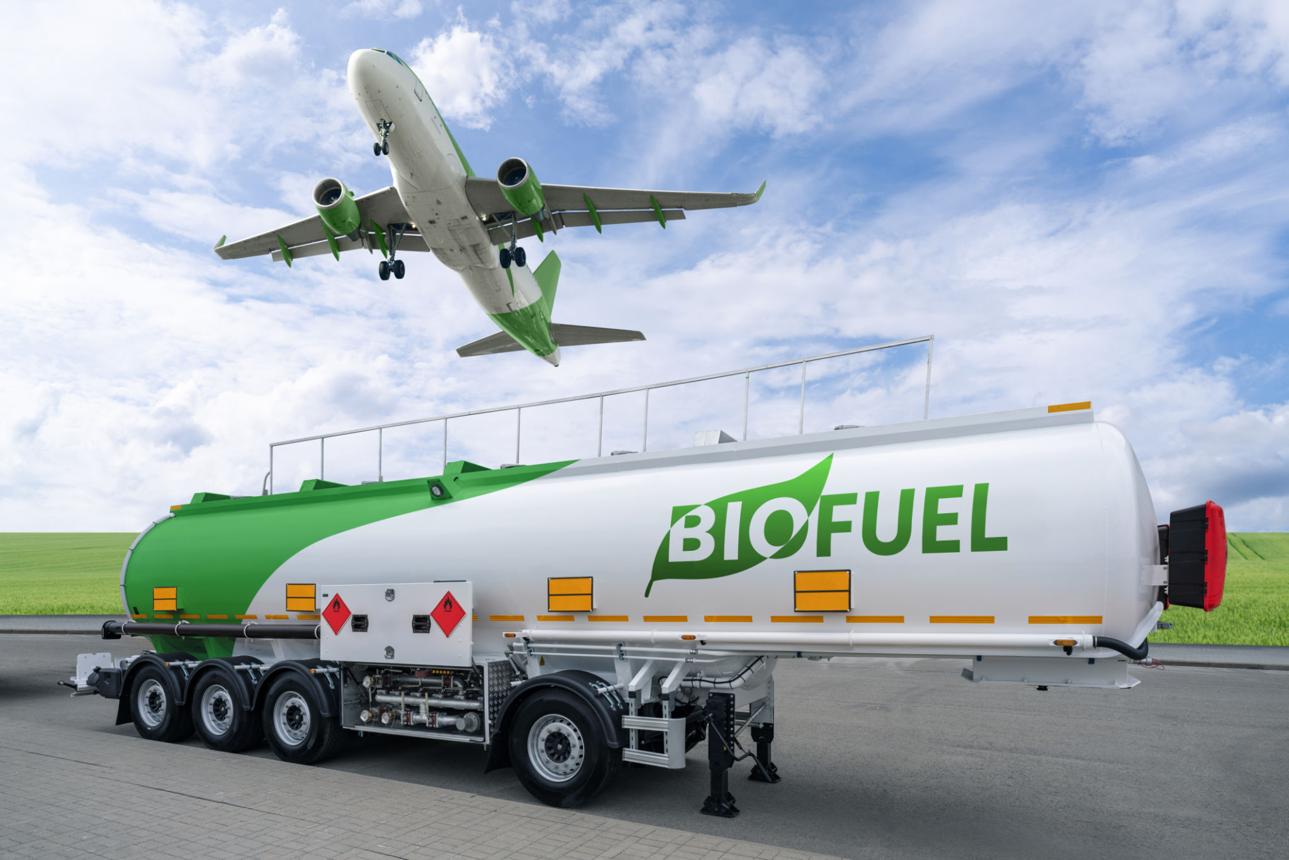
For years, sustainable aviation fuel has been positioned as one of the airline industry’s most important solutions in the race toward net-zero emissions. Governments, airlines and aerospace manufacturers have repeatedly described SAF as the bridge technology capable of reducing aviation’s environmental impact without fundamentally redesigning the global air travel system.
But new research suggests the reality may be far more complicated.
A recent study led by researchers at Washington State University offers a more measured assessment of SAF’s long-term potential, warning that while sustainable aviation fuel can play an important role in reducing emissions, significant economic and supply limitations may prevent it from fully replacing conventional jet fuel at global scale.
The findings arrive at a critical moment for aviation.
As airlines face mounting pressure to decarbonise, sustainable aviation fuel has increasingly become central to industry climate strategies. Major carriers, aircraft manufacturers and governments worldwide have committed billions toward SAF production partnerships, infrastructure development and long-term procurement agreements.
Yet despite the optimism, large-scale adoption remains extremely difficult.

The WSU study explored the long-term scalability of sustainable aviation fuel and concluded that while SAF could substantially reduce aviation emissions, the industry faces major constraints surrounding feedstock availability, production costs and infrastructure scalability. Researchers found that even aggressive SAF expansion scenarios may struggle to meet total global aviation demand in the decades ahead.
That challenge is fundamentally tied to energy density and scale.
Aviation remains one of the hardest industries to decarbonise because aircraft require extremely energy-dense fuel capable of powering long-haul flights safely and efficiently. Unlike road transport, where electrification is progressing rapidly, commercial aviation currently lacks viable large-scale alternatives to liquid hydrocarbon fuels for most long-distance operations.
This is why SAF has become so strategically important.
Rather than requiring entirely new aircraft systems, sustainable aviation fuel can often function as a “drop-in” replacement blended with existing jet fuel infrastructure. That compatibility allows airlines to reduce lifecycle emissions without redesigning fleets or airports entirely.
But producing enough SAF is another issue altogether.

Most current SAF production relies on limited feedstocks such as used cooking oils, agricultural waste, forestry byproducts and certain bio-based materials. Scaling production to support global commercial aviation would require enormous expansion of these supply chains, alongside massive investment into refining infrastructure and distribution networks.
The WSU researchers highlighted that feedstock competition itself could become a major obstacle.
Many of the same biomass resources being considered for aviation fuel are also increasingly needed for shipping, heavy industry, renewable chemicals and other decarbonisation sectors. That creates growing competition across industries all attempting to reduce emissions simultaneously.
Economics also remain a significant barrier.
Sustainable aviation fuel continues to cost substantially more than conventional jet fuel, making widespread adoption financially challenging without regulatory support, subsidies or carbon pricing structures capable of narrowing the gap. Airlines already operate on relatively thin margins, and large-scale SAF usage could place further pressure on ticket pricing and operational costs.
That reality is forcing the aviation sector into a much broader conversation about the future of air travel itself.

Rather than relying on a single solution, the industry increasingly appears to be moving toward a multi-layered decarbonisation strategy combining SAF, aircraft efficiency improvements, operational optimisation, carbon removal technologies and eventually hydrogen or electric propulsion systems for shorter routes.
In other words, SAF may become part of the solution rather than the entire solution.
That shift matters because public expectations surrounding aviation sustainability have grown dramatically over the past decade. Airlines are under increasing pressure from regulators, investors and consumers to demonstrate meaningful climate progress while continuing to meet rising global travel demand.
At the same time, air travel itself continues expanding.
International passenger numbers are forecast to rise steadily over the coming decades, particularly across Asia, the Middle East and emerging economies. Even with improved aircraft efficiency, growing demand could offset many emissions reductions unless low-carbon fuel production scales rapidly.
This creates a difficult balancing act for the entire industry.
Airlines cannot realistically stop flying, but decarbonising global aviation at scale remains one of the most technically and economically complex challenges facing the modern transport sector.
The WSU study therefore offers a more realistic framing of the transition ahead.
Rather than presenting SAF as a near-term silver bullet, the research suggests the industry must prepare for a slower, more complicated evolution involving multiple technologies, infrastructure shifts and long-term investment cycles. That realism may ultimately be valuable because it forces policymakers and industry leaders to confront the scale of the challenge directly rather than relying on overly simplified narratives.
Importantly, the study does not dismiss SAF entirely.
Researchers still concluded that sustainable aviation fuel could deliver meaningful emissions reductions and remain an essential component of aviation’s long-term sustainability roadmap. The issue is scale, pace and practicality rather than viability itself.
And despite the challenges, investment momentum continues accelerating globally.
Major aviation groups including Airbus, Boeing and multiple international airlines continue expanding SAF partnerships, while governments across Europe, the United States and Asia introduce mandates designed to gradually increase sustainable fuel usage across commercial aviation networks.
The pressure to solve aviation’s emissions problem is simply too large to ignore.
Still, the WSU findings highlight an increasingly important reality shaping the future of sustainable transport overall.
The transition to lower-carbon industries is unlikely to be powered by one breakthrough technology alone. Instead, it will probably involve a complex combination of incremental advances, infrastructure transformation and long-term behavioural adaptation across multiple sectors simultaneously.
Aviation may ultimately become one of the clearest examples of that complexity.
Because while sustainable aviation fuel absolutely offers promise, building a genuinely low-carbon global airline industry may prove far more difficult — and far more expensive — than many initially hoped.