



As climate anxiety, urban expansion and resource scarcity continue reshaping global priorities, the next generation of designers is beginning to respond with increasingly ambitious ideas. Nowhere is that more visible than at the University of the West of England’s latest showcase, where students are exploring how architecture and design can actively reshape the future rather than simply react to it.
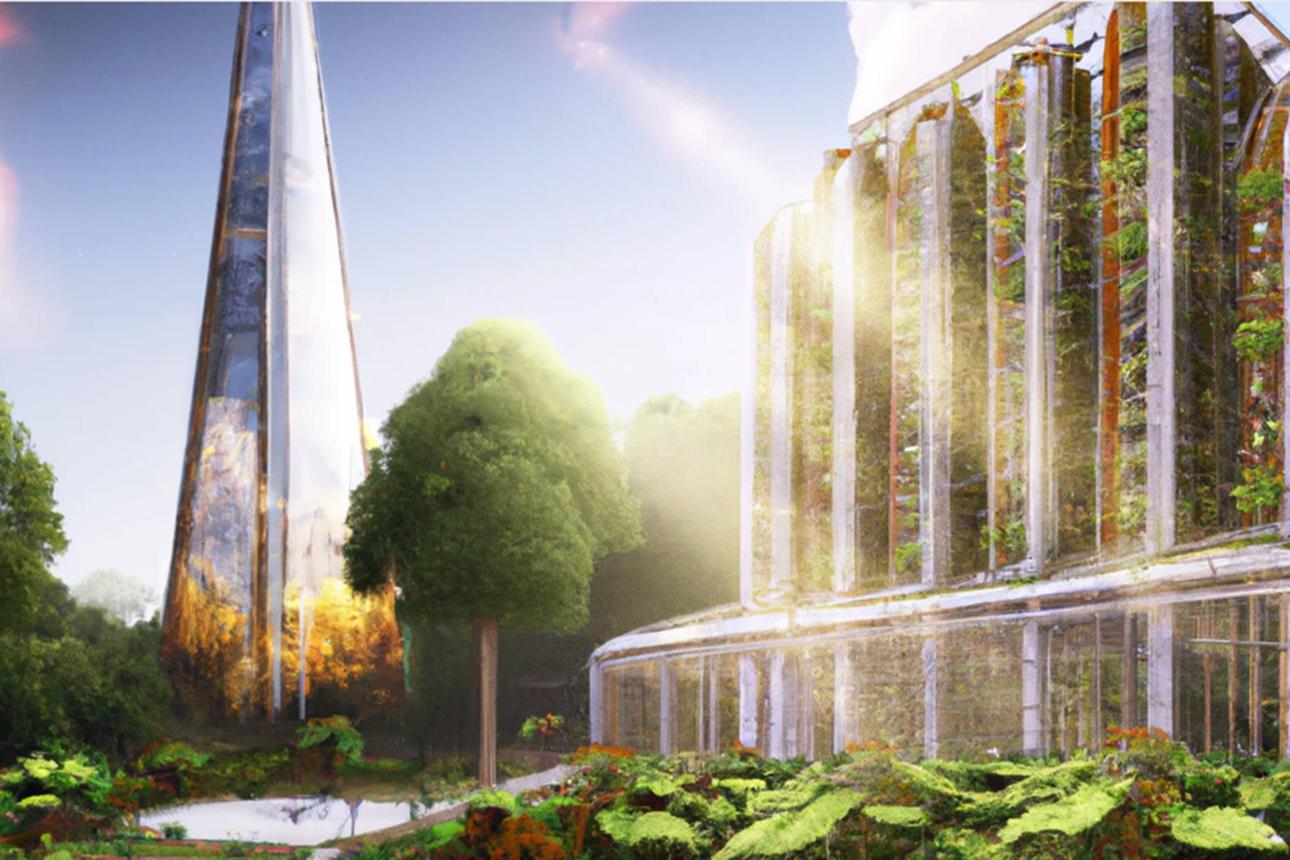
Among the standout concepts gaining attention is a proposal for a sustainable agriculture factory, a project that reflects the growing convergence between food production, environmental engineering and urban infrastructure. The scheme, featured as part of UWE Bristol’s latest graduating projects, imagines a future where agricultural production becomes vertically integrated into city environments, reducing transport emissions, increasing local resilience and rethinking how food systems operate within densely populated areas.
Rather than treating agriculture as something separated from urban life, the proposal positions food production as a visible, integrated part of modern cities. It reflects a broader movement emerging across architecture and design, where sustainability is no longer being approached as an optional feature but as the central framework guiding entire systems.

The project itself explores how industrial-scale farming could evolve within environmentally conscious urban environments. Concepts include renewable energy integration, water recycling systems, modular growing spaces and highly controlled indoor ecosystems designed to maximise efficiency while reducing environmental impact. The visual language feels intentionally futuristic, yet grounded in increasingly realistic conversations already taking place across architecture, agriculture and smart city planning.
What makes the work particularly compelling is that it reflects genuine global pressures rather than abstract academic experimentation. Food security, land scarcity and climate resilience are becoming defining challenges for governments and developers worldwide. As cities continue expanding, the question of how to produce food sustainably within increasingly urbanised environments is becoming more urgent.
Across Europe, Asia and the Middle East, investment into vertical farming and controlled-environment agriculture has accelerated significantly over the past decade. Large-scale indoor farming facilities are already emerging in cities including Singapore, Dubai and Tokyo, where traditional agricultural land is limited and food import dependency creates economic vulnerability. The ideas emerging from UWE Bristol therefore feel less like speculative fiction and more like an early glimpse into where urban infrastructure may eventually head.
The agriculture factory proposal was only one of several projects demonstrating how younger designers are increasingly thinking beyond aesthetics alone. Many of the featured concepts focused on sustainability, circular economies, adaptive reuse and environmental responsibility, reflecting how design education itself is shifting toward more systems-based thinking.

This evolution within architectural education reflects broader industry changes. Developers, governments and investors are placing increasing emphasis on ESG strategies, sustainable materials and long-term environmental performance. Architecture is no longer judged purely on appearance or commercial viability. Buildings are increasingly expected to contribute positively to environmental resilience, social wellbeing and urban efficiency.
That shift is creating new opportunities for emerging designers willing to challenge traditional assumptions around how cities operate. Younger architects are increasingly blending disciplines such as technology, environmental science, engineering and sociology into their work, producing concepts that feel more holistic than previous generations of design.
The UWE Bristol showcase also highlighted how digital technology is becoming deeply embedded within architectural development. AI-assisted modelling, environmental simulation tools and advanced rendering technologies are allowing students to explore highly complex systems in ways that were previously difficult within academic environments. The result is a generation of designers capable of visualising intricate environmental solutions with remarkable sophistication.
At the same time, there remains a strong human element running through many of the projects. While sustainability and technology dominate much of the conversation, many concepts also explore wellbeing, accessibility and the emotional experience of living within future cities. The most effective projects appear to understand that sustainable environments must also feel livable, social and emotionally engaging rather than purely efficient.

This balance between technological ambition and human-centred design increasingly defines the direction of modern architecture itself. Cities of the future will likely require solutions that simultaneously address environmental performance, population growth, infrastructure efficiency and quality of life. The projects emerging from institutions like UWE Bristol suggest that younger designers are already preparing for that complexity.
The agriculture factory proposal in particular symbolises how design thinking is evolving beyond conventional boundaries. It combines architecture, food systems, renewable energy, logistics and environmental engineering into a single integrated concept. That multidisciplinary approach is rapidly becoming one of the defining characteristics of contemporary design innovation.
Perhaps most importantly, the showcase demonstrates growing optimism within a generation often associated with climate anxiety and economic uncertainty. Rather than retreating from global challenges, many young designers appear increasingly motivated by the opportunity to rethink systems entirely. Their work suggests a belief that architecture can still play a transformative role in shaping healthier, more sustainable societies.
As sustainability moves from trend to necessity, projects like these offer insight into where the next era of architecture may be heading. Not simply toward greener buildings, but toward entirely new ways of organising food production, urban living and environmental infrastructure within increasingly complex cities.
And while many of these concepts may remain experimental today, the speed at which sustainability challenges are accelerating means some of tomorrow’s most influential urban systems may already be emerging from university studios like these.