




Ever heard of the Civil Air Patrol (CAP)? It’s one of those organizations most people know by name, but few fully grasp how deeply it weaves through America’s aviation, emergency, and youth culture fabric. CAP is the U.S. Air Force’s civilian auxiliary—an all-volunteer force that has quietly saved lives, educated thousands, and kept a steadfast presence in times of crisis.
So, What Is the Civil Air Patrol?
- CAP is a congressionally chartered, federally-funded nonprofit. Though civilian, it officially serves as the auxiliary of the U.S. Air Force.
- It’s built on volunteerism—planes, ground crews, cadets (young people), seniors (adult members). Nearly every U.S. state has wings and local squadrons.
A Quick History: From Wartime Needs to Peacetime Service
- The idea for CAP started in the late 1930s. Aviation advocates like Gill Robb Wilson, seeing war clouds gathering, believed civilian aviation could support national defense and tried to ensure civil flying wasn’t shut down just like it had been in other countries.
- CAP was formed officially around December 1, 1941 (Administrative Order 9). Its first tasks, during WWII, included coastal patrols, border surveillance, courier flights, and helping the war effort in other ways.
- After the war, Congress passed legislation (Public Law 79-476) that made CAP a nonprofit organization of volunteers, with the explicit rule that it would stop participating in actual combat missions.
What CAP Does Today: Three Core Missions
Today, CAP’s work revolves around three congressionally mandated missions:
- Emergency Services
This includes search and rescue, disaster relief, aerial reconnaissance, and support to federal and state agencies. For many missing persons cases in the U.S., CAP is a first responder in the skies. - Aerospace Education
CAP promotes aviation and aerospace knowledge—both for its members (cadets and senior members) and for the broader public. Schools, educators, and youth programs benefit from CAP’s resources. - Cadet Programs
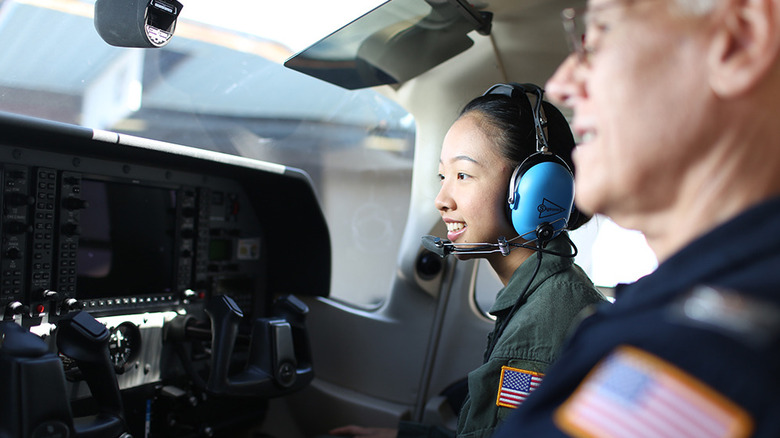
Young people—ages about 12-21—can join CAP as cadets. They get leadership training, orientation flights, STEM exposure, and a regimental structure that borrows from military tradition (without combat). It’s a serious program, with rank progression, fitness testing, aerospace courses, and camps.
Why It Stands Out
- Volunteers with Real Impact: CAP isn’t about show—it’s about results. Its members clock thousands of flight hours yearly, respond in emergencies, deliver relief, help map damage after storms, and fill support roles in homeland security.
- Bridging Civil & Military: CAP occupies a unique space—civilian, yet deeply integrated with the USAF. It provides services and training without being a combat force. It’s financed in part by the government, but powered by civic spirit.
- Youth Development + Education make up core goals. For many cadets, joining CAP is a path toward discipline, leadership skills, aviation interest, and a practical way to explore possible careers in aerospace or the military.
What to Watch For
- Modernization of Missions: As threats and needs change—climate disasters, cyber, regional emergencies—the demand on CAP shifts. New tech, better training, and faster mobilization are always part of the conversation.
- Funding & Resources: Being volunteer-based has advantages (passion, flexibility), but also limits—equipment, aircraft maintenance, funding for full-scale training etc. Sustained support is key.
- Cadet Engagement: As younger generations engage differently—with tech, social media, shifting career priorities—CAP’s ability to adapt its youth programs to be relevant will matter.
Final Thought
The Civil Air Patrol is one of those organizations that lives in the background until you need it—and then the value becomes glaringly obvious. Whether it’s guiding lost hikers, mapping flood zones, helping in wildfire response, or inspiring young people with the sky as their classroom—CAP has been quietly doing the work for 80+ years. For aviation lovers, service-minded folks, or anyone who believes in community, it’s a powerful example of how ordinary people can do extraordinary things.