



War reshapes markets long before it ends.
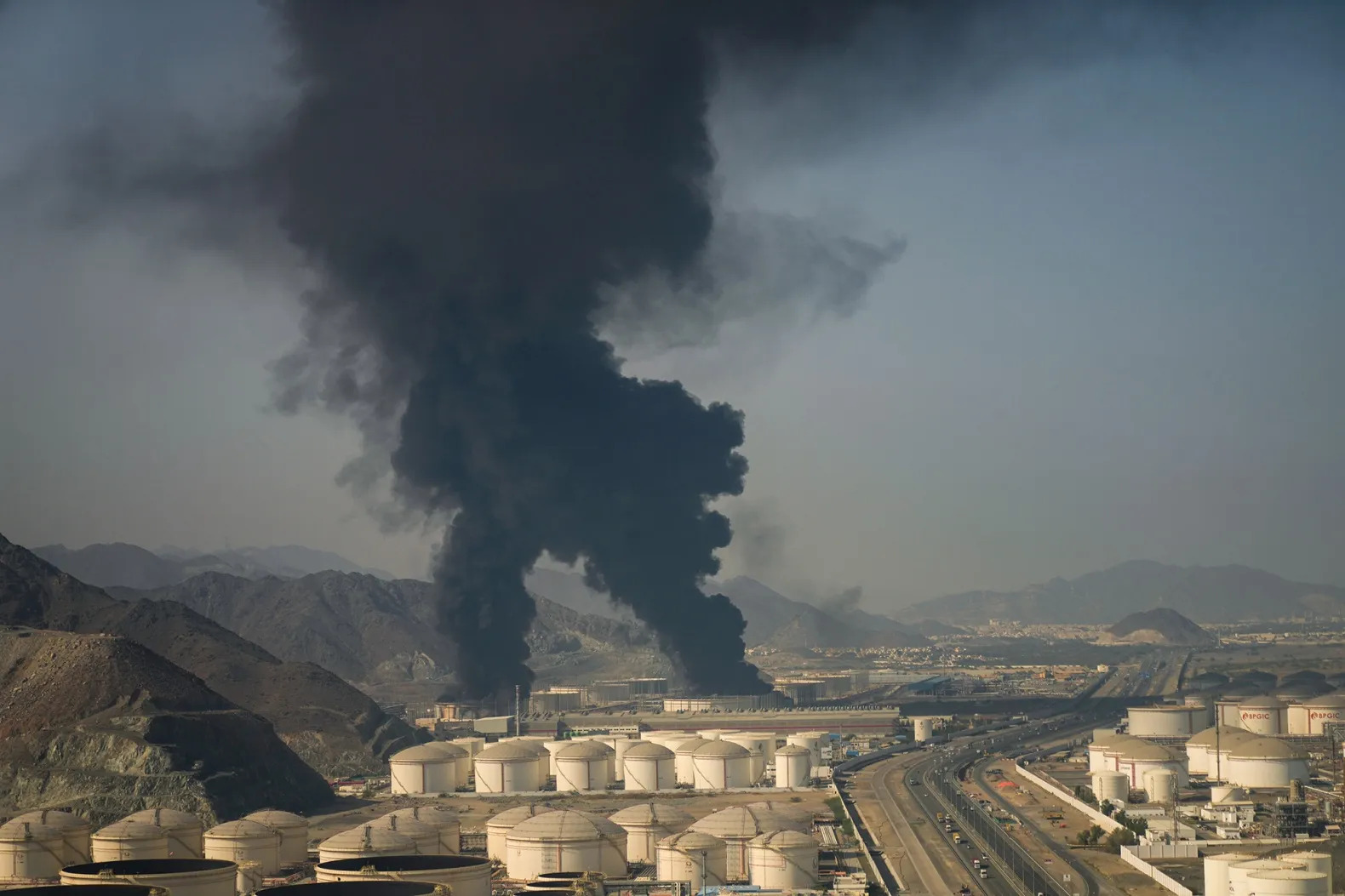
The ongoing conflict involving Iran has already triggered one of the most significant disruptions to global energy systems in decades, affecting supply chains, commodity prices and industrial output worldwide.
But beyond the immediate volatility, attention is quietly shifting towards what comes next.
Reconstruction.
History suggests that post-conflict environments do not simply recover. They are rebuilt, often at scale, and often by a relatively small group of global engineering, energy and services firms capable of operating in complex, high-risk environments.
The question is not whether rebuilding will happen. It is who will lead it.
The Firms Positioned to Rebuild
At the centre of that conversation are a handful of companies already deeply embedded in global energy infrastructure and large-scale engineering.
According to analysis of the sector, firms such as Baker Hughes, Bechtel, and ExxonMobil are among those most likely to play a central role in reconstruction efforts.
They are joined by oilfield service giants including SLB, Halliburton, and Weatherford, all of which specialise in restoring production capacity and maintaining complex energy systems.
These are not new entrants. They are incumbents.
And in post-conflict reconstruction, incumbency matters.
Why These Companies Dominate
Rebuilding energy infrastructure is not simply a question of capital. It is a question of capability.
Damaged refineries, disrupted pipelines and compromised export terminals require:
- Advanced engineering expertise
- Access to specialised equipment
- Established regional relationships
- The ability to operate in politically sensitive environments
This creates a natural barrier to entry.
Large-scale contractors like Bechtel bring project delivery at national scale. Oil majors such as ExxonMobil contribute capital, operational experience and long-term asset management. Service providers like SLB and Halliburton enable the technical restoration of wells, reservoirs and production systems.
In combination, they form an ecosystem capable of rebuilding entire energy networks.
The Scale of the Opportunity
The scale of potential reconstruction is already becoming clear.
Damage to oil and gas infrastructure across the Middle East is expected to run into tens of billions of dollars, with some estimates suggesting repair costs alone could exceed $25 billion.
And that figure captures only physical assets.
It does not include:
- Lost production capacity
- Supply chain reconfiguration
- Security and resilience upgrades
- New infrastructure designed to reduce future vulnerability
In reality, post-war investment cycles often exceed the cost of damage itself, as countries take the opportunity to modernise and expand.
For the companies involved, this is not short-term work. It is a decade-long pipeline.
A Structural Shift in Energy Strategy
Reconstruction will not simply restore what existed before.
It is likely to accelerate structural shifts already underway in global energy strategy.
The war has exposed the fragility of key transit routes such as the Strait of Hormuz, through which a significant portion of global oil flows.
As a result, future infrastructure investment is expected to focus on:
- Diversification of export routes
- Increased redundancy in supply networks
- Greater integration of digital monitoring and security systems
- Expansion of alternative energy capacity alongside hydrocarbons
For engineering and energy firms, this creates a dual opportunity: rebuild existing assets while designing the next generation of infrastructure.
Beyond Energy: The Wider Reconstruction Economy
While energy will dominate early reconstruction efforts, it is only part of the broader economic reset.
Conflicts of this scale disrupt:
- Transport infrastructure
- Industrial facilities
- Logistics networks
- Urban development
As stability returns, rebuilding extends into construction, materials, logistics and financial services.
Banks, insurers and private capital will follow, underwriting projects and facilitating cross-border investment. Supply chains will reconfigure. Governments will prioritise resilience.
The result is a multi-sector reconstruction economy, anchored by energy but extending far beyond it.
A Market Defined by Timing
Reconstruction opportunities do not begin when war ends.
They begin the moment outcomes become predictable.
Markets are already positioning accordingly. Energy service companies, engineering contractors and infrastructure specialists are being watched not just for current performance, but for their exposure to future rebuilding cycles.
The firms that succeed will be those able to move early, secure contracts quickly and operate at scale in complex environments.
The Long View
The Iran war has already reshaped the global energy landscape.
But its long-term legacy may be defined not by destruction, but by reconstruction.
For companies like Baker Hughes, Bechtel, ExxonMobil, SLB and Halliburton, the next phase is not about navigating disruption. It is about rebuilding the systems that underpin global energy supply.
And in that process, the line between recovery and opportunity becomes increasingly difficult to distinguish.