



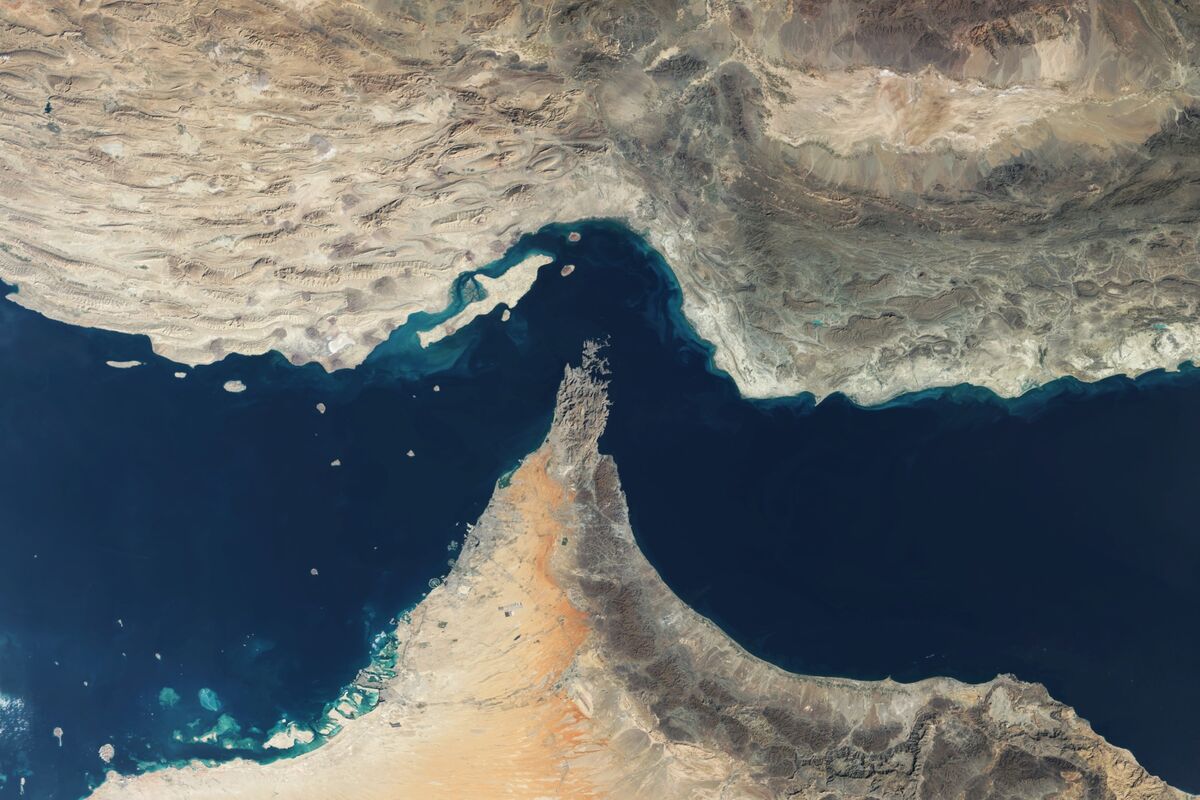
At first glance, the concentration of oil and gas around the Persian Gulf can feel almost arbitrary — a quirk of geography that shaped the modern world. In reality, it is anything but accidental.
The region sits at the centre of one of the most complete and perfectly aligned geological systems for hydrocarbon formation on Earth. Not one factor, but a rare convergence of many, unfolding over hundreds of millions of years.
That is why this relatively small stretch of the planet holds such an outsized share of global energy.
A Perfect Ancient Environment for Oil Formation
The story begins long before continents looked as they do today. During the Jurassic and Cretaceous periods, much of what is now the Middle East lay beneath a vast, warm, shallow sea.
These conditions were ideal for life — especially microscopic marine organisms. When they died, their remains settled on the seabed in enormous quantities. Over time, these organic-rich layers were buried under sediments, gradually transforming into hydrocarbons under heat and pressure.
This alone is not unusual. Many parts of the world experienced similar conditions.
What makes the Persian Gulf different is what happened next.
Burial, Pressure, and Time — On an Extraordinary Scale
As layers of sediment continued to accumulate, the region underwent long, stable geological subsidence — meaning it slowly sank over millions of years.
This mattered enormously.
The deeper those organic layers were buried, the more heat and pressure they experienced — precisely the conditions needed to convert organic matter into oil and gas.
Crucially, this process was consistent and uninterrupted. There were no major disruptions to scatter or destroy the developing reserves. Instead, hydrocarbons formed steadily and at scale.
In geological terms, the system was allowed to complete itself.
Natural Traps: Why the Oil Stayed Put
Forming oil is only half the story. To create vast reserves, that oil must also be trapped.
Here, the Persian Gulf again benefits from exceptional conditions.
Tectonic movements — particularly the collision between the Arabian and Eurasian plates — created large folds and structures in the الأرض’s crust, known as anticlines. These act like natural containers, trapping oil and gas beneath impermeable rock layers.
At the same time, thick layers of salt and evaporites formed effective seals, preventing hydrocarbons from escaping.
The result is a near-perfect geological system:
- Source rocks rich in organic material
- Reservoir rocks capable of storing fluids
- Cap rocks that lock everything in place
Few regions possess all three at such scale and quality.
Stability: The Quiet Advantage
One of the less obvious — but most important — reasons for the region’s abundance is its tectonic stability.
In many parts of the world, oil deposits were disrupted by intense geological activity — earthquakes, mountain-building, or shifting plates that fractured and dispersed reserves.
The Persian Gulf region, by contrast, experienced relatively gentle tectonic evolution.
This allowed oil and gas accumulations to remain intact, rather than being broken apart or lost over time.
In simple terms, the oil formed, migrated, and then stayed exactly where it needed to be.
A Geological Bottleneck — and a Global Energy Hub
All of this geological history converges in one place — the Persian Gulf basin — which today remains the world’s largest single source of petroleum.
The region contains:
- Some of the largest oil fields ever discovered
- The world’s biggest natural gas field shared by Qatar and Iran
- A concentration of reserves that accounts for a substantial share of global supply
Even the geography of the region reinforces its importance. The narrow Strait of Hormuz acts as a gateway through which a significant portion of the world’s oil must pass, turning geology into geopolitics.
Not Just Abundant — But Accessible
An important nuance often overlooked is that the Persian Gulf does not necessarily hold all the world’s oil — but it holds a large portion of the most accessible, high-quality reserves.
The oil is often:
- Located relatively close to the surface
- Found in large, concentrated fields
- Easier and cheaper to extract than in many other regions
That combination has made the Gulf not just resource-rich, but economically dominant.
Final Thought
The Persian Gulf’s energy wealth is not the result of a single event or condition. It is the outcome of a rare geological alignment — the right environment, the right timing, the right structures, and the right stability, all unfolding over immense timescales.
In Earth science, such perfect systems are uncommon.
Which is why, even today, this region remains at the centre of the global energy landscape — not by chance, but by deep geological design.