



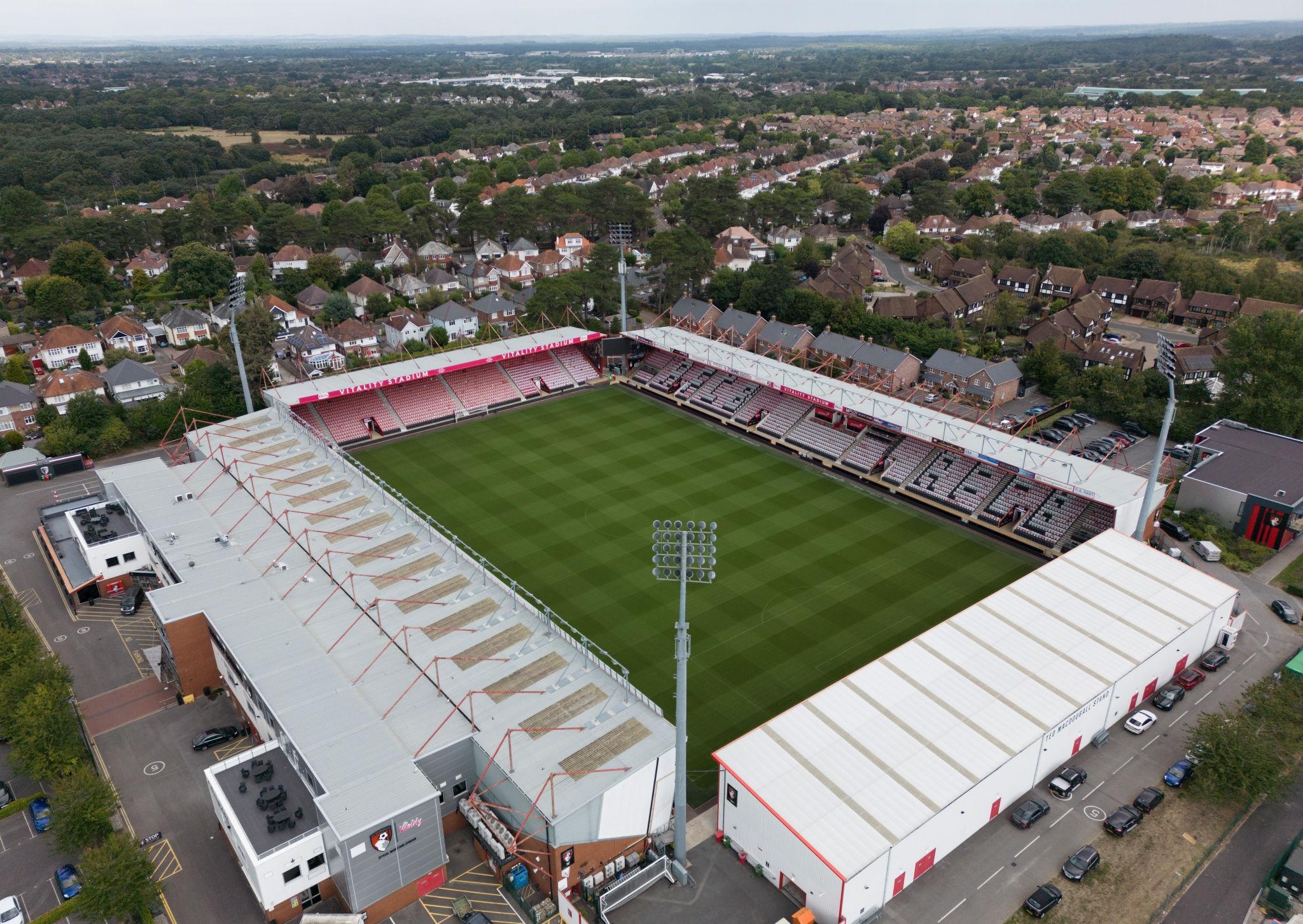
AFC Bournemouth’s plans to transform the Vitality Stadium into a larger Premier League-standard venue have taken a significant step forward, with a contractor now appointed to support the redevelopment programme.
Engineering specialist Stadium Structures has been selected as the pre-construction partner for the stadium expansion project. The appointment will see the company work on the early planning and delivery strategy for a phased redevelopment designed to more than double the ground’s current capacity to over 20,000 seats.
The move marks an important milestone for the Dorset club as it seeks to upgrade the smallest stadium in the Premier League into a venue capable of supporting its long-term ambitions both on and off the pitch.
A Major Upgrade for the Vitality Stadium
AFC Bournemouth’s home ground in Kings Park, often referred to historically as Dean Court, currently holds just over 11,300 spectators.
The redevelopment aims to significantly increase capacity while modernising facilities for fans, media and hospitality. Once completed, the stadium is expected to accommodate more than 20,000 spectators, bringing it closer in line with other top-flight venues.
Key elements of the scheme include:
- Demolition and replacement of the existing South Stand with a new 7,000-seat grandstand
- Construction of a 3,000-seat lower tier in the first phase
- Infill development in the south-east and north-west corners
- Refurbishment works to the East and West Stands
- Creation of new hospitality spaces and upgraded media facilities
The stadium’s turnstiles will also be relocated to a new perimeter layout, improving circulation and security on matchdays.
A Phased Construction Strategy

4
One of the biggest challenges for the project will be maintaining stadium operations while construction is underway.
To address this, the redevelopment will follow a phased construction programme, allowing AFC Bournemouth to continue hosting matches at the venue throughout much of the build period.
The project will rely heavily on modular and prefabricated construction techniques, enabling large sections of the new structure to be manufactured off-site and installed quickly during short construction windows.
This approach is increasingly common in stadium redevelopment projects, where work must be carefully scheduled around football seasons and broadcasting commitments.
Strategic Investment by Bournemouth’s Ownership
The expansion forms part of a wider strategy by the club’s ownership group to strengthen AFC Bournemouth’s infrastructure and commercial potential.
The club reacquired the stadium site in 2025 and has since prioritised redevelopment over building an entirely new stadium elsewhere. The investment reflects growing demand for tickets and hospitality experiences as Bournemouth consolidates its position in the Premier League.
Increasing capacity will also create new revenue streams through:
- Premium hospitality suites
- Expanded corporate entertainment areas
- Additional matchday ticket sales
- Improved media and broadcast facilities
For smaller Premier League clubs, stadium redevelopment is often one of the most effective ways to strengthen long-term financial sustainability.
Looking Ahead
Planning approvals for elements of the project are expected to continue through 2026, with construction phases scheduled to align with the 2026–27 football season and off-season periods.
Once completed, the expanded Vitality Stadium will not only deliver a significantly larger capacity but also provide modern facilities designed to support the club’s ambitions for growth.
For AFC Bournemouth, the redevelopment represents more than just a stadium upgrade. It signals the club’s intention to establish itself as a long-term Premier League presence while creating a venue capable of matching the scale and professionalism of England’s top-flight football environment.