



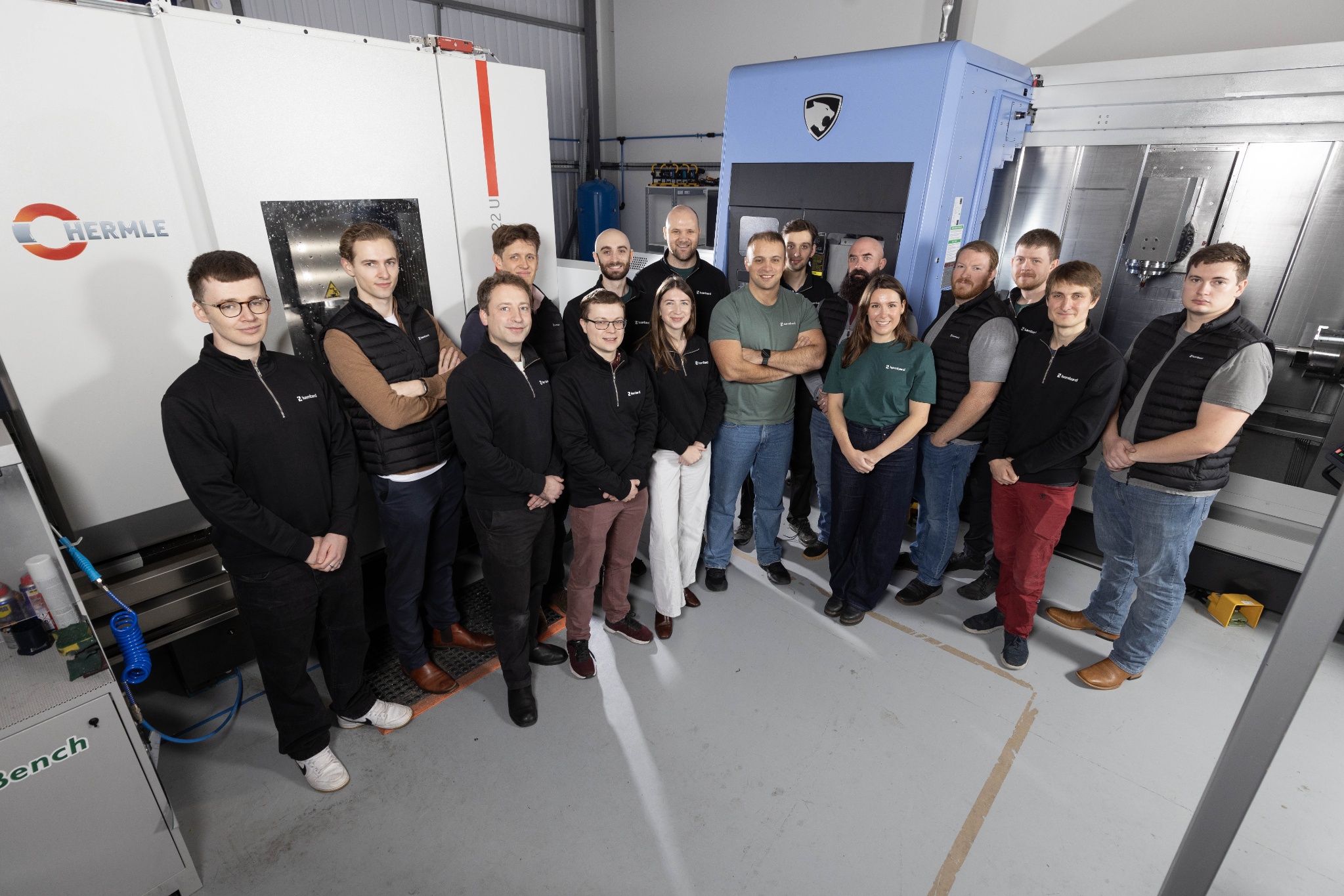
A British deep-tech manufacturing startup is attracting major investor attention as the West seeks to rebuild industrial capacity closer to home.
London-based Isembard, a company developing software-driven factories for high-precision engineering, has raised $50 million (£37.5 million) in a Series A funding round to expand its manufacturing network and accelerate development of its proprietary factory operating system.
The investment arrives less than a year after the startup secured roughly $9 million in seed funding, highlighting growing investor interest in the resurgence of advanced manufacturing in Europe and North America.
With demand rising across sectors such as aerospace, robotics and defence, Isembard is positioning itself at the intersection of software, automation and industrial production.
Reimagining the Modern Factory
At the centre of Isembard’s strategy is a software platform called MasonOS, designed to run manufacturing facilities with the efficiency of a digital operating system.
The platform integrates the entire production lifecycle into a single automated layer, connecting processes such as:
- Quoting and production planning
- Factory scheduling and logistics
- Supply chain management
- Quality control and delivery
By embedding these functions into one system, the company aims to streamline factory operations and reduce the complexity traditionally associated with precision manufacturing.
According to founder and chief executive Alexander Fitzgerald, the company’s ambition extends beyond building individual factories.
“Manufacturing is the origin of our security, prosperity and sense of purpose as nations.”
The goal is to create a network of highly automated production facilities that can rapidly manufacture advanced components for critical industries.
Video Insight: The Return of Advanced Manufacturing
Across Europe and the United States, governments and investors are increasingly prioritising reshoring—the process of bringing manufacturing capacity back from overseas production hubs.
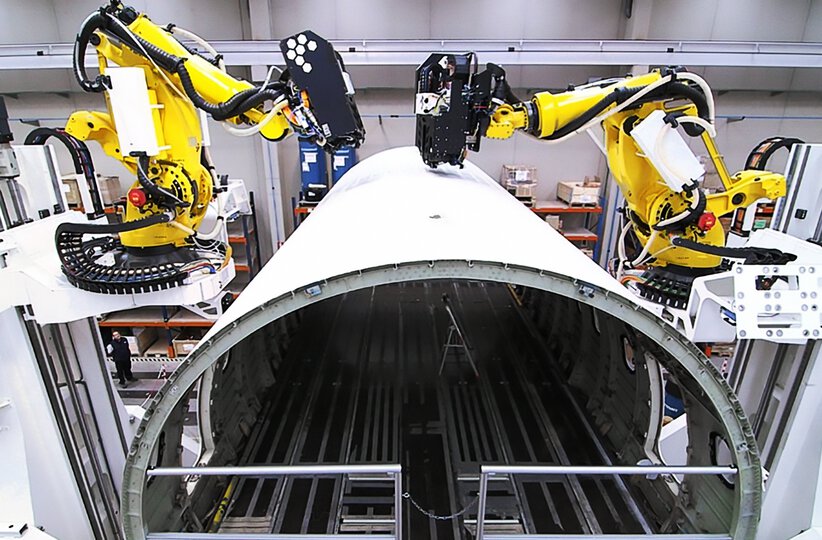
Automation, robotics and AI are making this shift more economically viable, enabling factories in Western economies to compete with lower-cost production centres.
The Investment Behind the Expansion
4
The new funding round was led by Union Square Ventures, a New York venture capital firm known for early investments in companies such as Twitter, Coinbase, Etsy and Cloudflare.
Union Square Ventures’ managing partner Rebecca Kaden said the startup’s software-first approach to manufacturing could reshape how factories are built and operated.
The MasonOS system effectively lowers the barriers to running high-performance manufacturing businesses by embedding operational expertise directly into the software layer.
This model could enable a distributed network of factories rather than a handful of massive industrial plants, allowing production to scale faster while remaining closer to customers.
With the new funding, Isembard plans to:
- Open additional factories across Europe and the United States
- Invest further in the MasonOS platform
- Recruit engineers and manufacturing specialists
- Support franchise partners operating local factories
The strategy aims to combine decentralised industrial infrastructure with a centralised software platform.
Addressing the Manufacturing Capacity Gap
Behind the company’s growth lies a broader structural challenge facing Western economies.
Precision manufacturing capacity has been declining for decades as production shifted to Asia. Many remaining factories are ageing, fragmented and struggling to scale production for emerging technologies.
At the same time, demand for advanced components is accelerating across industries including:
- Defence and aerospace systems
- Autonomous robotics and drones
- Energy infrastructure
- Advanced electronics
Startups and smaller industrial companies often lack the capital to build their own manufacturing facilities, creating a gap between innovation and production capability.
Isembard aims to fill that gap by providing rapid access to high-precision manufacturing without the need for companies to build factories themselves.
Reshoring and Industrial Sovereignty
The rise of companies like Isembard reflects a broader geopolitical trend: the growing emphasis on industrial sovereignty.
Supply chain disruptions during the COVID-19 pandemic, combined with rising geopolitical tensions, exposed vulnerabilities in global manufacturing networks.
Governments across Europe and North America are now prioritising domestic production in strategic sectors such as defence technology, semiconductors and energy systems.
Software-driven manufacturing platforms could play a critical role in this shift by enabling smaller, more flexible production ecosystems.
By combining automation, robotics and data-driven operations, companies are exploring new ways to rebuild industrial capacity while maintaining economic competitiveness.
A New Model for Industrial Production
For decades, the global manufacturing model relied heavily on large-scale factories in low-cost regions.
The next generation of manufacturing may look very different.
Companies like Isembard are exploring a model built around:
- Distributed factory networks
- AI-driven production planning
- High-precision automated machining
- Rapid prototyping and small-batch production
This approach prioritises speed, flexibility and supply chain resilience over sheer production volume.
If successful, the model could reshape how advanced industrial components are produced across Europe and the United States.
The Future of Software-Driven Manufacturing
The latest funding round marks an important milestone for Isembard, but it also signals a wider shift in how technology is transforming industrial production.
As automation and AI become deeply embedded within manufacturing systems, factories themselves are evolving into intelligent platforms capable of adapting to changing demand.
For industries dependent on precision engineering—from aerospace to robotics—the ability to rapidly manufacture complex components may become a decisive competitive advantage.
Isembard’s vision is ambitious: building a distributed network of software-driven factories capable of supporting the next generation of critical industries.
If the company succeeds, it may not only reshape manufacturing in Britain, but also contribute to a broader revival of industrial capability across the Western world.