



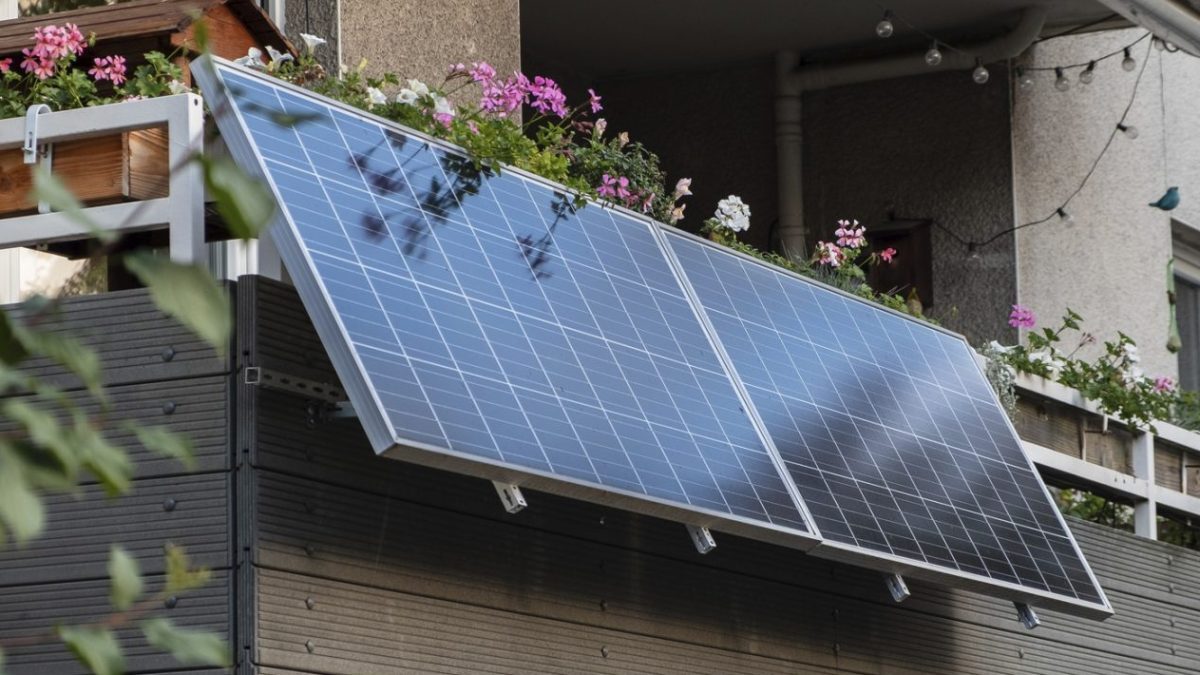
A quiet shift is taking place in the UK energy market—one that could bring solar power out of rooftops and into everyday homes.
Supermarkets including Lidl are set to sell plug-in solar panels for around £400, offering households a far simpler and more affordable route into renewable energy.
Unlike traditional solar installations, which can cost between £5,000 and £8,000 and require professional fitting, these systems are designed to be used straight out of the box.
Hang the panel. Plug it in. Start generating power.
It is a fundamentally different proposition—and one with the potential to reshape how households engage with energy altogether.
A Simpler Model for Solar Adoption
At the heart of the concept is simplicity.
Plug-in solar panels—often referred to as “balcony solar”—generate electricity that feeds directly into a home’s internal circuit via a standard socket. Instead of exporting power back to the grid, the energy is used immediately by appliances within the home.
The impact is subtle but meaningful. Households draw less electricity from suppliers, reducing overall energy bills without needing a full rooftop system.
Government estimates suggest savings of around £70 to £110 per year, with systems typically paying for themselves in roughly four years.
It is not about eliminating energy bills. It is about reducing reliance on them.
Why Now—and Why Lidl
The timing reflects a broader push to democratise energy access.
In countries such as Germany, plug-in solar systems are already widespread, with more than a million installations across homes and apartments.
Retailers like Lidl and Aldi have played a key role in that growth, offering low-cost kits through mainstream retail channels. The result has been rapid adoption—and falling prices as competition increases.
The UK is now moving in the same direction, supported by government efforts to remove regulatory barriers and expand access to small-scale solar solutions.
If that transition follows the same trajectory, supermarket distribution could bring solar into a far wider segment of the population.
The Appeal: Cost, Flexibility, Accessibility
What makes plug-in solar compelling is not just price, but accessibility.
These systems:
- Require no professional installation
- Can be used in flats, rented homes, or properties without suitable roofs
- Offer immediate, small-scale energy generation
For many households, particularly renters or urban residents, this removes one of the biggest barriers to solar adoption.
Traditional systems demand long-term commitment and upfront capital. Plug-in solar offers something closer to a consumer product—affordable, flexible, and easy to deploy.
The Limitations—and the Reality
The opportunity is real, but so are the limitations.
Plug-in panels generate far less electricity than full rooftop systems. They are designed to supplement, not replace, grid energy. Output will vary depending on sunlight, positioning, and usage patterns.
There are also regulatory considerations. While widely used across Europe, the UK is still finalising safety standards and approvals for widespread rollout.
In other words, this is an emerging market—not a fully mature one.
But that is also where the opportunity lies.
A Shift in How Energy Is Consumed
What Lidl’s move represents is larger than a new product category.
It signals a shift in how energy is produced and consumed at the household level.
Instead of centralised generation flowing one way—from grid to home—systems like plug-in solar introduce a more distributed model, where households generate a portion of their own power.
Small in scale, but significant in implication.
The Bigger Picture
Plug-in solar panels will not replace traditional energy infrastructure.
But they do change the equation.
They lower the barrier to entry.
They introduce flexibility into energy consumption.
And they bring renewable generation into spaces where it was previously impractical.
For retailers like Lidl, it is another extension of value-driven consumer tech.
For households, it may be the first meaningful step into energy independence.
And for the wider market, it raises a simple but important question:
What happens when generating your own power becomes as easy as plugging something in?