



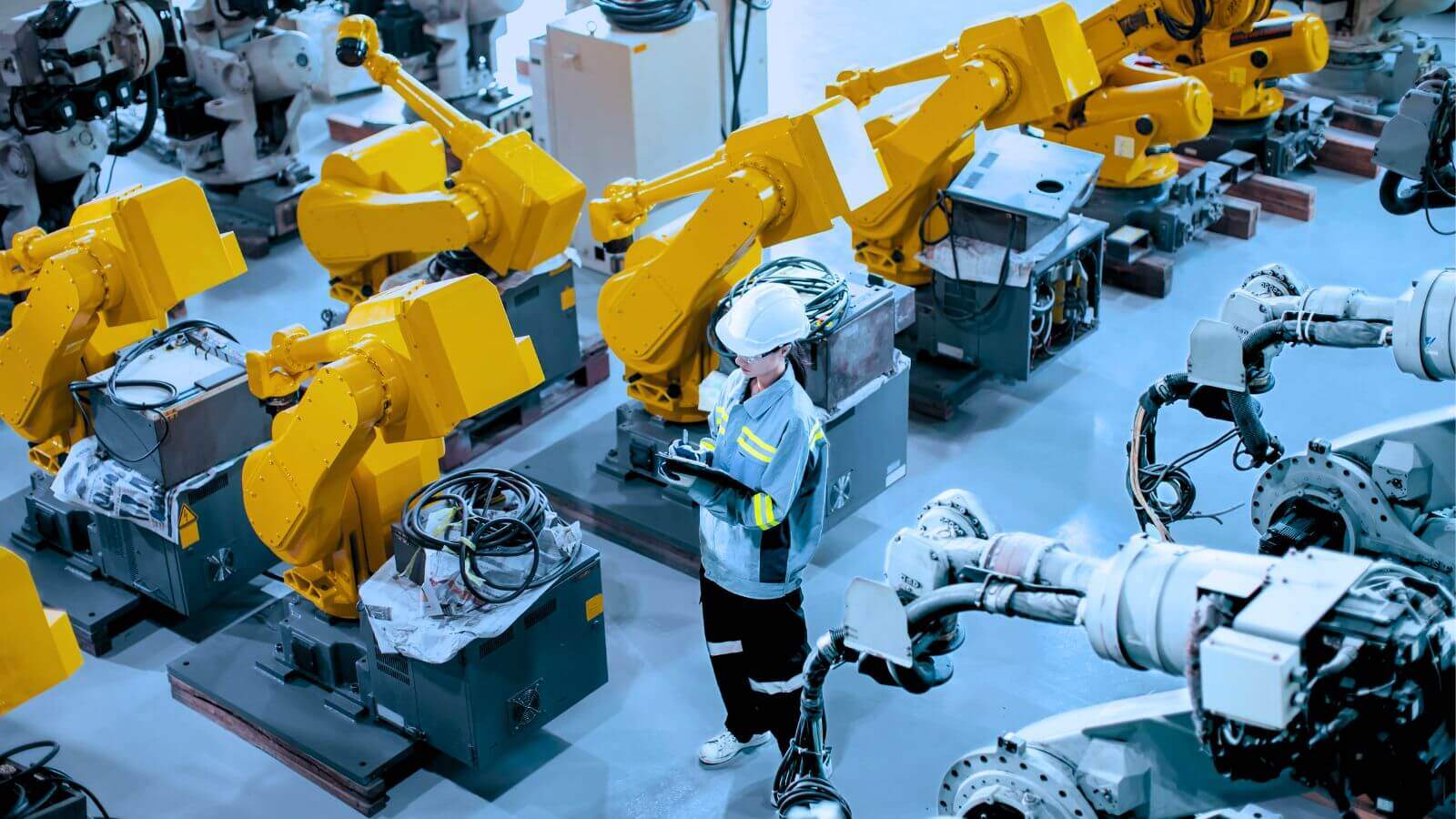
Manufacturing is facing a quiet but persistent crisis. Productivity growth has slowed, while labour shortages—particularly in technical roles—continue to tighten operational capacity.
Artificial intelligence is increasingly being positioned as the solution. Not as a future concept, but as a practical tool capable of reshaping how factories operate, scale, and compete.
According to recent analysis, the opportunity is significant—but so is the gap between potential and adoption.
A Sector Under Pressure
The manufacturing sector sits at the intersection of two structural challenges: stagnating productivity and a shrinking pool of skilled workers.
AI addresses both simultaneously. It enables automation of repetitive tasks, enhances decision-making, and reduces dependency on scarce technical talent. In many cases, companies expect a positive return on AI investment within one to four years.
Yet adoption remains uneven. Larger manufacturers are significantly ahead, with uptake rates far higher than smaller firms—highlighting a widening capability gap across the industry.
This is not just a technology story. It is a scale story.
Where AI Delivers the Most Value

AI’s impact in manufacturing is not confined to one area. It spans the entire value chain.
In core production, it enables predictive maintenance, reduces downtime, and improves quality control through computer vision systems. Beyond the factory floor, the gains may be even greater—particularly in planning, logistics, and administrative processes.
This is where the real shift is happening.
Manufacturing is no longer just about physical output. It is about data, optimisation, and decision speed.
The Data Problem Behind the Opportunity
4
For all its promise, AI is only as effective as the data behind it.
One of the biggest barriers to adoption is not technology itself, but the lack of robust data infrastructure. Many manufacturers still operate with fragmented systems, limiting their ability to deploy AI at scale.
Investment is beginning to shift in response. Spending on software and digital infrastructure across European manufacturing is rising rapidly, reflecting a growing recognition that data is now a core asset.
Without it, AI remains theoretical. With it, it becomes transformative.
A Divide Between Leaders and Laggards
AI adoption is not uniform across the sector—or across regions.
Some European markets, including Belgium and Denmark, are emerging as leaders in industrial AI implementation, while others risk falling behind.
The divide is also visible at company level. Larger firms, with greater resources and scale, are moving faster. Smaller manufacturers face barriers around cost, capability, and integration.
This creates a widening competitive gap.
Those that successfully integrate AI into their operations stand to gain disproportionately, while others risk being left behind in an increasingly data-driven industrial landscape.
Rethinking Work, Not Replacing It
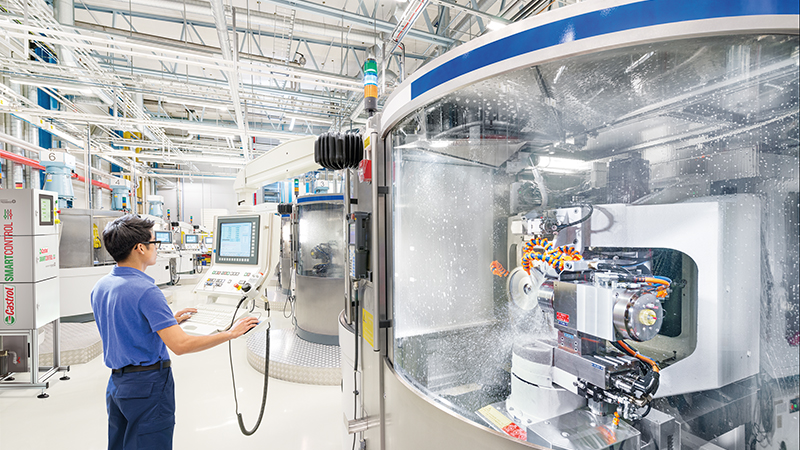
The role of AI in manufacturing is often framed as automation replacing labour. The reality is more nuanced.
In many cases, AI is being used to augment human capability rather than eliminate it. It supports workers by handling repetitive or data-heavy tasks, allowing them to focus on higher-value activities such as oversight, problem-solving, and optimisation.
At the same time, it helps address labour shortages by reducing reliance on hard-to-fill roles, particularly in engineering and technical operations.
The result is not necessarily fewer jobs, but different ones.
A Structural Shift, Not a Short-Term Fix
What is happening in manufacturing is not cyclical. It is structural.
AI is emerging as a general-purpose technology with the potential to reshape productivity across industries, much like electricity or the internet before it.
For manufacturing, this represents a turning point.
The sector has long struggled with incremental productivity gains. AI offers the possibility of a step change—but only for those able to adopt it effectively.
The Bigger Picture
Manufacturing stands at a crossroads.
On one side is a continuation of current trends—tight labour markets, modest productivity growth, and increasing pressure on margins. On the other is a more intelligent, data-driven model powered by AI.
The direction is becoming clearer.
But the outcome is not guaranteed.
Because in the next phase of industrial evolution, the defining factor will not be access to technology.
It will be the ability to use it.