



At Amazon’s scale, sustainability is not a side initiative. It is an operational necessity.
What emerges from its latest procurement strategy is not a collection of isolated ESG efforts, but a deliberate shift towards circularity—embedding reuse, lifecycle thinking and community impact directly into the mechanics of how the business runs.
At the centre of this transformation sits Amazon’s Global Procurement Organisation (GPO), quietly reshaping how one of the world’s largest supply chains sources, uses and reuses its assets.
The Power of Small Changes at Scale
One of the most revealing examples is also one of the simplest.
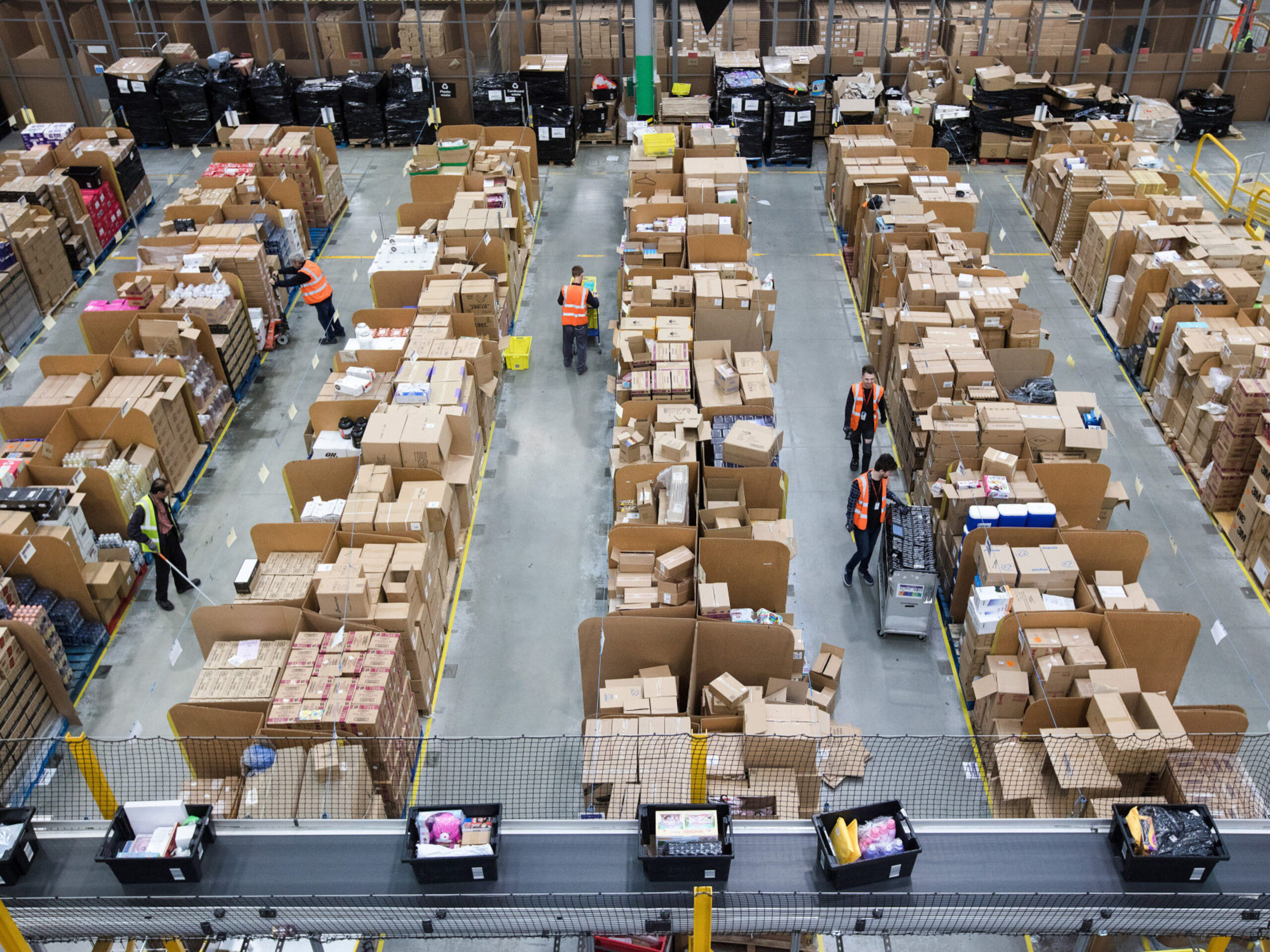
Inside Amazon’s fulfilment centres, “Yellow Totes”—the durable containers used to move products across vast logistics networks—are now being given a second life. Rather than being discarded at end-of-use, they are redistributed to charities and community organisations.
What might appear operationally minor becomes significant at scale.
These totes, once purely logistical assets, are now:
- Supporting food distribution networks
- Storing essential goods for non-profits
- Strengthening local community infrastructure
It is a subtle but important shift. Procurement is no longer just about acquisition. It is about extending value beyond the first lifecycle.
As Amazon itself frames it, the goal is to transform operational assets into “community impact assets” once their primary use ends.
Procurement as a Strategic Lever for Sustainability
Amazon’s GPO oversees the sourcing of non-inventory goods and services—everything from fulfilment centre materials to packaging systems that underpin its global logistics infrastructure.
But its role has evolved.
Today, procurement is being used to:
- Reduce waste at source
- Improve supply chain efficiency
- Support ESG targets across the organisation
Through initiatives like Procurement for Good, Amazon is aligning supplier selection, sourcing decisions and operational processes with broader environmental and social goals.
The implication is clear. Procurement is no longer a cost-control function. It is a strategic driver of sustainability outcomes.
Circularity in Practice: Beyond Recycling
Amazon’s approach reflects a broader rethinking of the circular economy.
Rather than focusing solely on recycling, the company is prioritising:
- Extending product lifecycles
- Reusing assets wherever possible
- Designing out waste before it occurs
This aligns with the core principles of circular procurement, which emphasise keeping materials in use for as long as possible while extracting maximum value from them.
Across its wider operations, Amazon is applying similar thinking:
- Enabling resale, donation and refurbishment of products
- Reducing packaging waste and improving recyclability
- Partnering with suppliers to minimise waste across the supply chain
The result is a system that challenges the traditional “take, make, waste” model—replacing it with something more regenerative.
Technology, Data and Supplier Ecosystems
What allows this to function at scale is not just intent, but infrastructure.
Amazon is leveraging:
- Data visibility across procurement and supply chains
- Digital tools to track spending, waste and supplier performance
- Partnerships with certified and local suppliers to meet ESG criteria
This creates a feedback loop where procurement decisions are continuously refined based on both operational efficiency and environmental impact.
In effect, circularity becomes measurable—and therefore manageable.
The Commercial Case for Circular Procurement

There is a tendency to frame sustainability as a cost.
Amazon’s model suggests the opposite.
Circular procurement delivers:
- Cost efficiencies through reduced waste
- Operational resilience via longer asset lifecycles
- Stronger supplier ecosystems aligned with ESG goals
Even broader initiatives—such as reusable packaging, electric vehicle procurement and waste reduction—demonstrate how sustainability and efficiency increasingly move in the same direction.
For procurement leaders, this is perhaps the most important takeaway.
Circularity is not just an environmental strategy. It is a business strategy.
Embedded Video: Circular Supply Chains in Action
From Function to Philosophy
Amazon’s procurement evolution reflects a deeper shift taking place across global business.
Procurement is moving:
- From transactional to strategic
- From cost-driven to value-driven
- From linear to circular
What makes Amazon’s approach notable is not any single initiative, but the integration of these principles into everyday operations.
It is not positioned as transformation.
It is positioned as how the business now works.
The Outlook
Amazon’s circular procurement strategy is still evolving, and the scale of its operations means progress will never be linear.
But the direction is clear.
By embedding circularity into procurement—arguably one of the most influential functions in any organisation—Amazon is demonstrating how sustainability can move from ambition to execution.
And in doing so, it offers a blueprint for enterprises facing the same question:
How do you turn sustainability from a target into a system?
For Amazon, the answer lies not in grand gestures, but in operational detail—applied, relentlessly, at scale.